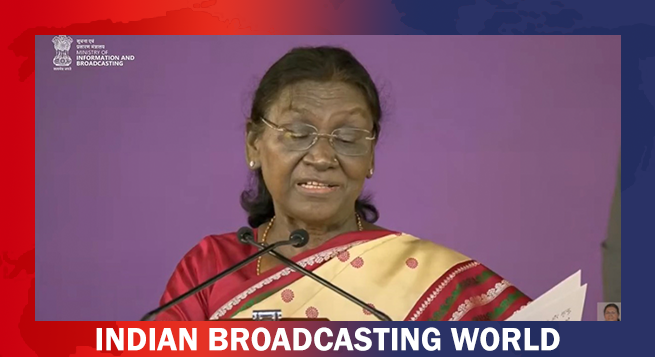
 President Murmu exhorts celebs to not endorse ‘harmful products’
  Satellite company SES, JioStar sign multi-year distribution deal
  Govt. clarifies CBFC certification changes, says 1991 core framework unchanged
 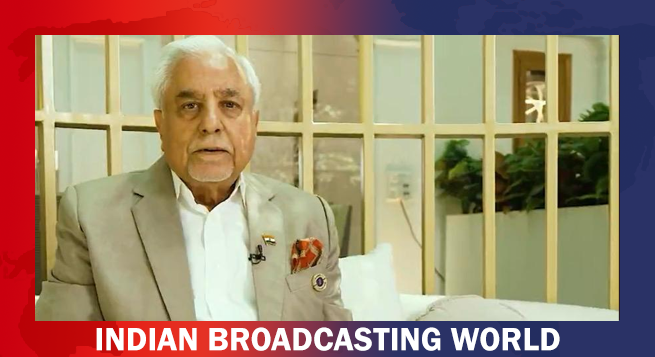 Subhash Chandra moves NCLAT over Sept 1 asset order
  Parineeti Chopra makes web series debut with Netflix’s ‘Shaque’
  Prime Video’s ‘Waiting Hai’: Harshita Gaur talks about Divyenndu
 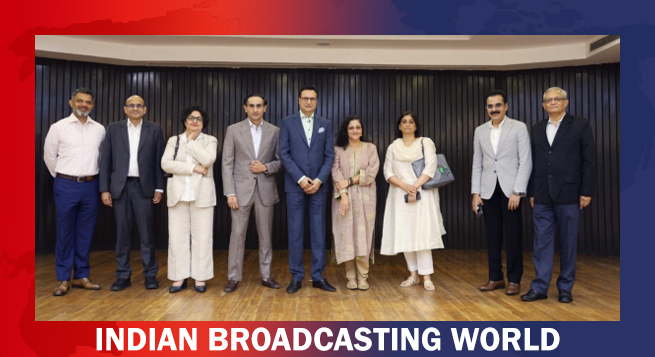 Rajat Sharma re-elected NBDA President for 2026-27
  Creator18 appoints Heena Lulla as Business Head




Utopai Studios has announced a significant upgrade to its PAI storytelling AI platform, introducing what it claims is an industry-first capability to generate three-minute videos in 4K, alongside an enhanced Story Agent designed to maintain narrative continuity across scenes. The update will go live from April 15, marking a notable step forward in AI-led filmmaking workflows.
According to a Utopai press release, the latest release positions PAI as more than just a creative tool, evolving it into a unified production system that supports filmmakers across pre-production, production, and post-production. The platform is already being used in professional film and television projects in Hollywood, reflecting its growing adoption in long-form storytelling environments.
At the heart of the update is PAI’s next-generation model, which focuses on solving one of the biggest challenges in AI filmmaking—continuity. The enhanced Story Agent is designed to ensure consistency across characters, environments, and cinematography, enabling creators to move seamlessly from concept development to shot planning and revisions. This structured approach allows creative teams to handle more complex narratives while scaling production efficiently.
The update also introduces multi-shot sequencing and multi-turn editing, giving filmmakers greater control over how scenes evolve over time. By integrating story development, video generation, editing, and asset management into a single workflow, PAI reduces operational friction and enables a more flexible production pipeline for both studios and independent creators.
Commenting on the development, Jie Yang, Co-Founder and CTO of Utopai Studios, said the future of AI in media lies in systems that can carry story, continuity, and collaboration across the entire creative process. He noted that the enhanced model is a step toward making AI more practical and reliable for professional filmmaking.
Echoing this, Zijian He highlighted that generative video is enabling a new production model where creative ambition is less constrained by cost and complexity. He added that PAI combines multimodal capabilities and multi-turn editing to give creators more speed, control, and consistency in executing ideas.
Designed for professional-scale use, the platform is already being deployed for rapid pre-visualisation in pre-production, helping teams align on elements such as camera language, scene design, pacing, and tone. During production and post-production, it supports the creation of complex shots, along with continuity fixes, lighting adjustments, environment changes, and localisation.
The April 15 update builds further on these capabilities with improvements including voice variety, character likeness, unlimited editing, simplified pricing, and enhanced controls across generation and asset management. Utopai Studios also emphasised that its models are not trained on copyrighted materials, underlining a focus on clean data practices for creators and rights holders.
With this release, Utopai Studios is positioning PAI at the centre of a broader shift toward integrated, AI-driven content production, where storytelling, execution, and iteration are increasingly handled within a single, intelligent system.