 Netflix’s marks Korean decade as K-content rules non-English viewing
  GTPL Hathway now tracking TV viewership via RPD, targets 50k homes
  Netflix, hoichoi in pact to take Bengali stories to wider audiences
  JioHotstar to offer ‘Ramayana’ on pay-per-view after theatrical run
  MIB issues advisory for TV channels on news reporting, AI use
  TRAI proposes new rules for Internet-based TV services
  Ahaan Panday , Sharvari’s film ‘Beparwah’ to release in March 2027
 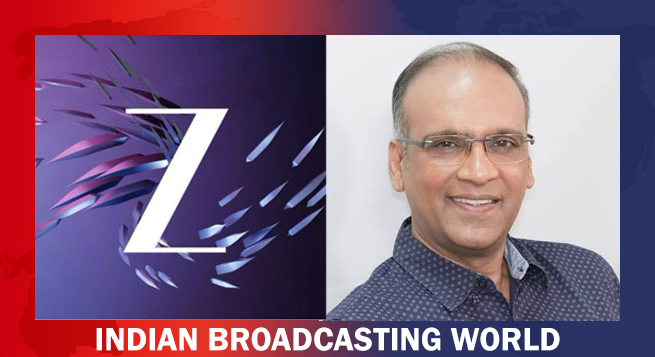 Komal Nahta joins Zee as Creative Director for movies business
  Flipkart Minutes launches Ramsay Brothers’ horror mini-series
  ‘Alpha’ world TV premiere set for Oct 31 on Sony MAX



India’s efforts to build a Direct-to-Mobile (D2M) broadcasting ecosystem have entered a significant policy stage, with Prasar Bharati forwarding a detailed implementation roadmap prepared by consultancy firm Ernst & Young (EY) to the Ministry of Information and Broadcasting (MIB) for evaluation.
According to The Storyboard18 report, the public broadcaster submitted the Detailed Project Report (DPR) after several rounds of revisions, stakeholder consultations and internal assessments. The document is expected to play a key role in shaping future policy decisions related to the rollout of D2M technology across the country.
D2M is designed to enable the delivery of video content, educational material, news updates and emergency alerts directly to compatible mobile devices without relying on internet connectivity. Supporters of the technology believe it has the potential to transform content distribution, particularly in areas where internet access remains limited or unreliable.
EY was tasked by Prasar Bharati with preparing a comprehensive strategy for nationwide deployment of D2M services. The consultancy’s mandate included developing an implementation framework, recommending a public-private partnership (PPP) model and proposing a sustainable commercial structure for long-term operations.
Officials familiar with the development said the DPR incorporates inputs from multiple ministries, industry bodies and stakeholders. The report addresses technical, regulatory and commercial aspects of deployment and is expected to serve as a foundation for future decisions regarding pilot expansion and eventual commercial implementation.
The submission comes at a time when the Parliamentary Standing Committee on Information and Communications Technology has urged the government to expedite policy decisions surrounding D2M. In a recent report tabled in Parliament, the committee acknowledged progress made through ongoing trials and sought updates on proof-of-concept projects being undertaken by the government and Prasar Bharati.
Responding to the committee, the Ministry of Information and Broadcasting stated that Prasar Bharati had been entrusted with developing a roadmap for offering D2M as a public service platform while incorporating recommendations from relevant ministries and stakeholders.
The government’s confidence in the technology is backed by a series of pilot projects conducted over the past few years. In collaboration with IIT Kanpur and Saankhya Labs, now part of Tejas Networks, Prasar Bharati is currently conducting D2M trials in more than 19 cities across India.
These trials are testing various transmission models using both high-power and low-power broadcasting infrastructure. Officials involved in the project believe the technology could significantly improve access to digital content while also reducing dependence on conventional broadband networks.
Earlier proof-of-concept demonstrations conducted in Delhi and Bengaluru successfully established the feasibility of transmitting multimedia content directly to mobile devices. Industry experts have argued that D2M could also help ease network congestion by shifting high-volume content delivery away from telecom networks, particularly during large-scale live events and emergency situations.
The initiative recently received another boost after the Committee of Secretaries approved the allocation of the 470–582 MHz spectrum band for D2M services and endorsed a PPP-based implementation model. The committee has also recommended further stakeholder consultations before wider deployment takes place.
Despite growing support from broadcasters and technology stakeholders, telecom operators have continued to express concerns over the proposal. The Cellular Operators Association of India (COAI) has argued that allocating the spectrum band for D2M could impact future mobile broadband expansion plans and has called for broader discussions before final policy decisions are made.
Proponents of D2M, however, maintain that the technology is intended to complement existing telecom networks rather than compete with them. They argue that broadcasting and broadband can coexist, creating a more efficient content delivery ecosystem.
Beyond smartphones, the technology’s potential applications are expanding. Demonstrations by Intel and Tejas Networks have showcased the ability to deliver content directly to laptops without requiring Wi-Fi or internet access, opening possibilities for education, public communication, disaster management and digital inclusion initiatives.
With the roadmap now under review by the Ministry of Information and Broadcasting, industry stakeholders will be closely watching the next phase of policy deliberations that could determine the future of D2M broadcasting in India.