 MIB issues advisory for TV channels on news reporting, AI use
  Netflix to expand ads plan to 15 new countries in 2027
  News18, TaMo to mark Oct 23 as ‘National Saarthi Diwas’
  Airtel launches voice-only prepaid plans starting at Rs 185
  Without naming Musk, RIL says it welcomes satcom competition
 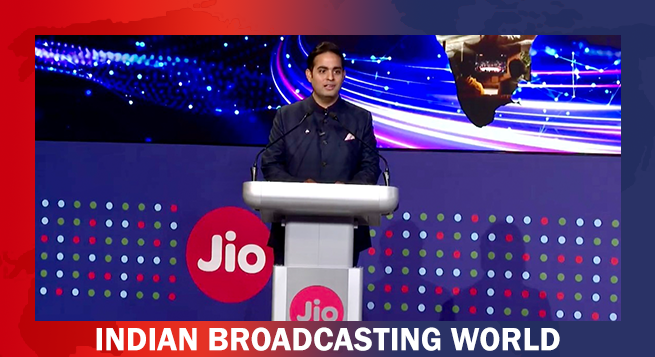 Akash Ambani banks on selling more services to up revenue
  Netflix cites to shareholders India growth as success of core strategy
  ICC scouts for PR, mktng. outfit for Women’s Champions Trophy ’27
  JioHotstar to offer ‘Ramayana’ on pay-per-view after theatrical run
  Zee Studios appoints Suraj Singh as business head
  Jio Platforms IPO sold out in 100 minutes; firm aims for largest-ever listing



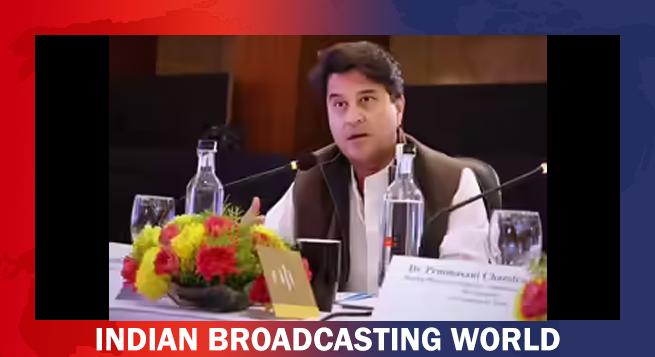
India has emerged as the world’s second-largest 5G subscriber base, trailing only China, with more than 400 million users now on the next-generation network, Minister of Communications Jyotiraditya Scindia said yesterday, highlighting the pace of adoption here is also among the fastest globally setting new benchmarks in scale, speed and digital transformation.
According to an ANI report, the Minister shared the milestone in a post on X, stating, “With over 400M+ 5G users, India today stands as the world’s second-largest 5G subscriber base and among the fastest adopters globally.” He underlined how the country’s rapid rollout reflects its growing digital maturity and expanding telecom infrastructure.
Since the launch of 5G services in 2022, coverage has expanded at an unprecedented pace. The network is now available across nearly the entire country, with a coverage footprint of 99.6 percent and population coverage touching 85 per cent.
Data released by the Ministry of Communications in December 2025 shows that, as of March 2025, telecom service providers had installed 4.69 lakh 5G base transceiver stations (BTSs) nationwide, making it one of the fastest 5G rollouts anywhere in the world.
The ministry added that since the introduction of 5G, around 25 crore (250 million) mobile users have migrated to the new network, underscoring strong consumer adoption. Alongside urban expansion, rural connectivity has also seen significant gains.
Rural telephone connections grew by 42.9 per cent — nearly double the growth rate in urban areas — rising from 377.78 million in March 2014 to 539.83 million by September 2025.
India’s broader digital push is reflected in internet usage as well. The number of internet connections has crossed the 100-crore mark, reaching 100.29 crore, compared to 25.15 crore in March 2014. This represents a growth of nearly 299 per cent over the last decade, driven by affordable data, wider network reach and increasing smartphone penetration.