 Meta says expanded AI sweep of ads linked to child abuse in India
  With WBD merger closed, Skydance is a Hollywood giant
  TRAI flags mixed 2025-26 trends: DTH shrinks, telecom base expands
 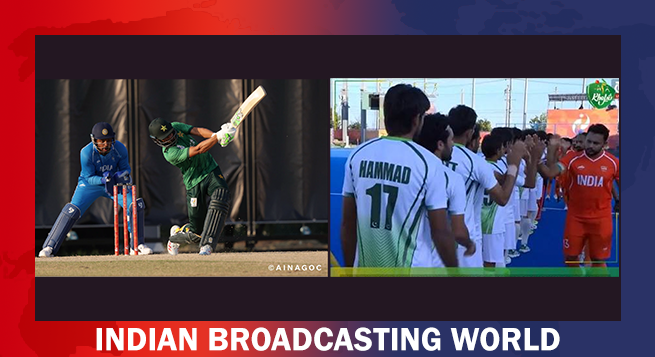 Ind, Pak cricket & hockey matches most viewed in Asian Games history
 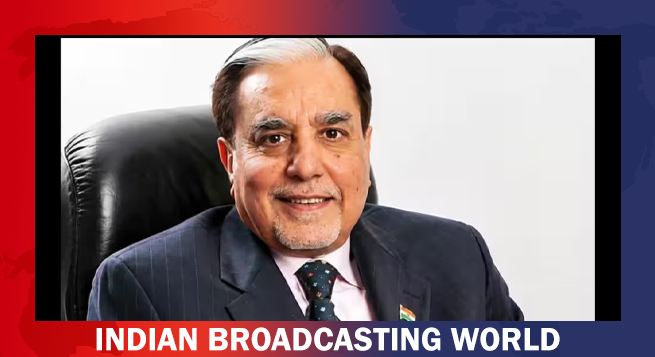 Zee completes 34 years as Subhash Chandra recalls media journey
  Mitta Ror teams up with Zee Music company for new single ‘Chehra’
  Kapil Sharma show’s S5 nets 12.88mn viewers on Netflix: Chrome data
  W.i.S.H. makes comeback with new songs ‘Kasoor’ , ‘Doori’
  SC upholds order restraining ‘Saurashtra Aaj Tak’ name
  Google, WIF India launch AI Filmathon using Google flow



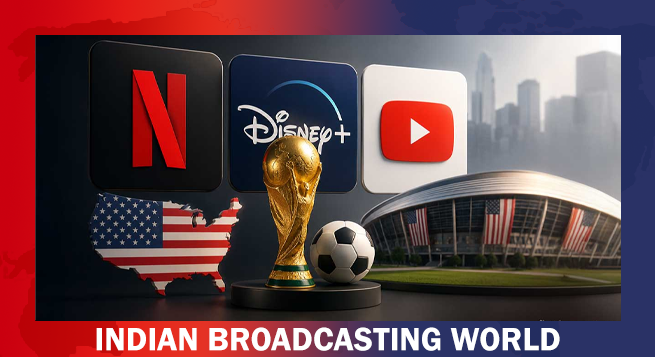
The race for the U.S. media rights to the 2030 and 2034 FIFA World Cups is set to intensify, with several global streaming and media companies preparing to challenge incumbent broadcaster Fox in what could become one of the biggest sports rights auctions in television history.
According to a CNN report, Netflix, The Walt Disney Company and YouTube are among the companies interested in acquiring the U.S. broadcast rights for the next two editions of the FIFA World Cup. The report also suggests that Amazon and Apple could join the bidding, potentially driving the value of the rights package to as much as $2 billion per tournament.
Discussions between FIFA and prospective media partners are expected to begin within the next three months. People familiar with the matter said preliminary conversations started earlier this year, with FIFA outlining a significant change in its approach to the U.S. rights package.
Unlike previous World Cup cycles, FIFA is expected to bundle the English- and Spanish-language U.S. broadcasting rights into a single package rather than selling them separately. The move is aimed at increasing competition among bidders and maximising the overall value of the media rights.
For the 2026 FIFA World Cup, Fox Corporation acquired the English-language rights for a reported $485 million, while Telemundo secured the Spanish-language rights for approximately $600 million. Industry executives now estimate that combined U.S. rights for each of the 2030 and 2034 tournaments could command between $1.5 billion and $2 billion.
The last major rights agreement between FIFA, Fox and Telemundo was signed in 2011 and later extended through the 2026 tournament. With the current cycle nearing its conclusion, media companies are expected to compete aggressively for one of the most valuable properties in global sports broadcasting.
The growing interest from streaming platforms reflects the increasing importance of live sports in attracting and retaining subscribers. Netflix, Disney and YouTube reportedly view the FIFA World Cup as a marquee property capable of significantly strengthening their streaming businesses.
Disney could also leverage its traditional television assets, including ESPN and ABC, alongside its streaming platforms, a combination that may appeal to FIFA given the consistently strong television ratings generated by Fox’s coverage during the ongoing World Cup. FIFA has already expanded its relationship with Netflix by awarding the streaming service the media rights to the FIFA Women’s World Cups in 2027 and 2031.
Representatives for FIFA, Netflix, YouTube and Disney have declined to comment on the report.
Industry observers believe packaging English- and Spanish-language rights together could also eliminate competition between separate broadcasters covering the same matches. During the current rights cycle, Telemundo has attracted not only Spanish-speaking audiences but also a section of English-speaking viewers through its streaming platform, Peacock, creating overlap with Fox’s audience.
The report noted that if the combined package approaches the $2 billion mark, NBCUniversal is unlikely to participate in the bidding. The company already carries substantial commitments for major sports properties, including the NFL’s Sunday Night Football and NBA coverage, while also focusing on broader financial priorities following Comcast’s decision to spin off NBCUniversal.
Although the 2030 and 2034 tournaments will be played in time zones less favourable for American audiences—with the 2030 edition hosted across Morocco, Portugal and Spain, and the 2034 tournament in Saudi Arabia—industry executives remain confident that demand for the rights will remain exceptionally strong.
The optimism is being fuelled by record-breaking viewership for the ongoing 2026 FIFA World Cup. Recent matches involving the United States have drawn audiences comparable to NFL playoff broadcasts, highlighting football’s growing popularity in the American market.
According to Fox Sports, the recent U.S. match against Bosnia and Herzegovina attracted more than 26 million viewers on English-language television, making it the most-watched English-language football telecast in U.S. history. An additional 9.8 million viewers watched the match through Telemundo or Peacock.
Audience interest has extended beyond U.S. fixtures as well. Portugal’s match against Croatia drew more than 11 million viewers on Fox, making it the most-watched non-final FIFA World Cup match in U.S. history that did not involve the American team.
With audience numbers continuing to surge and streaming companies increasingly investing in premium live sports, the battle for the U.S. rights to the 2030 and 2034 FIFA World Cups is expected to be one of the most closely watched media rights negotiations in the industry.