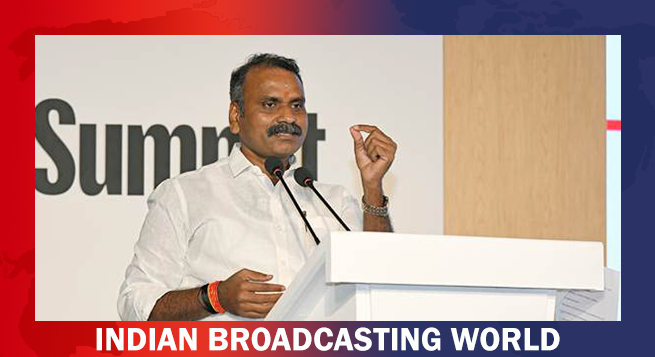
 Murugan resigns from Cabinet as Mos MIB & Rajya Sabha
  Broadcasters flag HD-SD conversion, satellite spectrum concerns in submission to MIB on telecom rules 2026
  MIB seeks dismissal of AIDCF plea against WAVES, says OTT rules differ from TV
 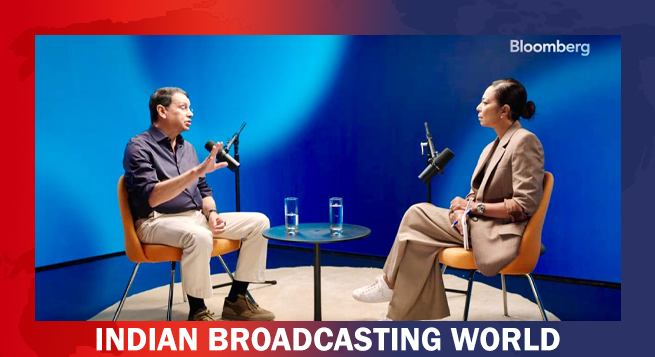 Uday Shankar: Indian M&E sector needs policy support to compete globally
 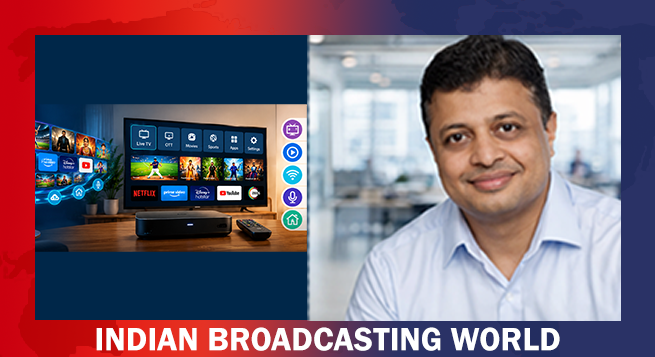 Guest Column: STB evolves from decoder to connected entertainment
 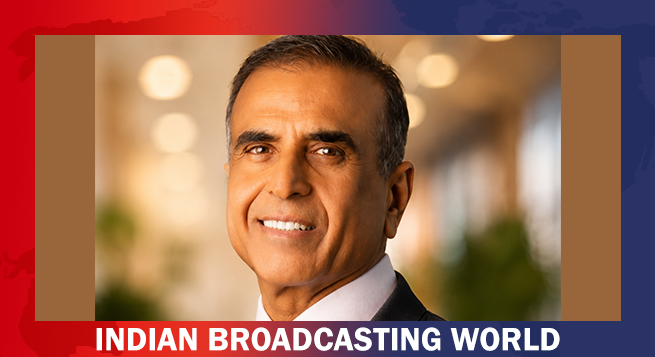 Sunil Mittal says OneWeb ahead of Musk in Indian approval queue
  ‘Your algorithm’ to allow FB users fine-tune feed with AI
  Netflix confirms workforce cuts amounting to 6%, biggest since ’22
  Ofcom report spotlights gaming’s ‘stranger’ danger for UK parents
  ‘Girls’ to return with 5 new episodes 10 years after original ended



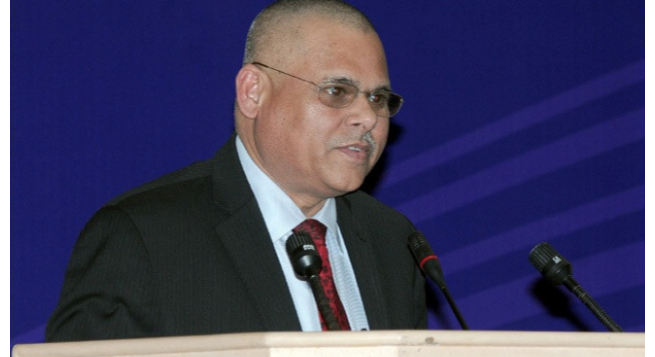
Uday Varma, former Secretary at the Ministry of Information and Broadcasting, whose tenure had seen some major push towards digitisation, has advocated that regulator TRAI ought to take a more pragmatic view of the Indian broadcast and cable sectors and lay down a ‘broad tariff structure’ that will benefit all stakeholders, including the consumers.
“Even if arguments favouring price regulation can be justifiably and appealingly found, is there a necessity for such a detailed pricing regime? Is getting into the complex web that business models have created and then initiating an exercise balancing the interests of different stake-holders really necessary? Why not leave this exercise to market forces, given the proven maturity of this market?” Varma has asked, raising some industry concerns, while adding that “intelligent safeguards” could be devised simultaneously.
Pointing out that if protecting the interests of the “population at the lower end of income” is a major reason behind TRAI’s tariff regimes, which are yet to be fully implemented on the ground fully, Varma has said that
steps should be taken by the regulator to have an “inexpensive alternative” available to the masses.
“Arguably, a lightly regulated tariff regime will immensely bolster the expansion of (Doordarshan) FreeDish,” Varma has suggested in his submission to TRAI in a consultation paper on ′Issue Related to New Regulatory Framework for Broadcasting and Cable Services’.
Entertainment may be argued to be a public good, but it is not an essential commodity, the former bureaucrat, who has also served as a secretary-general of chambers of commerce Assocham, said, suggesting that TRAI needs to “re-evaluate” this concern objectively.
“In any case, the TV channel prices in India are one of the lowest in the world. There is a justification to preserve it but not perpetuate it at the cost of growth of the sector. The right of the consumer to have the freedom of choice must outweigh most other considerations, but an obsession for it may skew an objective approach.
“TRAI’s objections to ‘perverse pricing’ by broadcasters may be a conscientious concern, but runs contrary to its logic of placing consumers at the centre of all tariff structures, a move to which TRAI vows to be committed,” Varma noted.
His conclusion: a “complex and micro managed tariff scenario will be impractical to implement” and enforce and an open invitation to litigation and resultant delay, defeating the very purpose of regulation.