 Times Now summit expands across south India
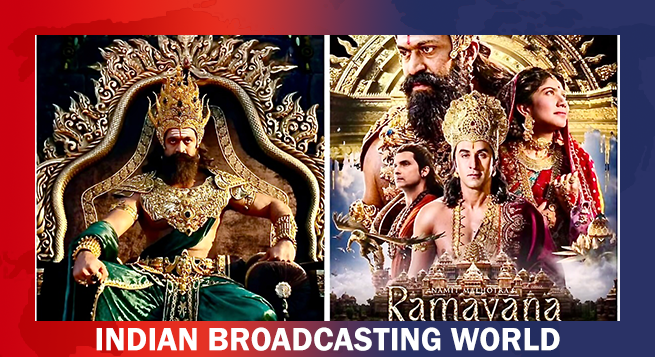 Hindu Janajagruti Samiti flays ‘Ramayana’ film for glorifying Ravan
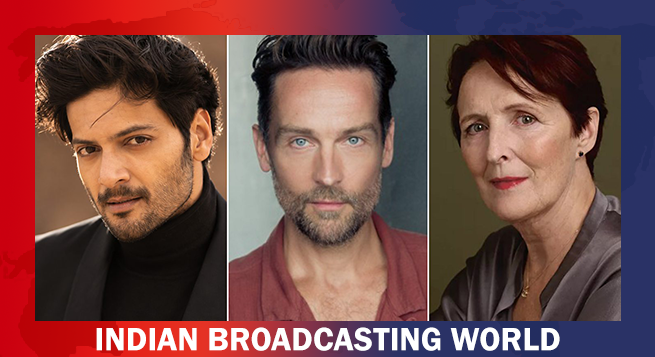 Ali Fazal, BBC, CBC, Emmy winner Richie Mehta collab on ‘A Passage To India’
 Akashvani launches ‘AIR Rising Stars’ to promote young musical talent
 WAVES Film Bazaar to mark 20th edition alongside 57th IFFI in Goa
 JioStar celebrates World TV Day with ‘Your Star Moment’ campaign
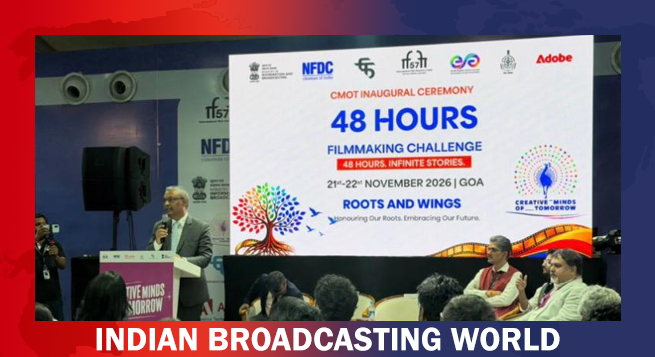 IFFI ‘26: Creative Minds of Tomorrow 6th edition inaugurated
 IFFI 2026 honours seven cinema legends
 Skydance to combine Warner Bros, Paramount TV Studios
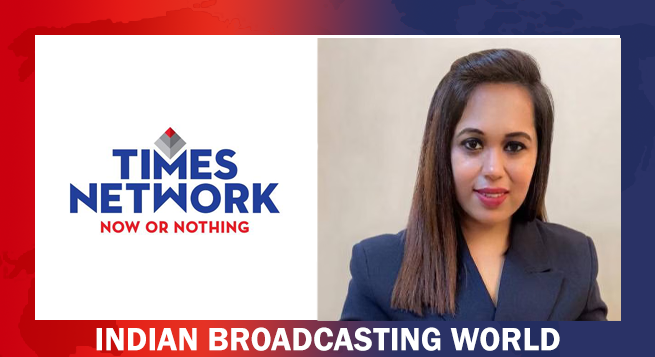 Purnima Banga elevated to Regional Head – North at Times Network




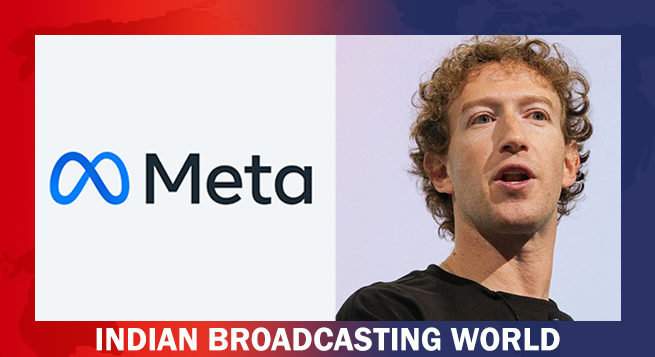
Meta has announced the launch of Muse Image, touted as its most advanced AI image generator and the first media generation model developed by Meta Superintelligence Labs, but the move drew sharp criticism and user concerns around data privacy, image-scraping and consent.
According to a PTI report from New Delhi yesterday, worry lines have started to emerge over a feature that allows users to create AI images by clawing photos from public Instagram accounts, with just a simple tag in the prompt.
Experts believe that since the feature is turned on automatically for public accounts, the ‘opted-in-by-default-approach’ raises some serious questions around consent, privacy and image-scraping, as unsuspecting users may come across their striking resemblance in random AI-generated images, even though they have not given any explicit permission.
The risk of having an easy, everyday deepfake capability handy and accessible for millions, if not billions, of users, could make it tougher to instantly trust which images are real and which are AI-generated, leaving people more vulnerable to online impersonation, despite certain watermark safeguards announced by Meta, industry watchers say.
Meta said Muse Image is its most advanced image generation model yet and that “it follows instructions faithfully, edits with precision, composes from multiple references, and draws on Instagram for social context”. According to Meta, it also brings agentic tool use capabilities and integrates with Muse Spark.
“We’re excited to launch Muse Image and preview Muse Video, the first media-generation models developed by Meta Superintelligence Labs,” Meta said.
Muse Image is available today across the Meta AI app and on meta.ai, Instagram Stories in the US, and WhatsApp in limited countries, and is coming soon to Facebook. Muse Video is also coming soon to creators and Meta AI, the company said.
Prachir Singh, senior analyst at Counterpoint Research, noted that Meta’s new Muse Image tool lets users type someone’s Instagram username into an AI prompt and generate fake pictures of that person, that is pulled from their public photos, without asking for permission first.
The feature is turned on automatically for public accounts, which means users are already included unless they go into their settings and manually turn it off, he added.
“This is a big change because it changes what having a public Instagram account means. It used to simply mean more people could see someone’s posts. Now it also means strangers can use that person’s face to create new images they never agreed to — a risk that’s especially significant for influencers and creators who rely on public accounts for their work, but also for everyday users, since Meta has said it won’t notify people when this happens to them,” Singh said.
Legally, if a business uses one of these AI-generated images in an ad and it accidentally includes someone’s face, that business (and not Meta) is likely to face lawsuits or backlash, he further said.
Prabhu Ram, Vice President at CyberMedia Research (CMR), says Meta’s move changes the meaning of a public profile in a significant way. Up until now, a public profile largely meant visibility and discoverability; with this, it can also become source material for AI-generated content built on a person’s likeness, he said.
“That shifts the risk from simply being seen online to being repurposed without clear consent or control. The fact that this is enabled by default makes it more problematic, because opt-out models typically benefit from user inertia rather than informed user choice,” he said.
The risks are especially high for creators and influencers, whose face and identity are not just personal attributes but part of their commercial value.
“If that likeness can be freely remixed, it raises the risks of impersonation, fake endorsements, reputational harm, and brand dilution, with real financial and legal consequences. As these capabilities begin to extend into automated ad tools, the liability question may not stop with the advertiser alone if platform design is seen to have enabled misuse at scale,” he further explained.
While this may not trigger a wholesale move away from public social platforms, users may become “far more selective” about what they share publicly.
“More importantly, non-consensual identity manipulation could become normalised, with wider consequences for trust in online content,” Ram added.
Meanwhile, Meta further said Muse Image edits images with precision, changing exactly what the user asks for.
It can follow a variety of instructions, Meta said, sharing examples of how the tool can restore an image, clear up a blanket of fog in another to reveal a valley below, or support more whimsical prompts like changing the petals of a flower to a rainbow gradient.
Images created by Muse Image in the Meta AI app and on meta.ai carry a hidden provenance signal that stays intact, even when cropped, compressed, resized, or screenshotted. The content seal will be extended to video soon.Meta said it is previewing a detection tool that lets people check whether an image carries a Content Seal watermark, providing an initial way to help them better understand if an image was made with Meta AI.