 Broadcasters flag HD-SD conversion, satellite spectrum concerns in submission to MIB on telecom rules 2026
  MIB seeks dismissal of AIDCF plea against WAVES, says OTT rules differ from TV
  Uday Shankar: Indian M&E sector needs policy support to compete globally
  Guest Column: STB evolves from decoder to connected entertainment
  Meta says expanded AI sweep of ads linked to child abuse in India
  With WBD merger closed, Skydance is a Hollywood giant
 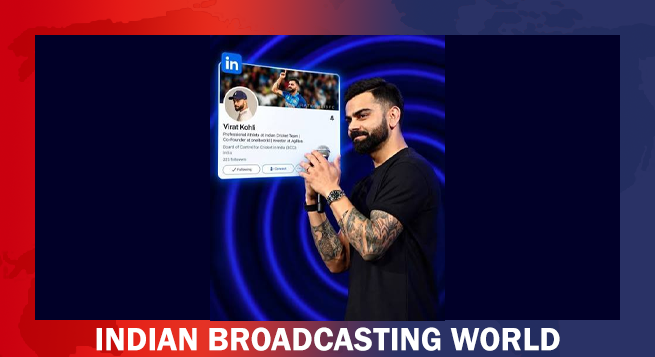 Virat Kohli joins LinkedIn to take Indian sports brands global
  Abhijeet Sawant makes comeback on ‘Indian Idol’ legends return
 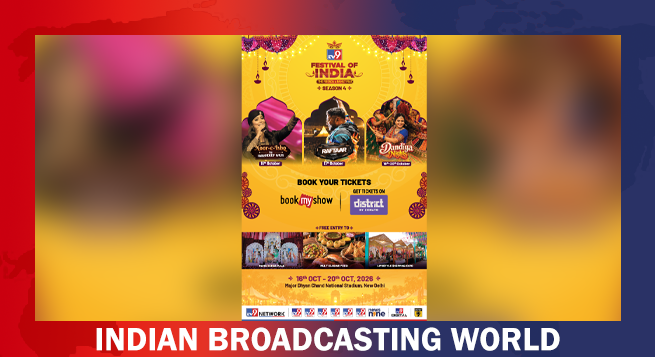 Harshdeep Kaur, Raftaar to headline TV9 Festival of India 2026 in Delhi
  Prasar Bharati may revise DD Free Dish auction rules



Broadcasters have sought changes to the draft Telecommunications (Television, Radio and Associated Services) Rules, 2026, urging the Ministry of Information and Broadcasting (MIB) to clarify provisions related to channel transmission, satellite spectrum allocation and penalties for content violations.
The submissions, made by broadcasting associations during the ministry’s consultation process, seek to protect broadcasters’ control over the conversion of high-definition (HD) channels into standard-definition (SD) feeds by cable and direct-to-home (DTH) operators. They have also called for greater clarity on whether content-related violations could affect the renewal of broadcasting permissions.
The final framework is expected to be notified this week, according to the Storyboard18 report, following the October 2 deadline for stakeholder comments.
While the government aims to consolidate several existing guidelines under a common set of rules, broadcasters have argued that the framework must account for the technical and commercial differences between broadcasting and telecom services.
Broadcasters seek control over HD-to-SD conversion
One of the key concerns relates to the conversion of HD channels into SD feeds by distribution platform operators (DPOs), including cable and DTH operators.
Under the existing framework, broadcasters can separately operationalise and uplink HD and SD versions of the same channel, even when both carry identical programming. A proposal under consideration would allow broadcasters to transmit a single HD master feed, with DPOs generating the SD version at their premises using digital technology.
However, broadcasters want such conversion to take place only with their explicit prior written authorisation. They have proposed that the process be governed by a Reference Interconnection Offer (RIO)-based agreement and carried out using equipment supplied by the broadcaster.
The submissions also seek to preserve broadcasters’ discretion over their transmission arrangements, including whether to use separate satellite uplinks, terrestrial transmission or authorised conversion at the DPO’s end. Broadcasters would inform the ministry if their transmission method changed.
The associations have flagged concerns over picture quality, commercial control and potential revenue leakage if DPOs under-report HD or SD subscribers. They have also sought an explicit provision allowing broadcasters holding permissions for both formats to generate the SD feed downstream through an authorised DPO.
Satellite television spectrum needs separate treatment
Broadcasters have also called for satellite television broadcasting spectrum to be clearly distinguished from terrestrial telecom spectrum under the proposed rules.
Terrestrial spectrum can be assigned on an exclusive basis, including through auctions. Satellite broadcasting spectrum, however, is internationally coordinated and shared on a non-exclusive basis.
According to the submissions, failing to recognise this distinction could create uncertainty around provisions concerning exclusive spectrum rights, auction-based allocation and terrestrial carriage when applied to satellite television services.
The associations want the rules to acknowledge satellite broadcasting as operating under a separate technical and regulatory framework. They have highlighted the implications for long-term investment, capacity planning and commercial arrangements.
Content violations and licence renewal provisions questioned
The proposed consequences of violations of the Programme and Advertising Code have emerged as another area of concern.
Broadcasters have questioned a provision that could affect the renewal of authorisation following five breaches for which liability has been adjudicated. They have sought clarity on how content-related findings would affect a broadcaster’s permission to operate and argued against automatically linking content violations with the renewal process.
The submissions call for a clearer separation between content regulation and telecom-style authorisation. They also seek proportionate penalties, due process and clarity on how the proposed rules would interact with existing legislation, including the Cable Television Networks (Regulation) Act.
The associations have further sought clarity on independent adjudication and appeals, including the role of the Telecom Disputes Settlement and Appellate Tribunal (TDSAT). They have also called for recognition of established industry self-regulatory mechanisms.
OTT, FAST and public service broadcasting provisions raise questions
The scope of the proposed rules for internet-delivered services is another issue raised by broadcasters. The associations want clarity on whether and how over-the-top (OTT) and free ad-supported streaming television (FAST) services would fall within the framework.
They have sought clearer definitions to distinguish services delivered through managed networks from those distributed over the open internet.
The proposed requirement for 30 minutes of public service broadcasting each day has also drawn questions over its practical implementation and its relationship with existing guidelines.
The submissions further point to ongoing litigation concerning parts of the 2022 uplinking and downlinking guidelines incorporated into the draft rules. The provisions under challenge before the Kerala High Court include the public service broadcasting requirement, penalties and the Programme and Advertising Code.
MIB revises draft after stakeholder consultation
The MIB published the first draft of the rules on June 12, seeking to consolidate several existing television and radio frameworks under the Telecommunications Act, 2023. These included guidelines governing the uplinking and downlinking of satellite television channels and provisions covering services such as DTH broadcasting.
The ministry subsequently issued a revised draft on September 3 and set October 2 as the deadline for stakeholder comments.
The final rules will determine how the government addresses the industry’s concerns over transmission practices, spectrum regulation, content-related penalties and the scope of services covered by the framework.