 Meta says expanded AI sweep of ads linked to child abuse in India
  With WBD merger closed, Skydance is a Hollywood giant
  TRAI flags mixed 2025-26 trends: DTH shrinks, telecom base expands
 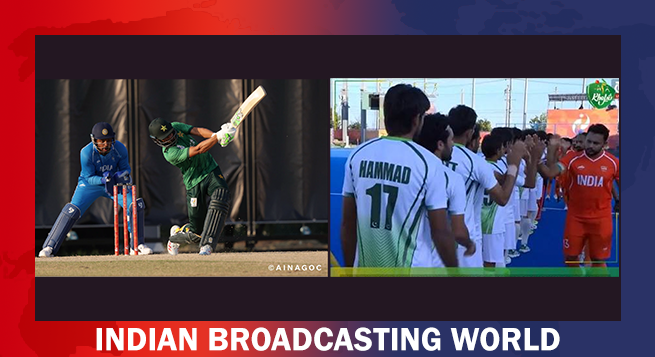 Ind, Pak cricket & hockey matches most viewed in Asian Games history
 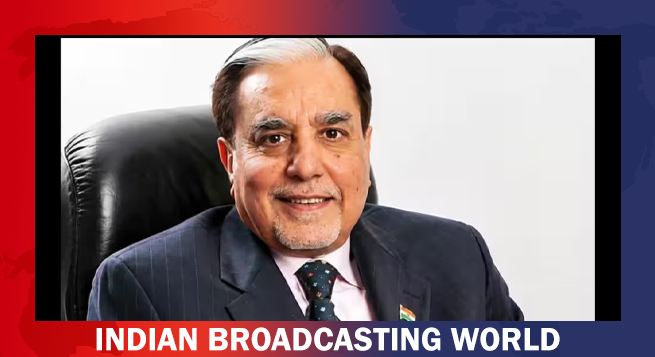 Zee completes 34 years as Subhash Chandra recalls media journey
  CNN-News18 ‘Indian of the Year 2026’ opens public voting
  India Today Conclave Mumbai to explore ‘Gateway to Growth’
  Guest Column: STB evolves from decoder to connected entertainment
  30-min sitcom ‘Abbott Elementary’ reaches rare feat of 100 episodes
  Sony AATH’s ‘Raandhuni…’ sees high-stakes elimination



India’s set top box industry is entering a new phase. For more than a decade, the STB played a central role in India’s transition from analogue to digital television, enabling addressability, improved picture quality and wider channel availability.
But the entertainment environment has changed. Smart televisions, streaming platforms, broadband connectivity and connected devices are redefining how consumers access content.
For cable operators and multi system operators, this change presents both a challenge and a significant opportunity.
The question is no longer simply whether the STB will remain relevant. It is how the STB can become a strategic connection point between the operator and every home it serves.
A Market in Transition
The opportunity remains significant, even as the nature of demand changes.
According to the IMARC Group, India’s STB market was valued at USD 2.85 billion in 2025 and is projected to reach USD 3.46 billion by 2034, growing at a CAGR of 1.8 percent.
Cable STBs accounted for 46 percent of the market in 2025, while HD STBs represented 48 percent. South India was the largest regional segment, with a 29 percent share.
These numbers indicate that the STB continues to have an important role in India’s television ecosystem.
At the same time, the relatively modest projected growth suggests that the future may depend less on deploying more boxes and more on creating greater value from the customer relationship connected through each box.
For MSOs and cable operators, this distinction is important.
The next STB cycle should not be viewed merely as a hardware replacement programme. It should be viewed as an opportunity to strengthen the operator’s relationship with every household.
From Digitalisation to Home Connectivity
India’s first STB cycle was driven largely by digitalisation. The objective was to move households from analogue to digital television.
The next cycle can be driven by connectivity and convergence.
A modern household increasingly consumes live television, OTT, on-demand content, sports, regional programming and internet-based services through the same television screen. Broadband has become an important part of this experience.
This creates a natural opportunity for cable operators. The network already reaches the neighbourhood. The operator already has a customer relationship. The STB is already present inside the home.
The strategic opportunity is therefore to connect these three assets: network + home + customer. The STB can become the gateway through which this relationship expands.
The Hybrid STB Advantage
A modern hybrid STB can potentially bring together the following:
- Live television and regional content
• OTT and video-on-demand
• Broadband connectivity
• Voice-enabled navigation
• Content discovery
• Interactive applications
• Operator services
• Connected home features
But the real opportunity for an MSO is not simply to place more applications on the STB. It is to use the STB as part of a broader connected home proposition.
A customer who currently purchases television can potentially become a broadband customer. A broadband customer can become an OTT subscriber.
The same household can eventually adopt additional digital and connected services.
The STB can therefore become an important platform for cross-selling, customer retention and service expansion.
Connecting Every Home Matters
For cable operators, one of the biggest strategic assets is the physical network already reaching homes across urban, semi-urban and regional markets.
The future opportunity is to maximise the value of that connectivity.
Every connected home represents more than one television subscription. It represents a potential long-term relationship for multiple services.
This makes the transition from traditional cable distribution to broadband and hybrid services particularly important.
An operator that connects a household with fibre or high-quality broadband infrastructure can potentially serve that home across multiple digital requirements.
The STB then becomes more than a television endpoint. It becomes one of the visible interfaces of that larger relationship.
This is why connecting each home today can create opportunities well beyond the television business of tomorrow.
Broadband & TV Can Strengthen Each Other
Television and broadband are increasingly complementary rather than competing services.
For MSOs, this creates an advantage that many standalone OTT platforms cannot easily replicate: a direct physical connection to the household combined with a local service network.
A hybrid proposition can allow operators to combine: television+ broadband + OTT + local service.
This can create opportunities for bundled subscriptions, broadband upgrades, OTT aggregation, content partnerships and connected home services. It can also improve customer retention.
When multiple services are connected to the same household relationship, the customer relationship becomes broader than a single television subscription.
The New Replacement Opportunity
India’s large installed base also creates a significant replacement opportunity.
Many STBs deployed during the digitalisation phase will eventually require replacement because of age, technical limitations or changing customer expectations.
The next cycle could progress from: SD → HD → UHD → Hybrid → IP-enabled entertainment.
However, replacement should not be viewed simply as hardware procurement. Consumers need a reason to upgrade.
A device offering better picture quality, OTT access, broadband integration, voice control and an improved user experience can create a stronger proposition.
For operators, the objective should be to convert replacement into subscriber lifecycle management.
The upgrade should create an opportunity to migrate customers towards higher-value services rather than simply replacing an old box with a new one.
The Smart TV Challenge
The industry’s central question remains straightforward: Why should a consumer retain an external STB when similar content is available through a smart television?
The answer cannot simply be another interface or another collection of applications.
The STB must provide tangible operator value through reliable live television, strong regional content, integrated broadband, content aggregation, competitive bundles and responsive local service.
A smart television may provide access to applications. An MSO can potentially provide a broader connected entertainment proposition. That distinction is important.
The operator can combine network connectivity, television services, broadband, OTT partnerships, local content and customer support into one relationship.
The LCO Becomes More Important
The evolution of the STB does not make the LCO irrelevant. It can make the local service network even more valuable.
As services become more sophisticated, LCOs can evolve beyond traditional installation and troubleshooting into local digital service partners.
They can support broadband activation, hybrid STB installation, customer education, service upgrades and connected home adoption.
The local presence of the cable ecosystem remains a competitive advantage, particularly in markets where customers value immediate service and local relationships.
From STB Deployment to Home Strategy
The future of the STB should therefore be viewed from the perspective of the home rather than the device.
The important question is no longer: how many STBs can be deployed?
It is: how many homes can be connected, and how many services can each connected home adopt?
This changes the economics of the STB.
A box that generates only television subscription revenue has limited strategic value.
A connected STB that helps an operator acquire broadband customers, aggregate OTT services, upgrade subscribers, reduce churn and introduce new digital services can have significantly greater lifetime value.
India’s first STB cycle was driven by digitalisation. The next cycle can be driven by replacement, broadband convergence and connected entertainment.
For MSOs and cable operators, the opportunity is therefore not simply to protect the STB.
It is to use the STB, the network and the local service ecosystem to build a deeper relationship with every connected home.
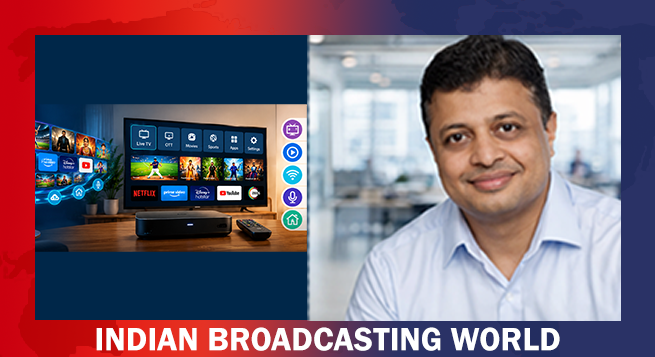
The smart-era STB may no longer be just a box connected to a television.
It can become the gateway through which the operator connects the home to television, broadband and the wider digital entertainment ecosystem.(The author is GM-Content, Legal & Regulatory Affairs at Asianet Satellite Communications. The views expressed are personal. They do not necessarily represent the official position of the author’s employer or Indianbroadcastingworld.com. The main image is AI generated.)