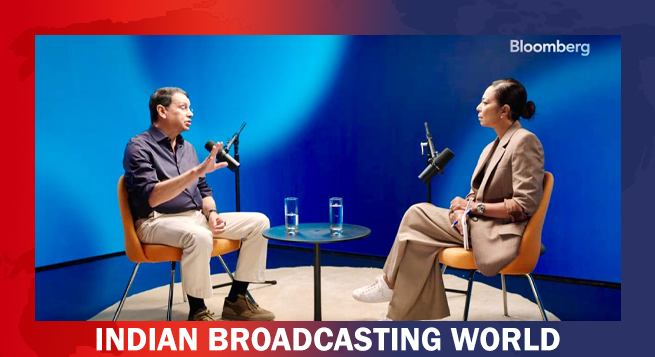
 Uday Shankar: Indian M&E sector needs policy support to compete globally
  Guest Column: STB evolves from decoder to connected entertainment
  Meta says expanded AI sweep of ads linked to child abuse in India
  With WBD merger closed, Skydance is a Hollywood giant
 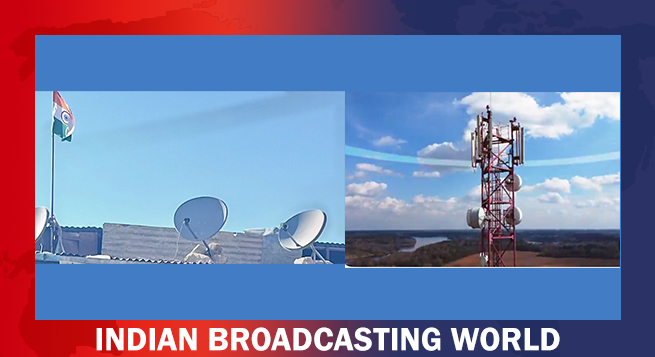 TRAI flags mixed 2025-26 trends: DTH shrinks, telecom base expands
  ‘Avatar: Seven Havens’ renewed for two more seasons
  ‘Drishyam: The Conclusion’ crosses Rs 400 crore worldwide
  Sony TV announces ‘Indian Idol Legends Return’
  Sony LIV announces brand partners for ‘Kon Honar Crorepati’
  Prime Video announces ‘Bloodaxe’ premiere date



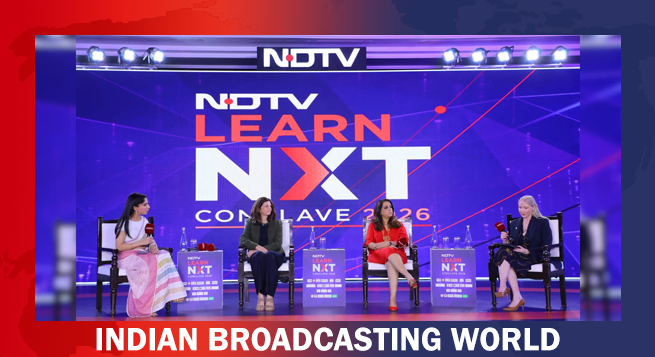
Policymakers, educators, entrepreneurs, academic leaders, and industry experts came together at the ‘NDTV LearnNXT Conclave 2026’ in New Delhi to discuss some of the most pressing issues shaping the future of education in India. From artificial intelligence and entrepreneurship to foundational learning, inclusion, and employability, the day-long event served as a platform for wide-ranging conversations on how India’s education system must evolve to meet the demands of a rapidly changing world.
The conclave brought together prominent voices from the education and policy ecosystem, including NCERT Director Prof. Dinesh Prasad Saklani, Atal Innovation Mission Mission Director Deepak Bagla, Ministry of Education official Ira Singhal, Pratham CEO Dr. Rukmini Banerji, as well as representatives from global universities, startups, and educational institutions.
A key theme that emerged throughout the discussions was the need to move beyond rote learning and focus on critical thinking, experiential learning, creativity, and adaptability. Speaking at the event, Prof. Dinesh Prasad Saklani defended the implementation of the three-language model under the National Education Policy (NEP) 2020, describing it as an important step towards reconnecting students with Indian languages, culture, and knowledge systems while simultaneously preparing them for global opportunities.
Addressing concerns around the policy, Saklani noted that the colonial legacy of education had left a strong emphasis on memorisation and examination-based learning. He argued that learning multiple languages enhances cognitive abilities and broadens cultural understanding, while acknowledging that successful implementation would require collaboration among schools, parents, and communities.
Artificial Intelligence and its growing impact on jobs and learning also dominated discussions at the conclave. Deepak Bagla, Mission Director at the Atal Innovation Mission, NITI Aayog, said entrepreneurship is increasingly becoming central to India’s growth story rather than remaining an alternative career path. Highlighting the country’s expanding startup ecosystem, he pointed out that more than two lakh startups are now registered with the government and over 1.1 crore students have participated in Atal Tinkering Labs.
Bagla described AI as a force that has democratised access to knowledge but cautioned that rapid technological changes and information overload are also contributing to rising levels of anxiety among young people. He said India’s youth are well-positioned to adapt to the AI era due to their entrepreneurial mindset and willingness to reinvent themselves.
The discussions repeatedly returned to the importance of foundational skills. Dr. Anirudh Gupta, CEO of DCM Schools, stressed that education should not be limited to examinations and syllabus completion. He argued that true education lies in developing personality, character, and life skills, while creating an ecosystem capable of producing innovators and job creators rather than simply preparing students for employment.
Similar concerns were echoed by Kunal Mehra, Regional Director MENA and India CEO at Crimson Education, who observed that many of the jobs students are preparing for today may not exist a decade from now. According to him, adaptability and foundational learning will become increasingly valuable in an uncertain future job market.
Disability inclusion emerged as another major focus area. Ira Singhal, Deputy Secretary in the Department of School Education and Literacy at the Ministry of Education, announced plans to introduce disability screening for every child within India’s school system and conduct sensitisation training for nearly one crore teachers across the country. Calling the current disability identification rate among school children unrealistic, Singhal argued that accessibility must go beyond basic infrastructure and encompass comprehensive implementation of accessibility standards.
Early childhood education also featured prominently in the discussions. Deepika Mogilishetty of EkStep Foundation highlighted the importance of investing in the first eight years of a child’s life, while Rocket Learning Co-Founder Siddhant Sachdeva described India’s vast Anganwadi network as a critical asset in strengthening foundational learning. Dr. Rukmini Banerji of Pratham emphasised the need to reinforce Balvatikas and Anganwadi systems under the framework of NEP 2020, noting that children enter formal schooling with widely varying learning experiences.
The conclave also examined the gap between academic learning and industry requirements. Speakers called for greater emphasis on practical learning, skill development, and modern infrastructure. Concerns were raised about outdated technology in several state-run institutions, particularly as AI-enabled learning tools become increasingly important in classrooms.
Global education models also formed part of the conversation. Professor Eloise Phillips from the University of Southampton highlighted how students at the university’s Delhi campus receive the same academic experience and curriculum as those studying in the UK and Malaysia, reflecting the growing internationalisation of higher education in India.
As the conclave concluded, participants broadly agreed that while policy reforms such as the National Education Policy have laid an important foundation, the success of India’s education transformation will depend on effective implementation, teacher preparedness, infrastructure development, parental participation, and the ability of institutions to equip students for an increasingly technology-driven future.