 Broadcasters flag HD-SD conversion, satellite spectrum concerns in submission to MIB on telecom rules 2026
  MIB seeks dismissal of AIDCF plea against WAVES, says OTT rules differ from TV
 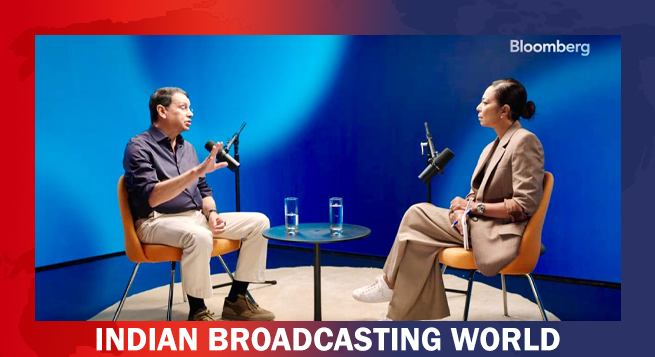 Uday Shankar: Indian M&E sector needs policy support to compete globally
  Guest Column: STB evolves from decoder to connected entertainment
  Meta says expanded AI sweep of ads linked to child abuse in India
  Sony VIZHA to launch Tamil shows, movies, cricket on Oct 19
  ‘Rise and Fall’ S2: Gautam Gulati’s outburst sparks tensions
  Jagadeesh Jayakumar joins Zee Tamil as associate director, ad sales
  Discovery special explores Max Healthcare’s role in global healthcare
  Virat Kohli joins LinkedIn to take Indian sports brands global




On April 4, 2021 the Film Certification Appellate Tribunal (FCAT) and the IP Appellate Board, along with many such organisations, died a quiet death. But India’s creative industry is certainly mourning the demise as going to the courts, under new regulations, to contest film certification board diktats on movies or intellectual property-related cases could upset business plans. Simply because the courts are already overburdened with work.
For the records, according to new data released by E&Y on Indian media and entertainment for the year 2020, the filmed entertainment segment declined 62 per cent last year with latest renewed surge in Covid cases in the country again forcing closures of cinema halls and release dates of films, thus hitting the vertical’s bottomlines further.
FCAT was a body where content creators, mostly film producers and directors, went to when they thought India’s film certification board or CBFC (popularly called the censor board) had in its wisdom directed unnecessary content cuts. And, there have been many instances when the FCAT had overturned CBFC’s directives or been more liberal.
However, under the new rules that come into force, called the Tribunals Reforms (Rationalisation and Conditions of Service) Ordinance, 2021, Indians now have to approach the commercial courts (read high courts).
“First, this means that producers will become scared to get caught in the loop of the high court, with no certainty about when their films will release. It will also discourage filmmakers to make movies on stronger themes,” The Quint quoted film-maker Anurag Kashyap who’s had several run-ins with the CBFC and emerged victorious at times, while bruised on other occasions.
While film-maker Vishal haradwaj dubbed closure of FCAT as “a sad day for cinema”, Hansal Mehta, director of the widely acclaimed web series ‘Scam 1992: The Harshad Mehta Story ‘tweeted: “Do the high courts have a lot of time to address film certification grievances? How many film producers will have the means to approach the courts? The FCAT discontinuation feels arbitrary and is definitely restrictive.”
But contrary to what content creators and rights holders are saying, the Indian government move to close some appellate boards was not a hasty one.
Indianbroadcastingworld.com had reported in February 2020 that the Indian government had proposed shuttering of Intellectual Property Appellate Board (IPAB) and similar such organisations in favour of normal courts to decide IP-related issues, which also impacts the Indian media and entertainment sector, apart from other businesses.
Reason for such closure was given as a cleaning up act to reduce regulations.
A draft Bill was introduced in Lok Sabha or Lower House of Parliament towards the end of the Budget session of parliament, amongst other things, says: “…the words `Appellate Board’, wherever they occur, the words `Commercial Court’ shall be substituted (ii) the words `constituted under section 11 whose decision thereon shall be final’ shall be omitted…in the Chapter heading, the words `AND APPELLATE BOARD’ shall be omitted…”.
Tribunals are generally set up to speed up the process of litigation in certain specialized sectors. For example, the National Green Tribunal in India oversees environment-related issues and has passed some important orders impacting projects and relevant issues like pollution.
The present ordinance, issued April 4, will have to be ratified by parliament within six months or it’d lapse.