 Satellite company SES, JioStar sign multi-year distribution deal
  MIB says no film denied screening permission at Keralam film festival
 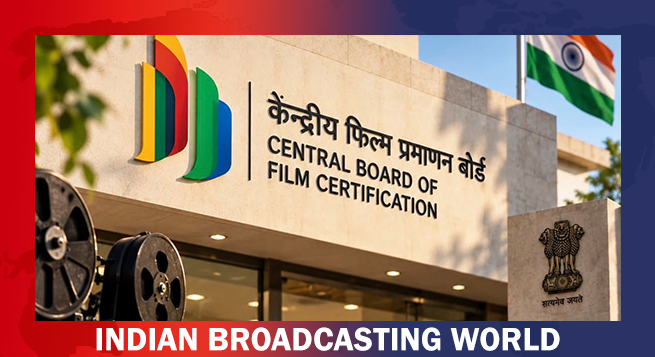 Govt. clarifies CBFC certification changes, says 1991 core framework unchanged
  JioStar lines up power-packed festive world TV premieres
  Airtel ups value for postpaid subs; adds iCloud+ service
  Shemaroo Filmi Gaane crosses 75 million YouTube subscribers
  Why Chrome DM data matters in cross-screen media economy
  Netflix sets december 17 premiere for ‘Quiztopia’



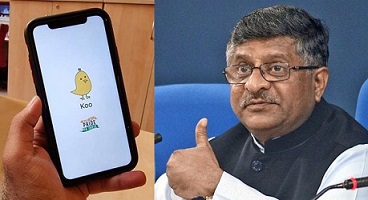
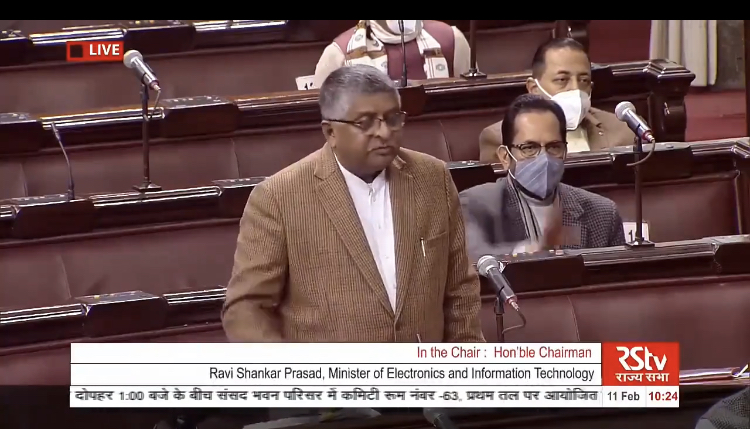
The Minister for Information Technology and Communications Ravi Shankar Prasad yesterday in parliament came down heavily on Twitter accusing it of double standards on freedom of speech.
Speaking in Rajya Sabha (Upper House), Prasad forcefully said, “Why is it that when police act in Washington’s Capitol Hill ransacking, a micro similar blogging site stands in their support, but when a similar action (by Indian police) is taken at Red Fort, the platform opposes it? Freedom of speech is there (in India), but with reasonable restrictions. Why double standards? You cannot spread hate messages such as ‘PM Modi massacre of farmers’.”
Pointing out that since his ministry, Meity, on February 10 engaged with Twitter and raised various red flags, he didn’t want to comment outside parliament on the issue, an animated Prasad sent across a message to the American micro-blogging site: “Work in India. You have crores of followers here. We respect that. Make money, but you will have to abide by Indian laws and the Constitution. “
indianbroadcastingworld.com yesterday had reported that Meity secretary Ajay Sawhney held a virtual meeting with top execs of Twitter to raise a slew of issues where the Indian government felt Twitter had over-reached itself in defying government’s legitimate requests on blocking some accounts— over 1,500— that were purportedly spreading hate messages and spreading fake news.
To another question raised by a fellow parliamentarians that why India had failed to become a hub of microprocessors manufacturing despite being an IT giant, Prasad riposted: “Koo (a micro-blogging start-up), a made in India blog, has become a big toast of success today. They are not only using Indian technology, Indian server too. Let us salute the extraordinary courage of the start-up movement …but I agree there is need to boost the processing industry.”
In an indirect message to Twitter, many of the government establishments, including general populace, in recent days have opened up accounts with Koo, a micro-blogging website that encourages Indian regional languages and could be called a smaller-in-size-and-scale Indian avatar of Twitter.
However, in a written reply to a unstarred question on the same issue of microprocessor manufacturing, Prasad’s colleague and junior minister at Meity, S. Dhotre, said, “As a result of various measures taken by the government over the last few years and efforts of the industry, electronics hardware production in the country has grown from Rs.1,90,366 crore in 2014-15 to Rs.5,33,550 crore in 2019-20, at a CAGR of 23 per cent.
While listing out various companies that have started manufacturing in India, Dhotre admitted that electronics hardware manufacturing sector in the country faces lack of level playing field vis-à-vis competing nations on account of several disabilities such as lack of adequate infrastructure, domestic supply chain and logistics; high cost of finance; inadequate availability of quality power and water and limited focus on R&D by the industry, which render domestic electronics hardware manufacturing uncompetitive.
“Further, the manufacturing facilities for semiconductors are highly capital intensive and have to deal with constantly changing technology,” he added.
On spread of fake news, Prasad said in parliament that the government respects social media as it has empowered the common people, but some basic rules would have to be followed by all players. “Whether it is Twitter, Facebook, or LinkedIn, I have a message for all of you: come, work in India, earn money but you will have to follow India’s laws,” the minister added.