 Sunil Mittal says OneWeb ahead of Musk in Indian approval queue
  Murugan resigns from Cabinet as Mos MIB & Rajya Sabha
  Broadcasters flag HD-SD conversion, satellite spectrum concerns in submission to MIB on telecom rules 2026
  MIB seeks dismissal of AIDCF plea against WAVES, says OTT rules differ from TV
 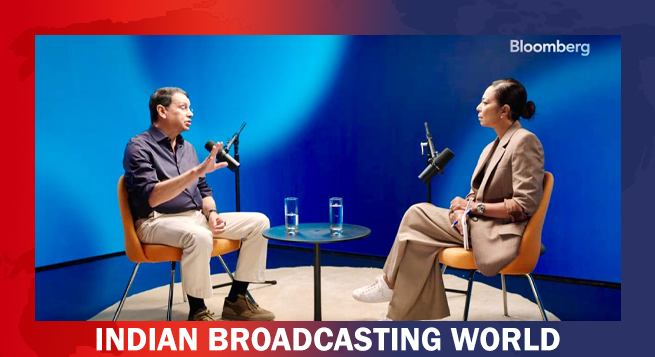 Uday Shankar: Indian M&E sector needs policy support to compete globally
  India’s M&E sector needs 15% growth to reach $100bn by ‘30: CII paper
 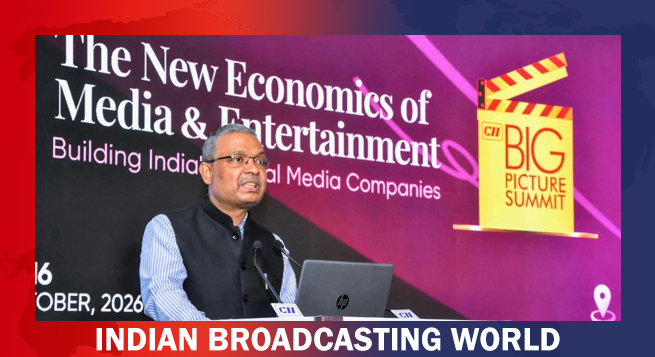 India’s media sector must create global brands, says MIB secy at CII Summit
  ‘The Love Hypothesis’, ‘Carrie’ lead Prime Video’s weekly global rankings
 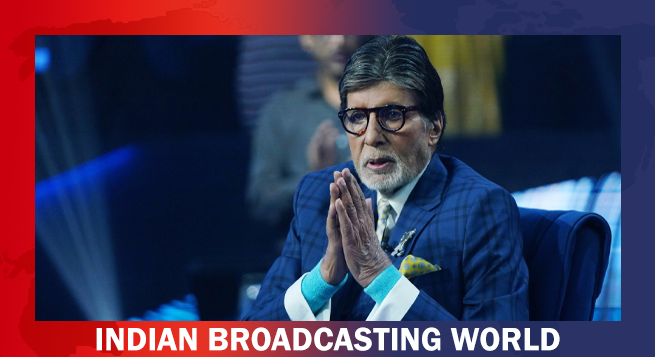 Amitabh Bachchan recalls Allahabad’s famous milk jalebis on ‘KBC 18’
  Prime Video announces weekly line-up of Indian, global shows & series



India’s entertainment and media industry is entering a new phase in which turning audience engagement into sustainable revenue will matter as much as building scale, as AI, regional content, digital advertising and expanding connectivity reshape the sector.
India’s media and entertainment (M&E) market is projected to grow from $25.7 billion in 2025 to $36.7 billion by 2030, expanding at a 7.4 percent CAGR — nearly twice the global growth rate of 4 percent, PwC India said in a report released on August 27.
The India findings of PwC’s Global Entertainment & Media Outlook 2026-2030 describe a shift from a scale-driven market to a value-driven one. While audience acquisition powered the first phase of digital growth, the next phase is expected to focus on monetising engagement, improving revenue generation and building sustainable user economics.
Digital ecosystems, regional content and technology-led revenue streams are expected to drive this transition.
Regional-language content is emerging as a major growth engine, enabling media companies to reach new audiences and unlock monetisation opportunities across India’s diverse linguistic markets, the report said, according to a press statement put out by PwC India yesterday.
Internet Advertising Leads Growth: Internet advertising is expected to remain the industry’s primary growth engine.
Revenue from the segment is projected to nearly double from USD 7.5 billion in 2025 to USD 14.3 billion by 2030, registering a 13.9 percent CAGR, with search and video advertising supporting the expansion.
OTT video is also moving beyond subscriber acquisition towards stronger monetisation.
India’s OTT market is projected to expand from USD 2.2 billion in 2025 to USD 3.6 billion in 2030, a 10.2 percent CAGR.
Advertising-supported offerings are emerging as an important revenue lever alongside subscriptions, while platforms are increasingly focusing on engagement, retention, revenue per user, premium content and regional programming.
Gaming and e-sports are projected to see similarly strong growth, with revenue rising from USD 1.5 billion in 2025 to USD 2.6 billion by 2030, an 11.3 percent CAGR.
PwC expects in-game advertising, sponsorship-led e-sports and recurring revenue models to play a greater role as the market matures.
AI Reshapes M&E value chain: AI is increasingly being deployed across content creation, production, discovery, advertising and audience engagement.
PwC identified applications including pre-visualisation, de-ageing, multilingual voice modelling, virtual production, generative engine optimisation, personalisation and recommendation systems.
The technology is creating opportunities to improve both operational efficiency and monetisation, the report said.
“India has already demonstrated its ability to build audience scale. The next phase is about converting that engagement into sustainable value,” Rajesh Sethi, Partner and Leader – Media, Entertainment, and Sports, PwC India, said.
He added that AI is beginning to improve how content is created, discovered and personalised, while regional storytelling and premium experiences are creating new avenues for engagement and monetisation.
Companies combining innovation with relevance, operational discipline and trust would be best placed to lead the next phase of growth, he said.
Connectivity Expands Digital Opportunity: Data connectivity revenue is projected to rise from USD 36.5 billion in 2025 to USD 58.6 billion by 2030, representing a 9.9 percent CAGR.
Expanding mobile, broadband, fibre and 5G infrastructure is supporting richer content experiences, new advertising models and larger addressable audiences.
The report also points to growing opportunities in premium live and out-of-home experiences. Consumers are showing greater willingness to pay for immersive, exclusive and differentiated experiences across music, sports and cinema.
Premium ticketing, hospitality-led offerings and higher-value cinema formats are shifting value creation towards higher spending per consumer.
Traditional Media Resilient: The growth story is not confined to digital media. Traditional television revenue is projected to increase modestly from USD 7.2 billion in 2025 to USD 7.5 billion by 2030, while newspaper revenue is expected to rise from USD 3 billion to USD 3.5 billion.
PwC attributed the resilience of television and print in India to the strength of regional audiences, advertiser demand, trusted brands and deeper integration between traditional and digital channels.
Overall, PwC said India’s M&E market is entering a phase where value creation will depend less on reach alone and more on the ability to monetise engagement sustainably.
As infrastructure, connectivity, platforms, advertising and AI converge, building trust with consumers, advertisers and creators will be critical to translating technology-led innovation into long-term value. (The image is AI generated)