 Netflix, hoichoi in pact to take Bengali stories to wider audiences
  JioHotstar to offer ‘Ramayana’ on pay-per-view after theatrical run
  MIB issues advisory for TV channels on news reporting, AI use
  Netflix to expand ads plan to 15 new countries in 2027
 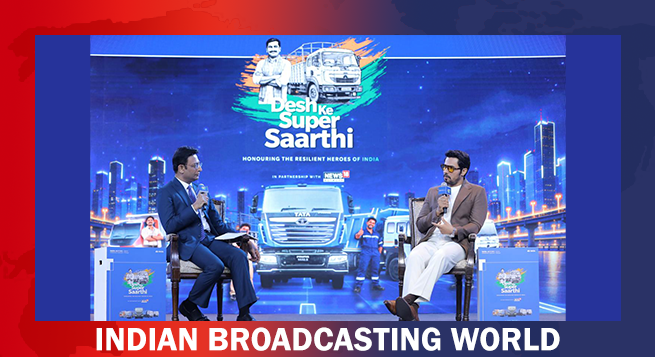 News18, TaMo to mark Oct 23 as ‘National Saarthi Diwas’
  Airtel launches voice-only prepaid plans starting at Rs 185
  ‘Crazy Rich Asians’ series to begin filming in 2027, says Constance Wu
 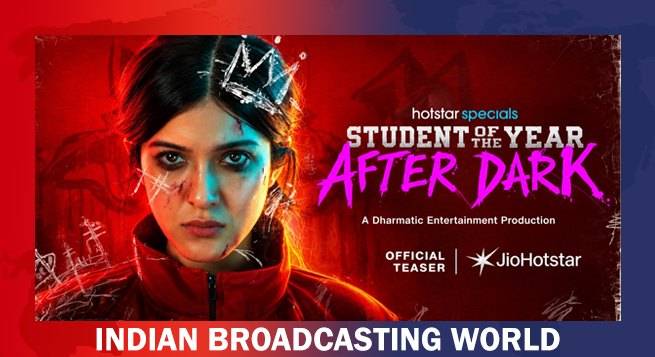 Shanaya Kapoor’s ‘Student of the Year: After Dark’ set for Nov 13
  ‘The Odyssey’ to arrive on Prime Video on Nov 17
  Meta adds new AI tools for forum admins
  Prabhas’ ‘Fauzi’ teaser released on 47th birthday



Prasar Bharati has released detailed technical specifications for Electronic Programme Guide (EPG) services on DD Free Dish, in a move aimed at improving content discovery and enabling seamless compatibility with modern television hardware.
The development, outlined in an official technical document, marks a step towards standardising how programme information is delivered and accessed across devices. The framework introduces a uniform data structure for programme listings, ensuring a consistent and intuitive viewing experience for users across different television sets and set-top boxes.
A key highlight of the new specifications is the introduction of a mandatory 7-day scheduling window for all channels on the platform. This ensures that viewers have access to a full week’s programming information at any given time, making navigation and content planning more efficient. The framework also incorporates genre-based discovery protocols, using standardised metadata and Logical Channel Numbering (LCN) to organise channels into structured, easy-to-navigate categories.
To strengthen technical reliability, the specifications lay down clear signalling standards for Program Specific Information (PSI) and Service Information (SI), including the use of protocols such as Program Association Table (PAT), Bouquet Association Table (BAT), and Network Information Table (NIT). These systems are designed to ensure accurate metadata delivery and stable network linkage for end users.
One of the most significant aspects of the update is its focus on compatibility with television sets equipped with in-built satellite tuners. By adhering to these guidelines, original equipment manufacturers (OEMs) can develop TV sets capable of receiving DD Free Dish signals directly, potentially eliminating the need for external set-top boxes and simplifying the user experience.
Prasar Bharati has also confirmed that the platform will continue to operate using GSAT-15 satellite transponders, while maintaining MPEG-4 compression and DVB-S2 transmission standards.
The release effectively serves as a blueprint for manufacturers and developers, signalling a broader push to modernise India’s largest free-to-air DTH platform and align it with evolving consumer expectations and hardware capabilities.