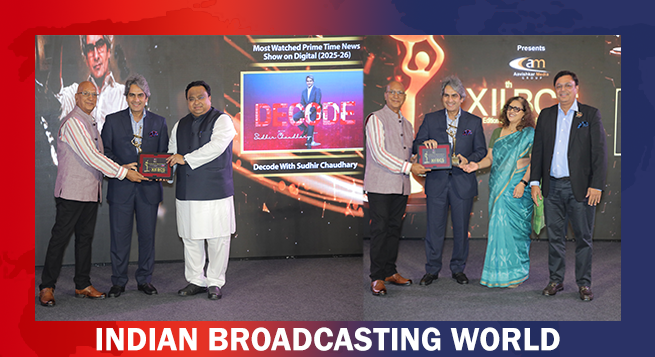
 Sudhir Chaudhary wins two big Honours at XIIᵗʰ BCS Ratna Award 2026
 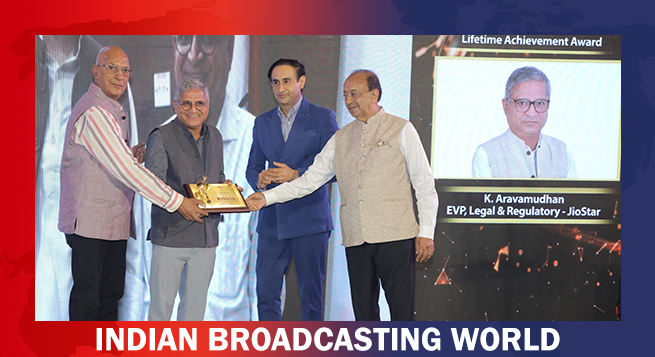 12th BCS Ratna Award: JioStar’s Aravamudhan is Lifetime Achievement honouree
  XIIth BCS Ratna Award : JioStar CEO Entertainment Kevin Vaz honoured
 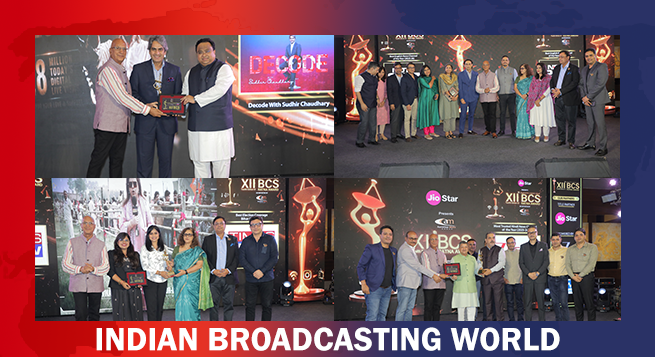 XIIth BCS Ratna Award 2026: Media achievers honoured
 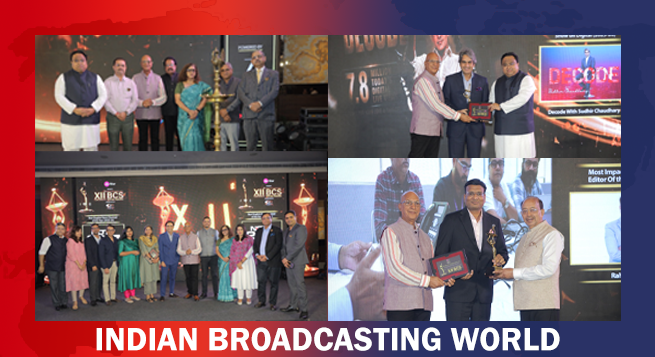 12th BCS Ratna Award a roaring success; honours excellence in M&E
 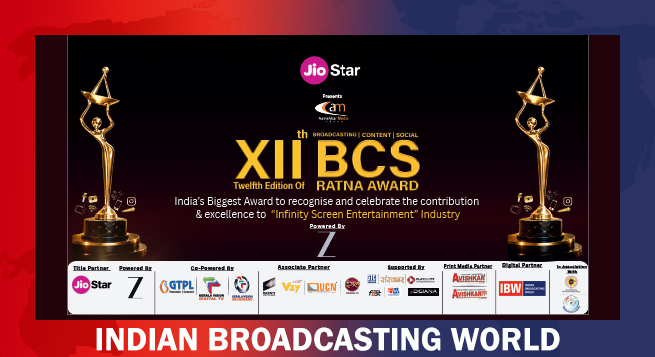 Twelfth BCS Ratna Award boasts stellar lineup; to be held on Aug 5
  Javier Bardem joins HBO’s ‘The Spread’
  ‘Family Full House’ to premiere today with Rohit Sharma
  JioStar’s ‘India Ke Top 1%’ gets seven sponsors
  ‘Golmaal 5’ release date announced
 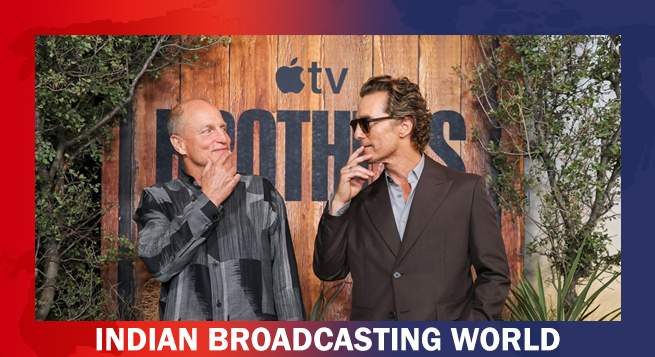 Apple TV hosts premiere of ‘Brothers’ in LA



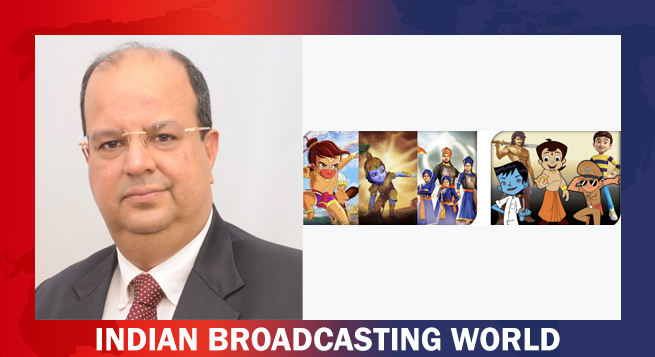
The Union Budget 2026, presented by Finance Minister Nirmala Sitharaman yesterday, marks a decisive policy intervention aimed at strengthening India’s orange economy, with particular emphasis on local production, talent development and digital infrastructure for the media and entertainment sector.
The enhanced allocation for the Ministry of Information and Broadcasting (MIB) — increased to Rs. 4,551.94 crore from Rs. 4,010.32 crore in FY 2025–26 — signals the government’s intent to move beyond ad-hoc incentives and adopt a structured, long-term approach to creative industries.Budget 2026 positions creativity as an economic multiplier rather than a soft-power by-product.
Strategic Growth Sector In AVGC: A central pillar of the Budget is the renewed focus on Animation, Visual Effects, Gaming and Comics (AVGC). Recognizing the sector’s export potential, employment intensity, and alignment with digital India objectives, the government has articulated a policy roadmap centered on capacity building at scale.
The proposal to establish AVGC content-creator laboratories in 15,000 secondary schools and 500 colleges under the Indian Institute of Creative Technologies is among the most significant announcements. This initiative aims to institutionalize creative and technical skill development at an early stage, addressing a long-standing industry concern around talent shortages and uneven skill quality.
India’s creative strength lies not only in its studios but in its classrooms. Budget 2026 recognises this by embedding AVGC skills into the education ecosystem.
This move also reflects continuity with discussions initiated during WAVES (World Audio Visual Entertainment Summit) 2025, translating industry consultations into actionable policy outcomes.
Boosting Local Production Ecosystems: In a notable shift, the government has withdrawn the customs duty exemption on the import of television and film production equipment by foreign film and television units. While this marks a departure from earlier incentives aimed at attracting foreign shoots, the policy intent is clear: strengthening domestic production capacity.
By encouraging foreign producers to source equipment locally, the measure is expected to:
# Improve asset utilisation among Indian production houses.
# Generate employment across technical and logistics roles.
# Encourage domestic investment in high-end production gear.
Pull-out highlight: The policy focus is moving from attracting projects to building sustainable production infrastructure.
From an industry perspective, this shift underscores the government’s confidence in the maturity of India’s production ecosystem, while nudging it towards greater self-reliance.
Cloud Infrastructure and OTT Enablement: The budget also advances India’s digital content ambitions by encouraging foreign investments in data centres and cloud infrastructure.
This move directly benefits OTT platforms, broadcasters and content distributors — all of whom are increasingly dependent on cloud-based workflows for content storage, distribution, and analytics.
Greater competition in cloud services is expected to:
# Lower operational costs for content platforms.
# Improve service resilience and scalability.
# Support emerging technologies such as remote production and AI-driven workflows.
Affordable and localised cloud infrastructure is now as critical to content creation as cameras and studios.
A Long-Term Policy Vision: Taken together, the measures announced in Union Budget 2026 reflect a coherent policy framework aimed at:
# Developing talent pipelines.
# Strengthening domestic production capabilities.
# Enabling digital infrastructure for next-generation content.
Rather than relying solely on fiscal incentives, the Budget adopts a systems-driven approach, positioning India to emerge as a global hub for animation, gaming, visual effects, and digital content production.
Budget 2026 treats the AVGC sector not as a niche industry, but as a core pillar of India’s digital and creative economy.
For industry stakeholders, the message is clear: the government is laying the foundations for scale, sustainability and global competitiveness, while placing the onus on industry to match policy ambition with execution.
(The author is an M&E industry veteran. The views expressed here are personal.Indianbroadcastingworld.com need not necessarily subscribe to them.)