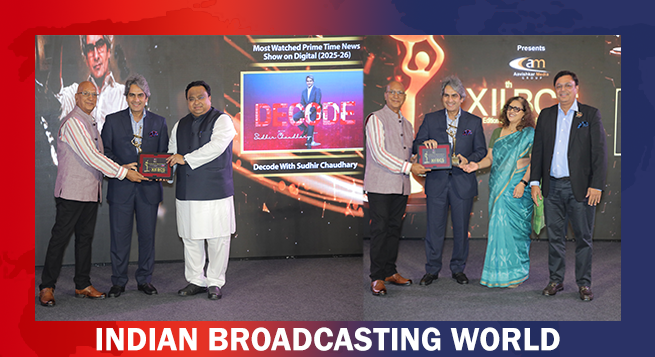
 Sudhir Chaudhary wins two big Honours at XIIᵗʰ BCS Ratna Award 2026
 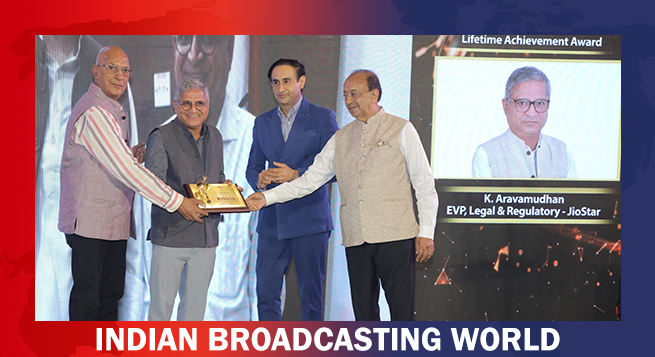 12th BCS Ratna Award: JioStar’s Aravamudhan is Lifetime Achievement honouree
  XIIth BCS Ratna Award : JioStar CEO Entertainment Kevin Vaz honoured
 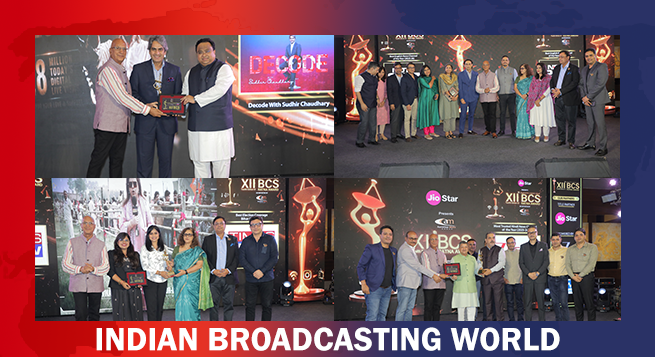 XIIth BCS Ratna Award 2026: Media achievers honoured
 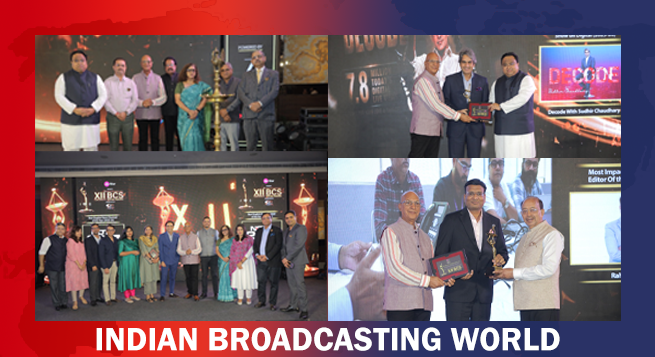 12th BCS Ratna Award a roaring success; honours excellence in M&E
 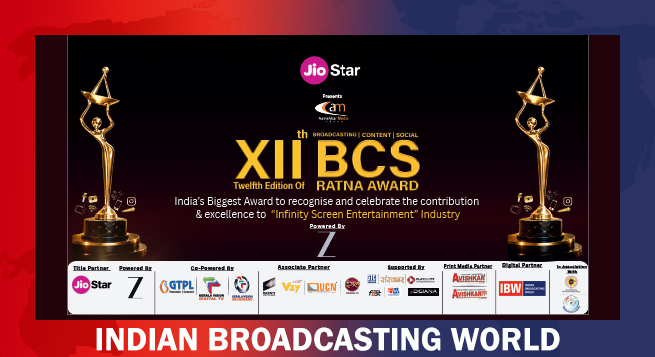 Twelfth BCS Ratna Award boasts stellar lineup; to be held on Aug 5
  ‘Ramayana’ first song ‘Jai Jai Ram’ out
  ‘Mirzapur: The Movie’ crosses Rs 220 crore at box office
  Netflix to stream Lee Chang-dong’s films
  ‘Hanuman Ansh’ hits Rs 250 crore mark at box office
  Dish TV plans business turnaround with VZY, Watcho



Telecom regulator TRAI yesterday rejected the Department of Telecom (DoT)’s view, suggesting a 5 per cent annual spectrum fee to be charged from satcom (satellite communications) players instead of 4 per cent, and let go of a Rs 500 fee per connection in urban areas.
According to a PTI report from New Delhi yesterday, the Department of Telecom sought some changes in the recommendation of the Telecom Regulatory Authority of India (TRAI) on satellite communications spectrum allocation methodology and charges for companies such as Elon Musk-led Starlink, Bharti Group-backed Eutelsat OneWeb, and Jio SES that are in fray to start their services in the country.
The DoT had asked Trai to reconsider its recommendation to levy a 4 per cent annual spectrum charge, and instead consider the idea of levying a 5 per cent annual spectrum charge with a provision of 1 percent discount if 5 percent customers of the company enrolled in a year are from tough terrains in border and remote hilly area, and let go Rs 500 per customer charge if they meet the target.
“…the Authority reiterates its recommendations…However, the Government may adopt any additional schemes to take advantage of FSS (fixed satellite services) for faster and economical expansion of broadband services in identified hard-to-connect areas, including but not limited to hills, border areas and islands, particularly addressing affordability of user terminals,” TRAI said.
TRAI has said that if DoT’s views are adopted to encourage satellite connections in border and tough terrains, then a lot of people in rural areas will be left behind in accessing satellite connectivity.
“The Authority does not concur with the DoT’s proposal to charge the spectrum at the rate of 5 percent of AGR with conditional discounts for providing connectivity to hard-to-connect areas such as border/ hills/ islands,” TRAI said.
The regulator said, given the relatively higher purchasing power of subscribers in urban areas compared to rural areas and hence the high demand and consumption of data in these regions, it is possible that non-geostationary orbit (NGSO)-based FSS providers may focus more on urban areas and potentially undermine the goal of bridging the digital divide in rural and remote areas.
“To address this, imposing a per subscriber charge of Rs 500 per annum in urban areas, while exempting rural and remote areas, may provide an incentive for operators to expand their services into rural and remote areas, and if required, this per subscriber charge may be reviewed in future,” TRAI said.