 Indian publishers, including those owned by Ambani & Adani, challenge privacy laws
 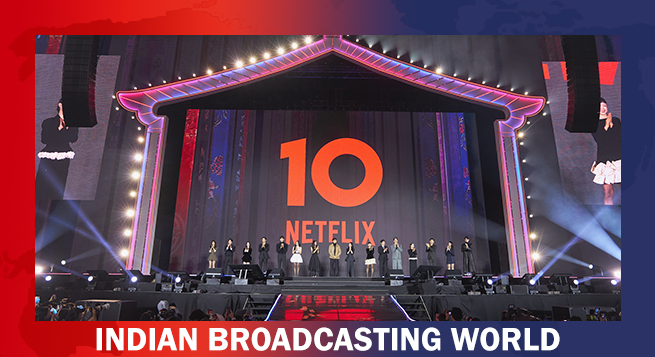 Netflix’s marks Korean decade as K-content rules non-English viewing
  GTPL Hathway now tracking TV viewership via RPD, targets 50k homes
  Netflix, hoichoi in pact to take Bengali stories to wider audiences
  JioHotstar to offer ‘Ramayana’ on pay-per-view after theatrical run
  Indian news group tells SC govt. privacy laws could lead to biz closures
 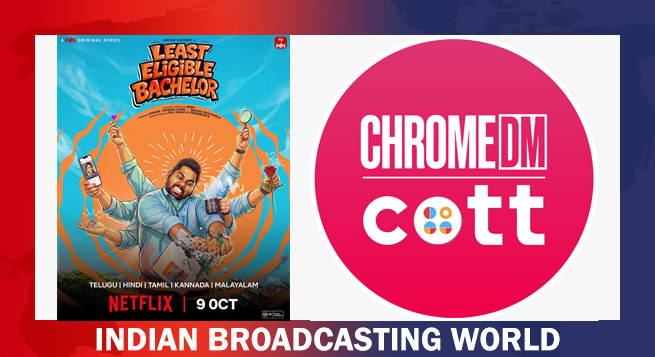 ‘Least Eligible Bachelor’ nets 8.10mn Netflix viewers: Chrome DM data
  Comic Con India to debut in Indore in Dec
  JioHotstar releases ‘Student of the Year: After Dark’ trailer
  Disney+ renews ‘Coven Academy’ for S2



Industry body IAMAI yesterday alleged that the regulator TRAI is attempting to regulate over-the-top platforms, such as WhatsApp, Signal, and Telegram, which do not fall within the scope of telecommunications services, through proposed amendments in pesky call and messaging rules.
In a move to curb spam calls, the Telecom Regulatory Authority of India (TRAI) has proposed changes based on the feedback from stakeholders during various interactions, as well as in light of recent developments like the implementation of AI-based detection of unsolicited commercial communications (UCC) by major access providers, a PTI report from New Delhi stated yesterday.
Trai’s draft Telecom Commercial Communications Customer Preference (Third Amendment) Regulations, 2026 includes rules for “call management applications, including phone diallers and third-party apps”, which industry players believe will cover the over-the-top (OTT) players.
“The IAMAI has argued that the TCCCPR Amendments attempt to regulate the functionality of OTT platforms, even though these do not fall within the scope of telecommunication services, thereby raising concerns of jurisdictional overreach,” the industry body said.
IAMAI (Internet and Mobile Association of India) said provisions under the TCCCPR Amendments, empowering Trai to strip non-compliant intermediaries of their safe harbour protection stemming from Section 79 of the Information Technology Act 2000, also constitute gross jurisdictional overreach.
“The IAMAI flagged that the proposed mandate for OTT platforms to share data with access providers amounts to unconstitutional expropriation of valuable proprietary data.
“As the collection of such data is a direct result of significant intellectual and financial investment of companies, requiring companies to part with such data runs contrary to their fundamental right to carry on a profession, trade or business under the Indian Constitution,” a statement said.
TRAI’s draft regulation proposes changes based on the feedback from stakeholders during various interactions, as well as in light of recent developments like the implementation of AI-based detection of unsolicited commercial communications (UCC) by major access providers.
Telecom operators have been claiming to have developed an effective AI-based technology to detect spam calls and messages based on caller behaviour, and they warn customers to be wary of those calls before attending to them.
TRAI has proposed that the telecom operator, on whose network the suspected spam communication lands, should, within two hours, share the details of the caller with the originating access provider (OAP) — the telecom firm from whose network the suspected call has originated — using blockchain technology that has been implemented for mapping spam.
The OAP will issue a notice to the suspected pesky callers through SMS, email, or both about the number being flagged as spam.
The OAP will need to restart KYC of the flagged caller within one day of getting the receipt from Terminating Access Provider (TAP) on whose network the communication was made, and identify all telecom connections allotted to them.