 Vir Das to perform in New York on Jan 30, 2027
 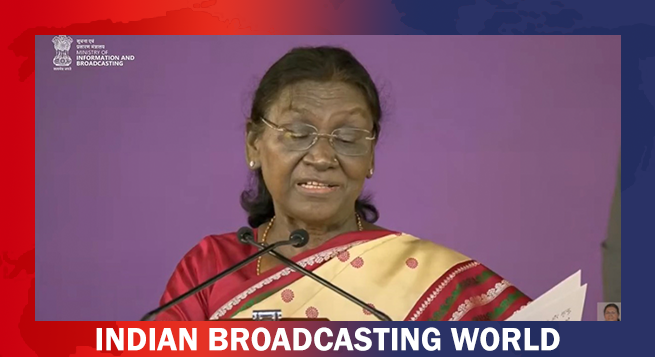 President Murmu exhorts celebs to not endorse ‘harmful products’
  Satellite company SES, JioStar sign multi-year distribution deal
  Govt. clarifies CBFC certification changes, says 1991 core framework unchanged
  Amish Devgan leaves News18 after 10 Years
  On ‘India’s Best Dancer 5’, Jackie fondly recalls Dev Anand
  FICCI FRAMES ’26 to discuss future of India’s media economy
  Ranbir Kapoor’s first look from ‘Love and War’ revealed
  Jack&Jones ropes in Vedang Raina for new denim campaign




Video content investment across India, Indonesia, Korea, Malaysia, the Philippines, Thailand and Vietnam is forecast to reach about $15.1 billion in 2026, with capital increasingly shifting towards streaming and local film even as traditional television budgets come under pressure, according to Media Partners Asia’s ‘Asia Video Content Dynamics 2026’ report.
The report said India’s video market is at the forefront of this shift, with online video accounting for 46 percent of content investment in 2025, ahead of television at 42 percent.
MPA estimated total video content investment across the seven markets at $14.8 billion in 2025, rising to $15.4 billion by 2031.
Television accounts for about 60 percent of current spending, online video 30 percent and film 10 percent, but virtually all incremental growth is coming from streaming and film.
Korea and India together accounted for roughly 80 percent of 2025 investment, at $6.9 billion and $5 billion respectively.
In India, users streamed an estimated 420 billion hours of online video in 2025, while JioHotstar led the premium VOD segment with a 58 percent viewing share and more than 180 million paying subscribers, MPA said.
Sports is emerging as a key differentiator for streaming platforms, with JioHotstar’s cricket-led model lifting connected-TV reach to 26 percent during IPL 2026.
The report identified local film as the region’s clearest growth opportunity. India’s box office reached a record $1.41 billion, while Vietnam’s box office rose 20 percent to $213 million in 2025, with local titles accounting for 69 percent of revenue.
Indonesia’s box office increased 10.5 percent to $325 million, with local films taking a 60 percent share, while a stronger local slate is contributing to a theatrical recovery in Korea in 2026.
At the same time, MPA said television requires deeper rationalisation as viewing remains substantial but monetisation weakens.
Thailand’s TV advertising revenue fell 18 percent to $422 million in 2025, with the report noting that several television industries continue to carry more legacy capacity than their advertising economics can support.
Production economics are also shifting from volume towards sustainability, with more selective television and streaming commissioning putting pressure on production-fee models.
Value is increasingly getting concentrated among integrated studios and producers with recurring demand, IP ownership or diversified revenue, while Korea combines Asia’s highest production costs with compressed 5-10 percent drama production margins.
MPA said India and Korea are moving most towards consolidation, with India having led through a definitive transaction and scope for further M&A, while Korea is looking to unlock value through the proposed TVING-Wavve combination.
MPA Vice President Stephen Laslocky said management quality, cost rationalisation, collaboration and protection of differentiated content would increasingly determine which companies convert strong audiences into sustainable returns.