 Uday Shankar: Indian M&E sector needs policy support to compete globally
  Guest Column: STB evolves from decoder to connected entertainment
  Meta says expanded AI sweep of ads linked to child abuse in India
  With WBD merger closed, Skydance is a Hollywood giant
  TRAI flags mixed 2025-26 trends: DTH shrinks, telecom base expands
  ‘Avatar: Seven Havens’ renewed for two more seasons
  ‘Drishyam: The Conclusion’ crosses Rs 400 crore worldwide
  Sony TV announces ‘Indian Idol Legends Return’
 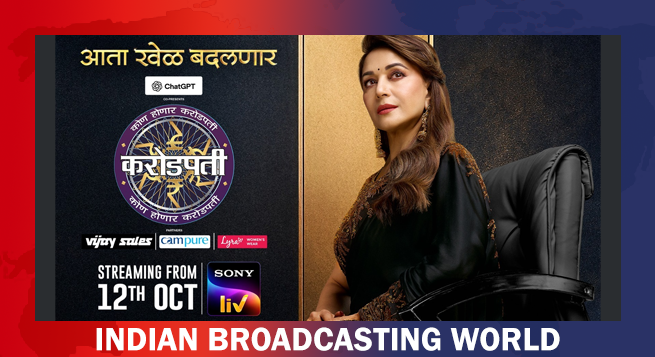 Sony LIV announces brand partners for ‘Kon Honar Crorepati’
  Prime Video announces ‘Bloodaxe’ premiere date



India’s television industry is at an important point of transition. For years, the 10+2 advertising framework has sought to balance broadcasters’ commercial interests with consumers’ viewing experience. With the Ministry of Information and Broadcasting examining the future of advertising restrictions on television, the industry is once again debating whether the existing framework remains relevant in today’s media environment.
The discussion, however, should extend beyond the question of whether broadcasters should be permitted to carry more advertising.
The more important question is whether any additional commercial flexibility can strengthen the overall television ecosystem and deliver greater value to consumers.
From the perspective of distribution platform operators (DPOs), including multi-system operators (MSOs) and DTH players, this distinction is particularly significant.
DPOs are no longer competing only with other television platforms. They are increasingly competing with a vast and growing universe of free content available through YouTube, social media platforms, creator-led programming and Free Ad-Supported Streaming Television (FAST) services.
As consumer attention becomes the most valuable currency in the media business, the future of television will depend on its ability to remain relevant, affordable and differentiated.
The New Competitive Reality: For decades, television competed primarily within its own ecosystem. Today, the competitive landscape has fundamentally changed.
Broadcasters are competing not only against other television channels and OTT platforms but against every form of digital entertainment that captures consumer attention.
YouTube, Instagram, Facebook, short-form video platforms and independent creators collectively offer consumers virtually unlimited amounts of free content supported by advertising.
This shift has altered consumer expectations.
Consumers increasingly expect access to high-quality content at little or no direct cost. At the same time, producing professional television content continues to require substantial investment.
Sports rights, original entertainment programming, regional channels, news operations and premium productions all demand significant financial resources.
Broadcasters therefore require sustainable revenue models to continue investing in quality content. The industry must recognise this economic reality.
However, if broadcasters are granted greater advertising flexibility, the resulting benefits should extend beyond broadcaster revenues alone. The opportunity should be used to strengthen content economics across the entire television value chain.
Why DPOs Have a Stake in the Debate: The impact of any change in advertising regulation extends beyond broadcasters.
DPOs today face an increasingly difficult challenge. Consumers can spend hours every day watching digital platforms without paying a traditional television subscription fee.
The availability of free content has intensified competition for audience attention and household entertainment spending.
In this environment, simply offering more channels is no longer sufficient to justify a paid television connection.
The television industry must increasingly compete on value.
For DPOs, value comes from a combination of professionally curated content, trusted news, premium sports, regional programming, reliability of service and bundled offerings that may include broadband, local content and digital services.
If advertising restrictions are relaxed, broadcasters should be encouraged to use part of the resulting commercial benefit to expand content availability, strengthen regional offerings and create more affordable content options for consumers.
This would help DPOs enhance their overall value proposition while giving consumers access to a broader range of professionally produced programming.
Greater Advertising Freedom & Better Consumer Value: The debate should not be framed as a choice between more advertising and less advertising.
Instead, the focus should be on how advertising revenues can support a healthier content ecosystem.
Additional advertising revenues can help finance higher-quality productions, stronger regional programming, better sports coverage, enhanced news operations and investment in new technologies.
These are outcomes that ultimately benefit consumers.
There is also an opportunity to expand advertising-supported content models that increase accessibility and affordability.
A stronger advertising market can support additional free-to-consumer programming, affordable television packages and innovative content offerings that can be distributed through existing DPO networks.
The potential ecosystem benefit is clear.
Does Greater Commercial Flexibility Means Stronger TV Ecosystem: When viewed through this lens, the discussion becomes less about advertising minutes and more about how the industry can remain competitive in an era of abundant free content.
While advertising-supported content will continue to grow, pay TV must maintain a clear and compelling value proposition.
Consumers understand that free services are largely funded through advertising. The relationship between advertising and free content is well established.
Paid television, however, represents a different proposition.
Consumers who pay for television services expect a viewing experience that reflects the value of their subscription. As the industry evolves, a more differentiated model may emerge:
- Free or free-to-consumer content primarily supported by advertising.
- Affordable subscription television supported by a combination of subscription and advertising revenues.
- Premium television services offering enhanced viewing experiences with reduced advertising or minimal interruptions.
Such differentiation would help consumers better understand the value they receive at different price points while allowing broadcasters and DPOs to serve multiple audience segments effectively.
The objective should not be to eliminate advertising. The objective should be to ensure that consumers receive appropriate value for the services they choose.
Market Discipline Remains Essential: Any relaxation of advertising restrictions must also recognise consumer expectations.
More advertising flexibility should not automatically translate into excessive commercial interruptions. In a highly competitive media environment, viewers have alternatives available at the touch of a button.
The effectiveness of advertising ultimately depends on audience engagement. If advertising loads become excessive, consumers may simply migrate to other platforms.
This creates a natural form of market discipline.
Even in a more flexible regulatory environment, broadcasters will continue to balance commercial objectives against viewer satisfaction.
Long-term audience retention will remain far more valuable than short-term gains from additional advertising inventory.
The industry’s focus should therefore remain on improving content quality and expanding consumer choice rather than merely increasing advertising volume.
Shared Opportunity for TV Industry: The future competitiveness of television will depend on the collective strength of broadcasters, DPOs and content creators.
If broadcasters can monetise content more effectively through advertising, there is an opportunity to expand content offerings, strengthen regional programming and support affordable television services.
DPOs, in turn, can use this enhanced content ecosystem to improve customer retention and strengthen bundled service offerings.
Most importantly, consumers can benefit from greater choice, better content and improved affordability.
The discussion around the 10+2 framework should therefore not be viewed solely as a regulatory debate about advertising limits. It should be viewed as part of a broader conversation about how television can remain relevant and competitive in an increasingly fragmented media landscape.
The rise of digital platforms has fundamentally changed the economics of content consumption. Consumers today have access to an unprecedented volume of free, advertising-supported content across multiple platforms.
Television must adapt to this reality while preserving the qualities that have made it one of India’s most trusted and widely consumed media platforms.
Whether the 10+2 framework is retained, modified or eventually replaced, the guiding principle should remain clear: any increase in commercial flexibility should ultimately create greater value for consumers.
For broadcasters, that means stronger and more sustainable content economics.
For DPOs, it means a more competitive content proposition capable of retaining audiences in the face of growing competition from free digital platforms.
For consumers, it means more choice, better content and greater affordability.
That is the principle that should guide the television industry’s future ensuring that greater commercial flexibility translates into greater consumer value across the entire broadcasting ecosystem.
(The author is GM-Content, Legal & Regulatory Affairs at Asianet Satellite Communications. The views expressed are personal. They do not necessarily represent the official position of the author’s employer or Indianbroadcastingworld.com.)