 Sunil Mittal says OneWeb ahead of Musk in Indian approval queue
  Murugan resigns from Cabinet as Mos MIB & Rajya Sabha
  Broadcasters flag HD-SD conversion, satellite spectrum concerns in submission to MIB on telecom rules 2026
  MIB seeks dismissal of AIDCF plea against WAVES, says OTT rules differ from TV
 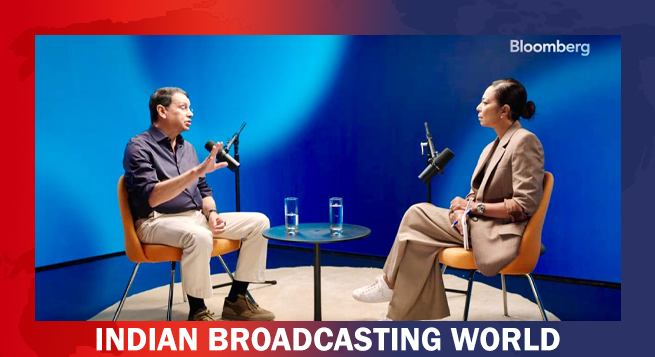 Uday Shankar: Indian M&E sector needs policy support to compete globally
  India’s M&E sector needs 15% growth to reach $100bn by ‘30: CII paper
  India’s media sector must create global brands, says MIB secy at CII Summit
  ‘The Love Hypothesis’, ‘Carrie’ lead Prime Video’s weekly global rankings
 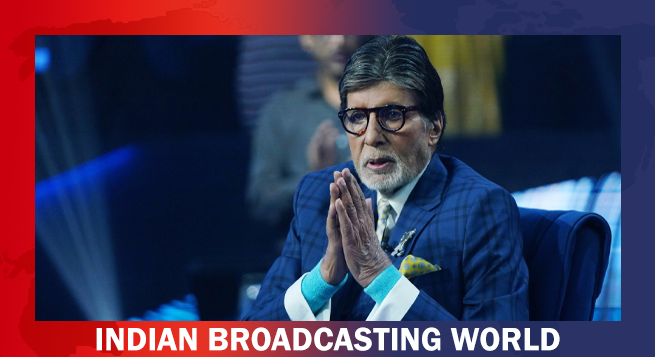 Amitabh Bachchan recalls Allahabad’s famous milk jalebis on ‘KBC 18’
  Prime Video announces weekly line-up of Indian, global shows & series



The BBC remains the United Kingdom’s leading brand for media, reaching 94 percent of adults on average per month and having a satisfying year from a content viewpoint, according to its annual report for 2025-26 made public yesterday. But concerns on licence fee pressure continue to dog the public broadcaster.
The report, according to a statement from the British pubcaster, highlights the BBC’s continued role serving audiences across the UK and around the world, despite ongoing pressures on licence fee income, rising production costs and a rapidly changing media market.
Audiences spend more time with BBC TV and iPlayer than with all the big SVODs combined; over 30 million on average per week tune in to BBC Radio; the BBC is the only UK brand in the top 5 most used by young people; and the BBC ranks as the UK’s media provider most trusted for fact-checked, accurate reporting and content.
The report also outlines the challenges the organisation is facing. The BBC will not be able to sustain its public service mission in the future, without reform of its funding model, the annual report highlights.
While 94 percent of adults use BBC services per month, fewer than 80 percent of households pay the licence fee.
Last month, the BBC announced plans for savings across the News, Nations and Content divisions that will deliver around £160 million of £500 million in savings needed by 2028-29.
BBC Chair Samir Shah said in a statement: “This report sets out in detail the considerable pressures now faced by the BBC — not least the question of future funding.
“When 94 percent of adults use the BBC per month yet fewer than 80 percent of households contribute, it tells you the current funding model cannot maintain the BBC’s public service mission.
“The new Charter must ensure that the BBC can continue to be a universal public service media organisation of scale.”
Shah pointed out that the BBC is, and always has been, so much more than simply a broadcaster. It is a fundamental public good.
“It delivers unique benefits to audiences and to the whole of the UK — for our society, our economy, and our democracy,” he added.
BBC Director-General Matt Brittin opined: “This is a moment of real jeopardy, not just for the BBC but for public service broadcasting and the UK as a whole.
“I believe the case for BBC has never been stronger: public service, economic impact, UK sovereignty and values. Our mission has never been more needed. So reinventing the BBC to fulfil that mission in a fast-changing world is our duty and our challenge. That’s the work that is now underway.”
The report shows the BBC has already made over £1.5 billion of savings during the current Charter period.
Public Service headcount continued to reduce, with a net reduction of 400 equivalent full-time roles by March 2026. Since 2019-20 ,the BBC’s headcount has fallen by over 10 percent — a reduction of over 2,200 roles.
Audiences continue to respond well to the BBC’s digital transformation. In the average week in 2025-26, a record 35 million of the 45 million adults that came to the BBC used its online services, the report said.
On the issue of licence fee, the report said there were 23.3 million TV licences in force, a fall of 539,000 year on year. This generated an income of £3.9 billion, which is an increase of £36 million year-on-year, largely driven by the licence fee uplift.
BBC Commercial reported revenue of £2.2 billion, with underlying sales growth in some revenue streams offsetting decline in others. It returned £377 million to the BBC, keeping the business on track to meet its five-year target of £1.5 billion in returns to public service.
Globally, the annual report stressed, the BBC is ranked number one for trust, reliability and independence amongst international news providers.
It is the number one most-followed English language news publisher on YouTube with 19.7 million subscribers.
The BBC also published yesterday its Commissioning Report for 2025/26, highlighting the BBC’s content achievements, strategic priorities and contribution to the UK’s creative sector.
The report shows the BBC invested £196m in TV and radio titles meeting its creative diversity criteria in 2025-26, its highest investment to date. It invested £1.5 billion in original TV content and £400 million in original radio content, working with 310 independent TV producers and 269 radio production companies across the UK.