 Prasar Bharati holds copyright over content, govt clarifies in Parliament
  ‘One Battle…’, ‘Sinners’, Marty…’, begin Mar15 Oscars quest
  Govt admits ad code bars ‘miraculous’ claims in product ads
 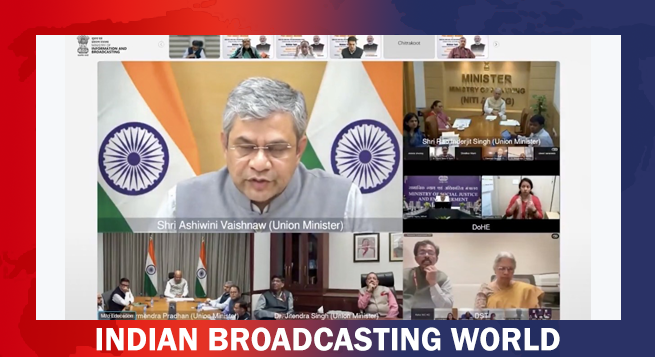 Vaishnaw: Creator economy offers citizens a democratic platform
  Prime Video, HBO Max executives to headline Series Mania Forum
  Siddharth Anand, Abhishek Bachchan team up for horror thriller
  ‘Muthu Alias Kaattaan’ trailer unveiled
  Star Gold to premiere ‘Son of Sardaar 2’ on television tomorrow
  NDTV’s Creators Manch S2 to be held in Delhi on March 14–15
  ‘Raftaar’ set for theatrical release on July 24




British communications regulator Ofcom has started seeking views from stakeholders following a request from the BBC to make three updates to its operating licence.
In order to help it progress its savings and reinvestment plans over the next two years, the BBC has requested Ofcom update certain operating licence conditions that relate to network current affairs, BBC Local Radio and the BBC Radio 5 Live, the regulator said in a statement on October 15.
“In line with our responsibility to ensure the BBC is delivering for all audiences and fulfilling its Mission and Public Purposes, we have carried out an initial assessment of the changes and are minded to approve the BBC’s request,” Ofcom said.
Under the BBC’s proposal, the overall quota for the volume of current affairs on BBC One and BBC Two (450 hours) would remain the same, but a new quota with a guaranteed minimum number of hours of first-run, UK original current affairs programming during peak times would be introduced.
Specifically, the BBC has requested to replace its current affairs joint peak time quota across BBC One and BBC Two — which stands at 106 hours, including a minimum of 45 hours on BBC One — with a single, combined quota of 70 hours of first-run content during peak time.
The BBC states that if this quota is maintained in its current form, it would have to increase its reliance on repeats to meet the quota, which would not be in the interests of viewers.
Taking this into account, along with the shift in audience behaviour towards on-demand viewing and the need for quotas to remain relevant, Ofcom said it’s likely to “approve this change”.
The BBC has also requested to amend the times of the day during which programming shared between neighbouring BBC Local Radio stations can count towards its quota for original, locally made programming (4,954 hours per year).
The request is intended to enable BBC local radio stations to focus resources on producing more original, locally made programming during higher listening hours, particularly weekday mornings. It does not impact the BBC’s delivery of local news bulletins – the requirement to offer these will remain the same.
Currently, shared programming between stations only counts towards the quota if it is broadcast between 6am and 7pm. In practice, this means that the BBC needs to put resources into producing locally made content when fewer people listen. The BBC would like to be able to focus these resources towards times when more people listen.
The BBC therefore proposes that shared programming should not count towards the quota if broadcast between 6am and 2pm on weekdays—when more audiences are listening. Only shared programming broadcast outside this window would contribute to the quota.
Taking into account that this would enable the BBC to bring more locally made programming to greater numbers of listeners, while maintaining flexibility in lower-listening periods, Ofcom would likely approve this request also.