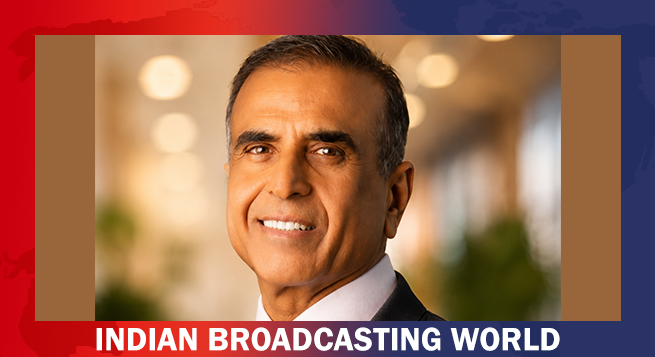
 Sunil Mittal says OneWeb ahead of Musk in Indian approval queue
 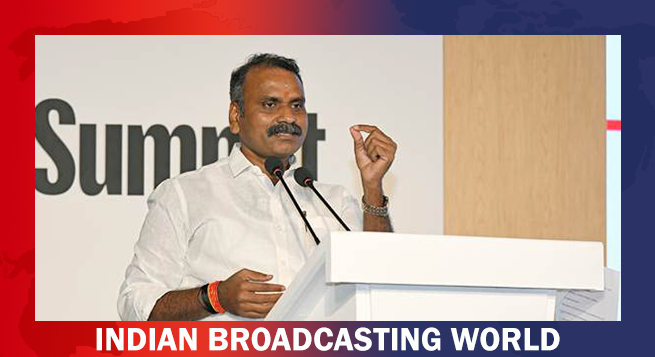 Murugan resigns from Cabinet as Mos MIB & Rajya Sabha
  Broadcasters flag HD-SD conversion, satellite spectrum concerns in submission to MIB on telecom rules 2026
  MIB seeks dismissal of AIDCF plea against WAVES, says OTT rules differ from TV
 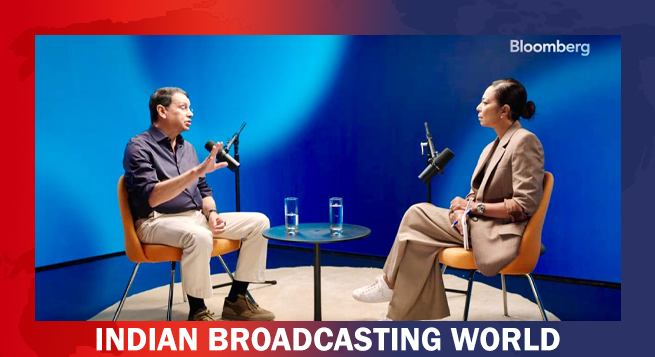 Uday Shankar: Indian M&E sector needs policy support to compete globally
  India’s media sector must create global brands, says MIB secy at CII Summit
  ‘The Love Hypothesis’, ‘Carrie’ lead Prime Video’s weekly global rankings
 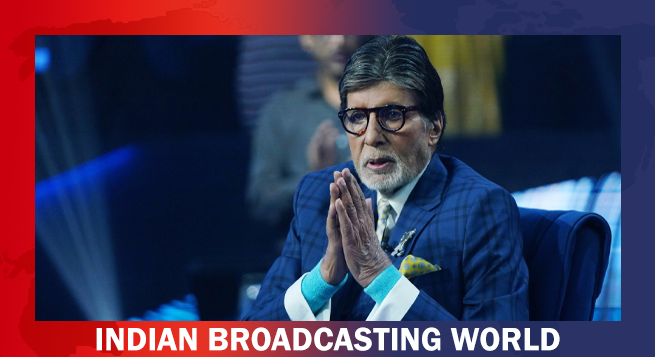 Amitabh Bachchan recalls Allahabad’s famous milk jalebis on ‘KBC 18’
  Prime Video announces weekly line-up of Indian, global shows & series
  Harshdeep Kaur to open TV9 Festival of India 2026 Oct 16




The Indian government has said it has not received any proposal from any Indian company to operate or collaborate with Indian space agency ISRO for satellites similar to Elon Musk’s Starlink, which offers high-speed broadband-via-satellite to consumers around the globe and is now seeking to enter the Indian market too.
“IN-SPACe has not received any application for establishment and operation of a NGSO (non-geostationary orbit) satellite constellation similar to Starlink by an Indian operator,” Dr. Jitendra Singh, Minister of State for Science and Technology and Space said in a written reply in the Rajya Sabha (Upper House) yesterday, replying to queries from a fellow parliamentarian.
The Prime Minister (who is the senior Minister for Space Ministry) was asked, amongst other things, whether there were any collaborations between India Space Research Organisation (ISRO) and private Indian companies to develop a homegrown alternative to Starlink, which now has, as per announcements, distribution deals with Reliance Jio and Airtel, both of whom, interestingly, are readying their own broadband-via-satellite ventures.
On being asked whether there will be any restrictions on foreign entities owning and operating broadband satellite networks over Indian airspace, the government clarified that though such services are provided under various international regulations (to which India is a party to), within India such services by a foreign entity will have to adhere to local laws.
MoS Singh, in his reply, stated, “Capacity from all foreign satellites can be provisioned for broadband satellite networks in India only after IN-SPACe (a government agency) authorization. The foreign entities owning and operating broadband satellite networks in the space covering India is governed by international regulations and co-ordinations.
“Use of such satellites for services over Indian territory is governed by Indian Space Policy, Telecommunications Act and other regulation(s) & guidelines.”
How does the government plans to reduce India’s dependency on foreign
satellite broadband providers? While admitting that the government is “encouraging and enabling” Indian entities to establish space assets
for broadband services, the Minister stated that official agencies like the New Space India Ltd. and ISRO have enabled “one Indian private operator with requisite orbit spectrum support” to deploy a new broadband satellite.
Such support and deployment of new satellites are based on user demand, Singh added, detailing that a fleet of 19 communication satellites are operational over India supporting the telecommunications, broadband and broadcasting services, apart from societal and strategic communications needs.
According to the government, the space sector reforms have enabled larger participation of non-governmental entities for building/leasing, owning and operating satellite systems for providing satellite based services. “More than 10 satellite operators have shown interest and applied for authorization for providing the satellite capacity over India. With more players in the market, the entire country would get enhanced satellite capacity and the competitive price advantage,” the Minister concluded.