 Sunil Mittal says OneWeb ahead of Musk in Indian approval queue
  Murugan resigns from Cabinet as Mos MIB & Rajya Sabha
  Broadcasters flag HD-SD conversion, satellite spectrum concerns in submission to MIB on telecom rules 2026
  MIB seeks dismissal of AIDCF plea against WAVES, says OTT rules differ from TV
 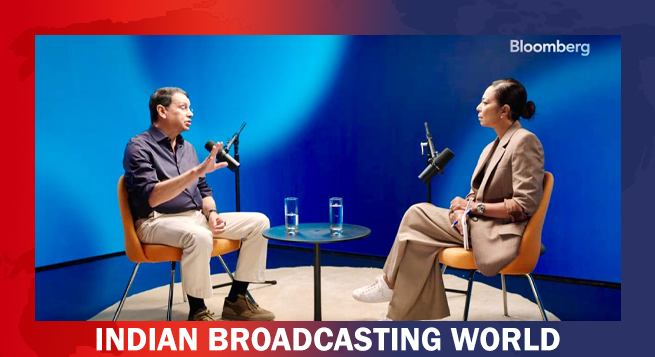 Uday Shankar: Indian M&E sector needs policy support to compete globally
  India’s M&E sector needs 15% growth to reach $100bn by ‘30: CII paper
  India’s media sector must create global brands, says MIB secy at CII Summit
  ‘The Love Hypothesis’, ‘Carrie’ lead Prime Video’s weekly global rankings
 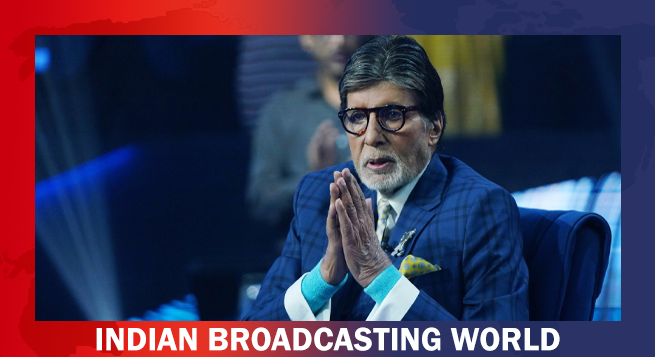 Amitabh Bachchan recalls Allahabad’s famous milk jalebis on ‘KBC 18’
  Prime Video announces weekly line-up of Indian, global shows & series



The Department of Telecom (DoT) has fixed December 2022 as the deadline for Internet service providers to customise their network as well as change modem and routers at customer premises for the services as per the Internet protocol address IPv6.
The DoT has set June 30, 2022 as the last date for government organisations for complete transition to IPv6, according to an official note issued on November 2.
“All new retail wireline customer connections provided by service providers after December 31, 2022, shall be capable of carrying IPv6 traffic either on dual stack on native IPv6,” PTI quoted from an official note.
The IP addresses help in identifying and connecting various devices and servers onto the Internet.
The DoT had released the first and second roadmap to roll out IPv6 addresses in the country in 2010 and 2012, which can grant several trillions of unique Internet addresses unlike the old regime of IPv4 that has a limit of 3 billion IP addresses.
The growth in the number of devices connecting to the Internet has fuelled demand for IPv6 addresses.
“The service providers shall endeavour to progressively replace/upgrade the CPEs (customer premise equipment), which are not IPv6 ready and are owned by service providers latest by December 31, 2022,” the note said. India now has around 50 per cent share in IPv6 addresses globally.
“The transition to IPv6 even with a dual stack mode will help in growth of Internet usage especially in the context of work from home as well IoT ecosystem and upcoming 5G services because of the requirement of an enormous IP address which is not available with IPv4. In addition, transition to IPv6 will enhance the network security because of built-in ‘IPsec’ feature in the verison 6,” IPv6 Forum chairman Satya N Gupta said.
With proliferation of IPv6 addresses, India can create its own secure Internet by setting up its own root servers for communication within countries geographical boundaries.
At present, there are 13 root servers, which play a vital role in working on the Internet globally. Eleven root servers are located in the US and one each in Europe and Japan. Under the present global regime, the Internet can stop working if any of the root servers are switched off.
Gupta said that with an indigenous root server, India can continue to communicate within its own jurisdiction after transition to IPv6.
“The US has already decided to switch off IPv4 addresses by 2024,” he said.