 FY26 Q3 pay TV viewership dips; telecom subs, revenues up: TRAI
  India’s football body invites commercial rights bids for 15 years
  NDTV India, NDTV 24×7 lead YouTube viewership amid major news cycle
 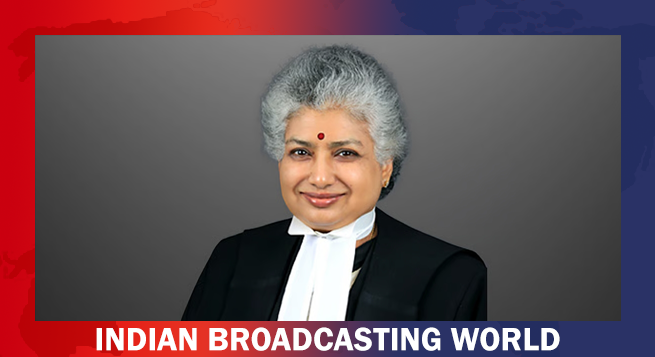 SC judge Nagarathna says media can’t perform under constraint
 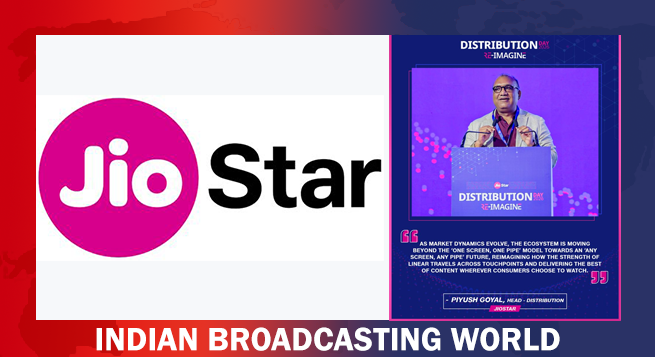 JioStar’s Piyush Goyal outlines vision for ‘Any Screen, Any Pipe’ future of TV
  ‘Scary Movie’ returns with 6th instalment, set for June release
  WPP Media elevates Dipti Gulati as APMEA VP for Client Growth
  Apple TV cancels Kristen Wiig-led comedy ‘Palm Royale’
 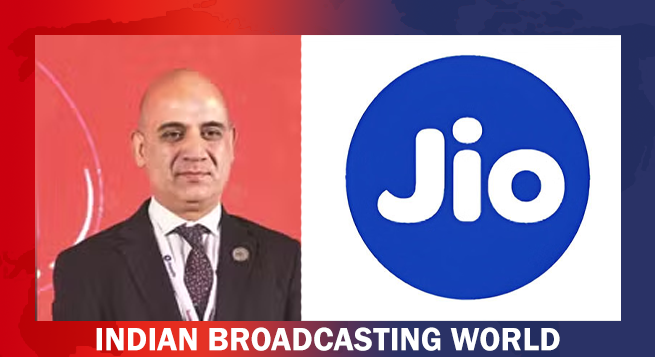 Jio Platforms appoints Dan Bailey as prez to drive global expansion
  Rising Bharat ’26: PM outlined vision of self-reliance, AI leadership



The telecom industry body Cellular Operators Association of India (COAI) has sought a significant reduction in regulatory levies, including a sharp cut in licence fees, in its submissions to the government ahead of the upcoming Union Budget. The association has argued that easing the financial burden on telecom operators is critical to sustaining investments in networks and accelerating next-generation connectivity across the country.
According to PTI, COAI has proposed that the licence fee be reduced to 0.5–1 per cent from the current three per cent, stating that the existing structure imposes a heavy cost on an already capital-intensive sector. The association has also recommended that contributions to the Digital Bharat Nidhi be paused until the unused corpus is fully utilised by the Department of Telecommunications.
Highlighting the pressure on telecom finances, COAI said it has consistently advocated measures that would allow operators to invest more aggressively in infrastructure, technology upgrades and rural expansion, in line with the government’s vision of ‘Viksit Bharat’. At present, the licence fee comprises a three per cent levy on adjusted gross revenue (AGR), in addition to a five per cent contribution towards the Digital Bharat Nidhi, which the industry body described as a substantial and recurring financial burden.
COAI has argued that the licence fee should ideally be limited to covering administrative costs, and therefore a reduction to 0.5–1 per cent would be more appropriate. The association has also raised concerns around the goods and services tax (GST) regime, recommending specific policy interventions to provide relief to the sector.
On GST-related issues, COAI has suggested that telecom operators be granted an exemption on GST applied to regulatory payments such as licence fees, spectrum usage charges (SUC) and spectrum acquired through auctions. Alternatively, it has proposed that the GST rate under the reverse charge mechanism on spectrum payments, licence fees and SUC be reduced from the current 18 per cent to five per cent.
According to the industry body, such a move would be revenue-neutral for the government while helping telecom companies reduce the accumulation of unutilised input tax credit (ITC). COAI has further recommended that operators be allowed to use their existing ITC balances to discharge GST liabilities under the reverse charge mechanism on licence fees and SUC, which would ease cash flow pressures and help unlock blocked capital.
The association has also reiterated that telecom should no longer be viewed as a standalone vertical, but as a horizontal enabler that underpins multiple sectors of the economy. In that context, COAI has called for a broader recalibration of spectrum pricing and assignment models to reflect the sector’s strategic role in driving digital transformation across industries.