 MIB issues advisory for TV channels on news reporting, AI use
  Netflix to expand ads plan to 15 new countries in 2027
  News18, TaMo to mark Oct 23 as ‘National Saarthi Diwas’
  Airtel launches voice-only prepaid plans starting at Rs 185
  Without naming Musk, RIL says it welcomes satcom competition
 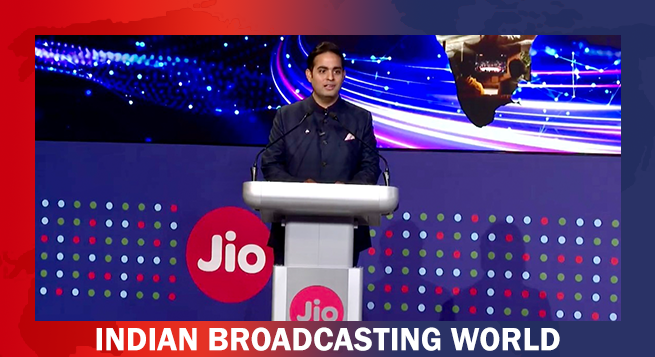 Akash Ambani banks on selling more services to up revenue
  Netflix to stream ‘La Velada del Ano’ live for three years
  Abhijeet Sawant gets emotional about return to ‘Indian Idol’ stage
 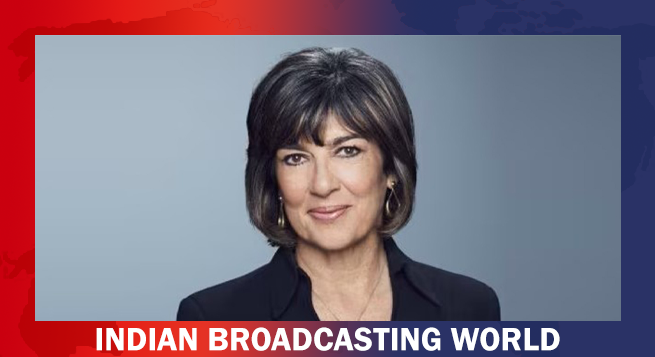 Christiane Amanpour to leave CNN in June 2027 after 43 years
  Ram Gopal Varma’s ‘Police Company’ to release in June 2027



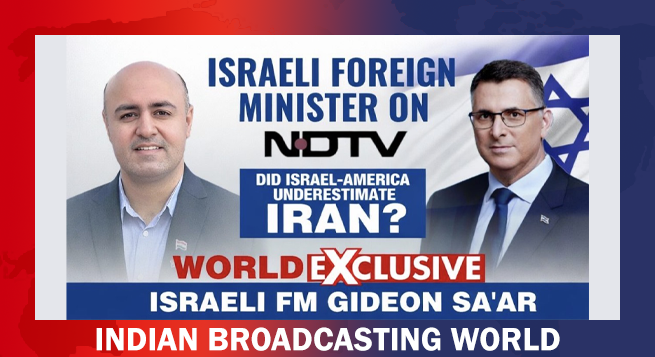
In the midst of escalating hostilities in West Asia, NDTV conducted a high-stakes conversation with Gideon Saar, Israel’s Foreign Minister, on the rationale and strategic thinking behind Israel’s coordinated strikes inside Iran. The interview, conducted by NDTV’s Aditya Raj Kaul in Jerusalem, comes at a time when missile exchanges and retaliatory threats are intensifying concerns over a wider regional conflagration.
According to an NDTV press release, the discussion addressed the elimination of Iran’s Supreme Leader Ali Khamenei, the targeting of senior commanders of the Islamic Revolutionary Guard Corps (IRGC), and the broader security calculus shaping Israel’s military strategy. The conversation also explored the geopolitical implications of the strikes as regional and global powers closely monitor the unfolding crisis.
At the centre of the exchange was the question dominating diplomatic circles: why act militarily when negotiations were reportedly underway? Saar argued that both Israel and the United States had concluded that Tehran was prolonging talks while continuing to advance its nuclear and ballistic missile capabilities. He stated that intelligence assessments suggested Iran was preparing to move critical elements of its nuclear programme into deep underground installations that would be significantly harder to target. In his view, inaction would have altered the strategic balance irreversibly. “It’s more dangerous not to act rather than to act in this situation,” Saar said, framing the strikes as a pre-emptive measure rooted in urgency and deterrence.
Saar clarified that Israel was not a participant in the Oman-mediated negotiations between Washington and Tehran, noting that the diplomatic process was being handled by the United States. While acknowledging attempts at engagement, he reiterated that Israel’s stated objective remains the dismantling of what it views as existential threats, including nuclear capabilities, ballistic missile expansion, and regional proxy infrastructure. He refrained from outlining a fixed timeline for military operations, indicating that progress would be measured against defined strategic objectives in coordination with American allies.
The future of Iran’s political leadership also formed a key part of the interview. Saar maintained that governance decisions ultimately rest with the Iranian people through a free and fair electoral process. However, he argued that such a transition would not be feasible under the current regime’s coercive apparatus. He suggested that weakening the existing power structure could create conditions for political change, while acknowledging that the Iranian establishment continues to retain domestic control despite recent eliminations of senior figures.
On the broader regional impact, Saar described the current escalation as part of a decades-long pattern of instability. Referring to Iran’s regional policies over the past five decades, he questioned whether continued restraint would serve long-term security interests. He characterised the present moment as one that must be viewed within a wider historical and strategic context rather than as an isolated military episode.
In a diplomatic reference to India, Saar reflected on Prime Minister Narendra Modi’s recent visit to Israel, describing India as the world’s largest democracy and one of the fastest-growing economies. He reaffirmed the strength of bilateral ties, stating that India and Israel can rely on each other’s friendship even amid regional turbulence.
NDTV’s interview with Israel’s Foreign Minister unfolds against the backdrop of a conflict that is reshaping alignments across West Asia and influencing global strategic calculations. As tensions continue to evolve, the conversation provides insight into the motivations and long-term objectives behind one of the most consequential military decisions in the region in recent years.