 JioHotstar to offer ‘Ramayana’ on pay-per-view after theatrical run
  MIB issues advisory for TV channels on news reporting, AI use
  Netflix to expand ads plan to 15 new countries in 2027
 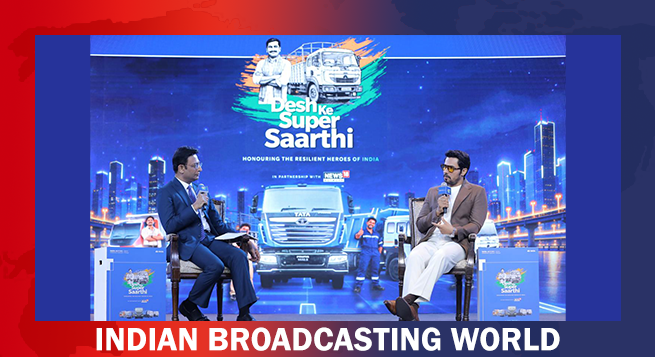 News18, TaMo to mark Oct 23 as ‘National Saarthi Diwas’
  Airtel launches voice-only prepaid plans starting at Rs 185
  Without naming Musk, RIL says it welcomes satcom competition
 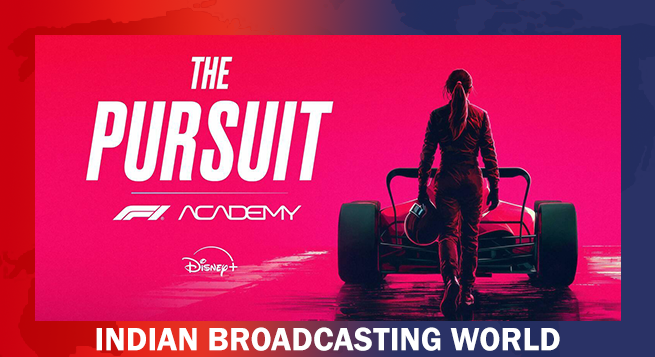 Disney+ to spotlight women racers in new F1 documentary
  HBO exploring Poison Ivy series with ‘The Penguin’ creator
 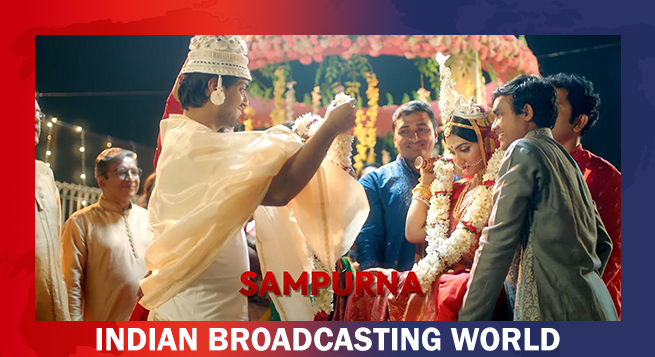 Netflix, hoichoi in pact to take Bengali stories to wider audiences
  Discovery wins 7 honours at Asian Academy Awards
  Shilpa Shetty praises ‘Indian Idol Legends Return’ contestants



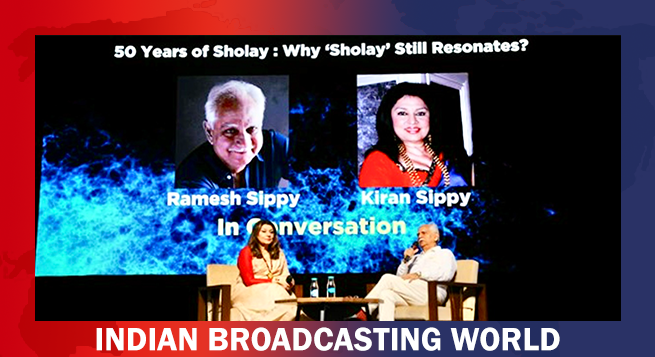
Cinema lovers were yesterday transported back in time as filmmaker Ramesh Sippy, creator of the iconic Hindi film ‘Sholay’, took the audience on a riveting journey through the movie’s history at an ‘In-Conversation’ session at the 56th International Film Festival of India (IFFI) in Goa.
The session, titled “50 Years of Sholay: Why Sholay Still Resonates?’, was hosted by Sippy’s wife and actor-producer Kiran Sippy. It was a session filled with nostalgia, revelations and heartfelt tributes as the ace filmmaker reflected on the making of a film that became nothing short of a cultural milestone, stated an official gist of the session put out by the organisers.
Sippy also shared one of the most eagerly awaited announcements for cinephiles: the re-release of ‘Sholay’ with its original ending intact.
When the film first released in 1975 during the Emergency period imposed by the then Prime Minister Indira Gandhi, the then film certification board objected to the climax where Thakur Baldev Singh (Sanjeev Kumar) kills Amjad Khan’s Gabbar Singh using his spiked shoes. Reason: the CBFC insisted a police officer could not be portrayed seeking revenge.
Reluctantly, the filmmaker and his team had to reshoot the ending. “Now you will see the movie as it was made,” an elated Sippy told the audience, celebrating the long-overdue restoration of his creative vision.
The director described how he sought a completely new visual palette for the film. At a time when Hindi cinema’s dacoit dramas were mostly shot in Rajasthan and the Chambal valley, Sippy scouted and discovered rugged terrain near Mysuru and Bengaluru in South India. The rocky backdrop gave ‘Sholay’ a distinctive look never seen before in Indian cinema.
This setting also added an unusual contrast — Gabbar Singh, with his raw Uttar Pradesh accent, terrorizing a landscape in South India. Speaking about Khan’s unforgettable portrayal, Sippy revealed that Danny Denzongpa was the original choice, but was unavailable due to overseas shooting commitments.
Khan, recommended by film’s writer duo Salim-Javed, impressed Sippy with his theatrical prowess, and the rest is cinematic history.
The filmmaker also noted that the screenwriting duo had initially pitched a two-line concept to Manmohan Desai, who was not impressed. But the Sippy father-son duo (GP Sippy and son Ramesh) immediately recognized its potential.
Siipy revealed that within a month the screenplay was complete, and a mercurial villain was born when he told Salim-Javed that he wanted a character who was unpredictably dangerous. That is how Hindi cinema got one of its finest villains of all times.
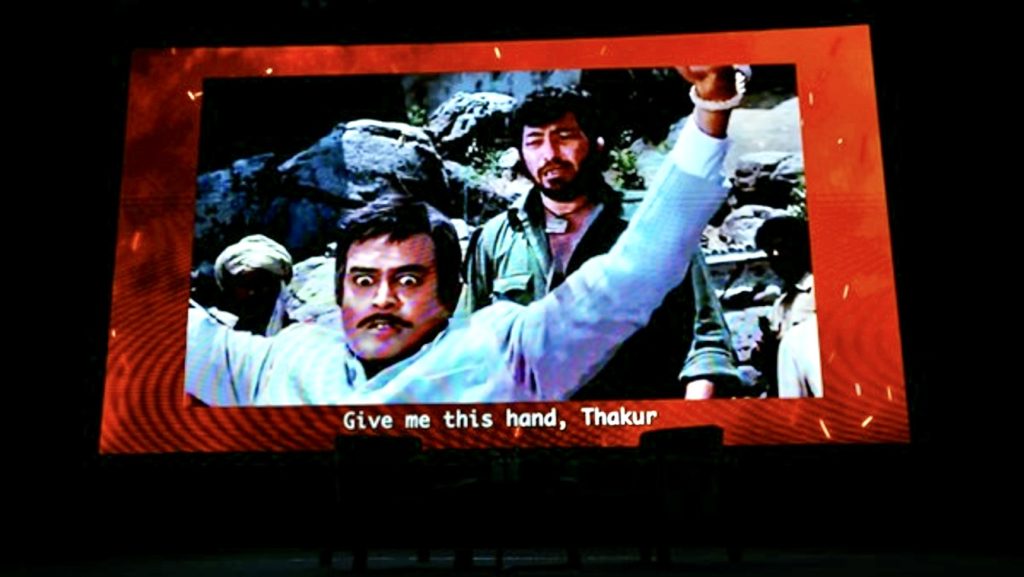
Reflecting on the passage of time, Sippy grew emotional remembering the towering actors of the film who were no longer amongst them. He paid heartfelt tribute to Sanjeev Kumar, Khan and Dharmendra (who essayed Viru), who passed away recently.
In a touching anecdote, Sippy recalled how dedicated Dharmendra was during shoots. Dwelling on a horse-riding action sequence, where the saddle slipped and the actor fell, Sippy said his heart “stopped for a moment”, but added: “Dharamji just stood up, dusted himself off, and was ready to go again. He always wanted to push himself and try new things.”
Sippy emphasized that ‘Sholay’ was a product of extraordinary teamwork. Out of the many firsts introduced in and by the film, he said one being that it was the first Indian film to bring in a professional fight sequence team from the United Kingdom. It pioneered safety protocols for action scenes in Hindi cinema, informed Kiran Sippy.
During an interaction with the audience, the filmmaker also stated cinematographer Dwarka Divecha set new benchmarks with his visual storytelling and recalled how production manager Ajiz Bhai played a pivotal role behind the scenes.
The evocative lighting of Jaya Bhaduri’s evening lamp sequence took days to capture, waiting each day for the perfect “magic hour”, revealed the master filmmaker. He also reminisced about the timeless song ‘Yeh Dosti Hum Nahi Todenge’, penned by Anand Bakshi and composed by R.D. Burman, which continues to echo across generations.
As the session concluded, one thing was clear: ‘Sholay’ is not just a film. It is a living legacy that continues to inspire filmmakers, enthrall audiences, and redefine the boundaries of Indian cinema.
With its 50-year celebration and the long-awaited return of its original ending, ‘Sholay’ is ready to roar once again— exactly as its maker had envisioned it half a century ago.