 Indian publishers, including those owned by Ambani & Adani, challenge privacy laws
 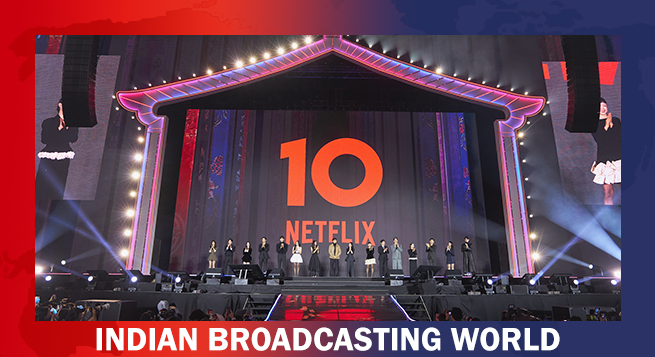 Netflix’s marks Korean decade as K-content rules non-English viewing
  GTPL Hathway now tracking TV viewership via RPD, targets 50k homes
  Netflix, hoichoi in pact to take Bengali stories to wider audiences
  JioHotstar to offer ‘Ramayana’ on pay-per-view after theatrical run
  Disney+ renews ‘Coven Academy’ for S2
 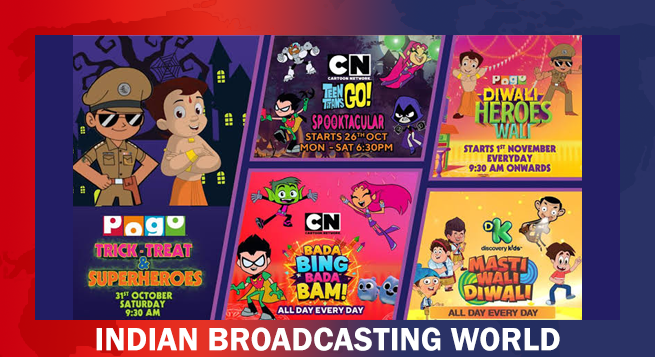 POGO, Cartoon Network, Discovery Kids announce Halloween, Diwali specials
  NDTV reports Q2 loss of Rs 63.51cr, plans Rs 800cr fundraise
  IMDb report tracks 10 years of Indian streaming growth
  Free Fire India set to launch on Oct 28



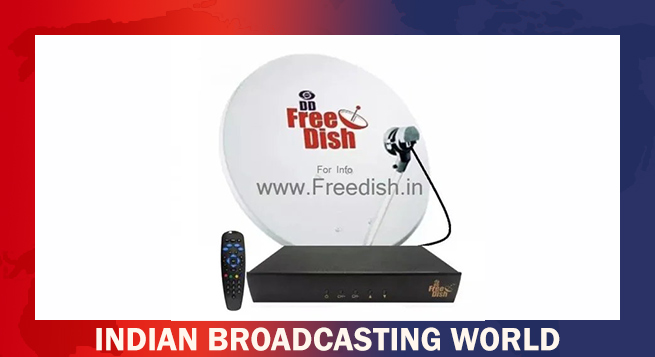
Indian pubcaster Prasar Bharati has announced the 91st e-auction for the allocation of vacant MPEG-2 slots on its free DTH platform, DD FreeDish. The notice invites private satellite TV channels to apply for these coveted carriage slots for the period of end-September 2025 to March 2026.
According to the notice, issued on September 8, TV channels are classified into distinct genre-based buckets, each carrying a defined reserve price.
For example, Bucket A covers Hindi GECs or general entertainment TV channels and commands the highest reserve price, while Bucket B includes Hindi movies. Bucket C is set aside for Bhojpuri GECs and movies, while Bucket D covers Hindi music and youth channels. Bucket E includes sports; Bucket F covers devotional content, and Bucket G is meant for regional language GECs and movies. News and current affairs channels are grouped separately under Bucket R.
Reserve prices for various slots range from Rs.15 crore at the higher end for premium Hindi GECs to around Rs. 5–6 crore for regional and niche channels, reflecting both audience demand and market value. In the past, news category too has seen aggressive bidding.
FreeDish DTH service is owned and operated by public service broadcaster Prasar Bharati. Launched in December 2004, FreeDish is the only free-to-air (FTA) DTH service where there is no monthly subscription fee from the viewers. It is affordable for all as it requires only a small one time investment of about Rs. 2000 for purchase of set-top-box and a small-sized dish antenna with accessories. The unique free to air model has made FreeDish the largest DTH platform in the country.
But, of late, criticism by paid DTH services and MSOs, for example, has been rising as FreeDish is not regulated by the broadcast regulator’s various rules. Critics contend that because FreeDish lies outside the pale of TRAI’s regulatory environment, it creates an uneven playing field vis-à-vis other distribution platforms, thus upsetting the business ecosystem.
Meanwhile, the latest FreeDish notification states that qualified applicants must submit several critical documents as part of the e-auction process. These include a programme content schedule or fixed-point chart for the past three months, as well as the projected schedule for September through November 2025, apart from other documentation related to tax purposes.
To be a successful bidder for a MPEG-2 slot the applicant is also required to broadcast at least 75 percent of its content in the declared genre and language, discounting advertisements and promos. This ensures a minimum of 60 percent of total monthly content aligns with the declared criteria, preserving the thematic and linguistic expectations set by the Ministry of Information & Broadcasting.
The e-auction would be held later this month.