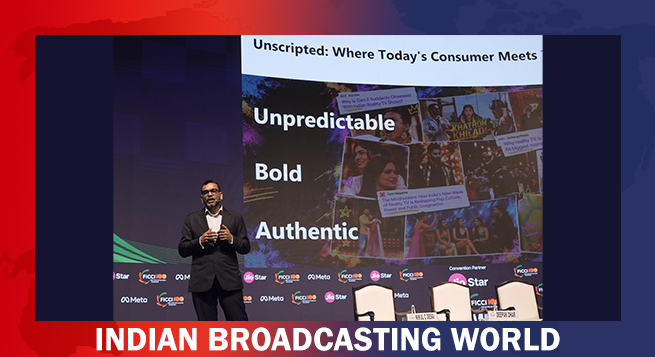
 Ficci FRAMES session discusses what makes reality TV tick
 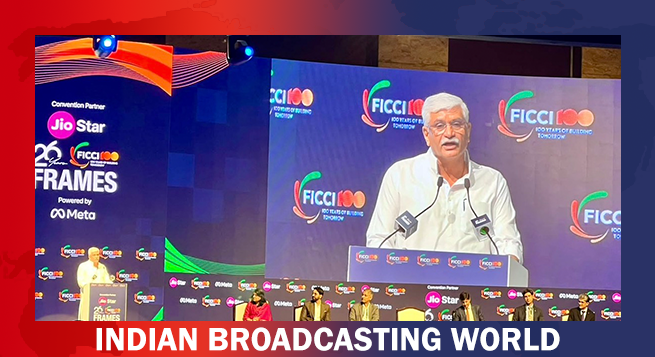 Shekhawat: India must shift from content consumer to global creator
  Puneet Goenka, Gaurav Banerjee, Rahul Kanwal share views on TV ratings
  Uday Shankar urges Indian M&E sector to help nation’s global narrative
  At FICCI FRAMES ‘26, Vaz bats for more innovation, regulatory flexibility
  India b’band base at 1.1bn in August, telecom subs cross 1.36bn
  From Netflix’s Sarandos to Ben Affleck: highlights of Bloomberg event
  ‘Neagley’ S2 okayed after S1 nets 40mn viewers at Prime Video
  Paramount, WBD merged entity to be christened Skydance
  Mehta shares ‘Gandhi’ BTS images on Mahatma’s birth anniversary
 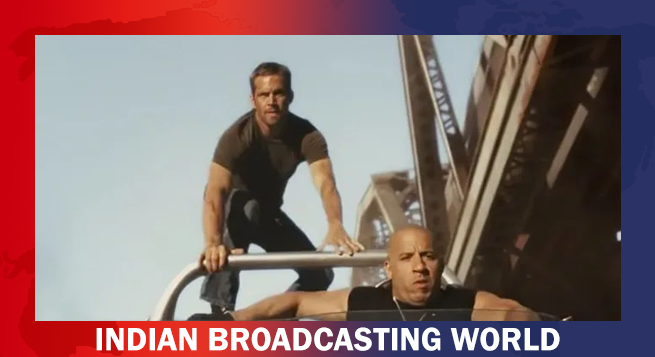 Peacock greenlights ‘Fast & Furious’ series; debut in 2028



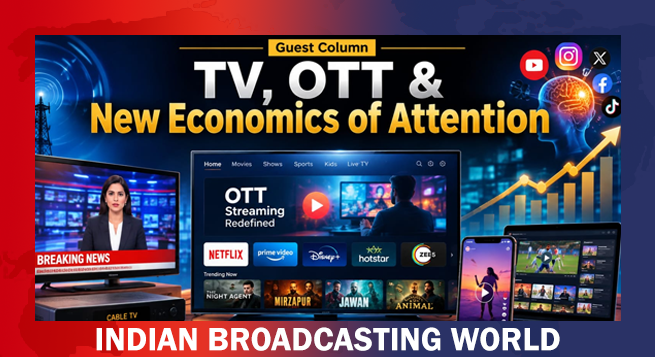
The Indian media industry is entering a new phase of competition. For years, the dominant narrative was television versus OTT, with broadcasters and traditional distribution platforms increasingly challenged by digital streaming.
That equation is changing. The more significant competitor may no longer be another broadcaster or streaming platform. It is free content.
YouTube, social media, short-form video, creator-led programming and the emerging ecosystem of Free Ad-Supported Streaming Television (FAST) channels are giving consumers unprecedented access to entertainment and information without a direct subscription fee.
The industry is therefore no longer competing only for subscribers. It is competing for consumer attention.
For broadcasters, Multi System Operators (MSOs), DTH operators, OTT platforms, telecom companies and ISPs, the central challenge is how to create sustainable value when consumers increasingly expect content to be available free of charge.
Television Still Has Scale in a Digital-First India
The rise of digital media should not be mistaken for the disappearance of television.
India remains one of the world’s largest television markets, with approximately 190 million television households and nearly 150 million households receiving television through cable or DTH platforms.
The country also has more than 900 permitted satellite television channels, reflecting the continued scale and diversity of the television ecosystem.
Television continues to offer significant advantages: mass reach, familiarity, professionally curated programming and strong regional penetration. For millions of Indian households, particularly outside the largest urban centres, television remains an important source of entertainment, news and information.
At the same time, digital consumption is expanding rapidly. The growth of smartphones, affordable broadband, social media and streaming platforms has fundamentally changed how audiences discover, consume and engage with video content.
This creates a new media reality: television continues to command reach, while digital platforms increasingly compete for attention.
The question, therefore, is no longer whether television or digital will win. The more important question is how each ecosystem will adapt to changing consumer expectations and how effectively traditional and digital media can coexist, compete and create new forms of value.
The Rise of Free Content
The growth of free content is being driven by three forces.
First, global digital platforms provide enormous libraries of professionally produced and user-generated content supported largely by advertising.
Second, India’s creator economy has expanded dramatically. Individual creators can now build audiences at a scale that was once possible only for established media companies.
Third, FAST channels are creating a new distribution model by combining the familiarity of linear television with the accessibility of digital streaming without conventional subscription fees.
India is still at an early stage of FAST adoption, but smart TV penetration, affordable broadband and connected-TV consumption provide considerable potential.
The boundary between television, OTT and digital video is consequently becoming less distinct.
Premium Content Under Pressure
Premium content remains expensive. Sports rights command significant valuations, original programming requires substantial investment, and regional productions are becoming increasingly sophisticated.
At the same time, consumers are becoming more selective about subscriptions. Many subscribe for a major sporting event, a particular series or a blockbuster release and then cancel when the immediate attraction disappears.
This creates pressure on the traditional subscription model. The lesson is clear: content alone is no longer enough.
Consumers increasingly judge platforms on convenience, discovery, personalisation, reliability, affordability and trust.
The winning proposition will therefore be the overall experience, not simply the size of the content library.
Regional Relevance: India’s Strategic Advantage
If global platforms have scale, Indian media companies possess another powerful advantage: local relevance.
India is not a single media market. Language, culture, geography and viewing behaviour vary significantly across states and communities.
Regional news, local sports, cultural programming, devotional content, community events and locally relevant entertainment can create an emotional connection that global platforms may find difficult to replicate consistently.
This presents a significant opportunity for regional broadcasters and MSOs.
MSOs, in particular, can move beyond being television distributors. With established last-mile infrastructure, local relationships and advertising ecosystems, they can develop hyper-local media and connectivity ecosystems combining television, broadband, local content and community engagement.
The future MSO can therefore be defined not merely by the number of channels it distributes, but by the value it creates around connectivity, content and community.
From Free vs. Paid to Hybrid Monetisation
The distinction between free and paid content is gradually disappearing. Successful media businesses are likely to combine multiple revenue streams.
Freemium models can allow consumers to access basic content while premium experiences remain paid. OTT services can be bundled with broadband or mobile connectivity to improve affordability and reduce churn.
Transactional Video-on-Demand can support premium sports, concerts and special releases.
Advertising is also evolving, particularly through connected television, where digital targeting and measurement can increasingly complement traditional television advertising.
The future is therefore unlikely to belong to a single monetisation model.
It will belong to businesses capable of combining advertising, subscriptions, partnerships, connectivity and premium experiences.
Technology Will Differentiate Winners
As content becomes abundant, technology will determine how effectively audiences discover and consume it.
Artificial intelligence is improving content recommendations. Predictive analytics can strengthen audience engagement. Cloud-based delivery enables seamless viewing across televisions, smartphones and other devices.
Interactive features such as personalised advertising, multilingual audio and audience participation can further enhance engagement.
But technology should ultimately serve one purpose: reducing friction for the consumer.
When audiences have almost unlimited choices, helping them find the right content quickly can be as important as acquiring the content itself.
Collaboration and Regulatory Balance
The future media ecosystem will not be built entirely through isolated competition.
Broadcasters, OTT platforms, telecom operators, ISPs, MSOs, smart TV manufacturers, advertisers and content creators increasingly depend on one another.
Strategic partnerships can expand reach, reduce distribution costs and create new advertising opportunities.
At the same time, the industry needs a balanced regulatory environment.
The objective should not be identical regulation for every technology. Different business models require different approaches.
However, where services compete directly for audiences, advertising and premium content, policymakers should consider proportionate regulatory parity in areas such as transparency, consumer protection, advertising accountability and responsible content governance.
The objective should be competitive fairness without restricting innovation.
The Real Competition Is for Attention
India’s television industry is far from obsolete, and subscription OTT is not disappearing.
Both will remain important parts of India’s media ecosystem but both must evolve.
The real competition is no longer simply television versus OTT or free versus paid.
It is a competition between platforms that merely distribute content and those that create trust, relevance, convenience and enduring consumer value.
Trusted journalism, premium storytelling, regional relevance, superior user experience, responsible content governance, intelligent monetisation and strong technology will define the next phase of media growth.
Consumers may have more free content than ever before. What they will continue to have less of is time.
And in the next phase of India’s media industry, the most valuable currency may not be the subscription fee. It will be consumer attention.
(The author is GM-Content, Legal & Regulatory Affairs at Asianet Satellite Communications. The views expressed are personal. They do not necessarily represent the official position of the author’s employer or Indianbroadcastingworld.com.)