 Shekhawat: India must shift from content consumer to global creator
  Puneet Goenka, Gaurav Banerjee, Rahul Kanwal share views on TV ratings
 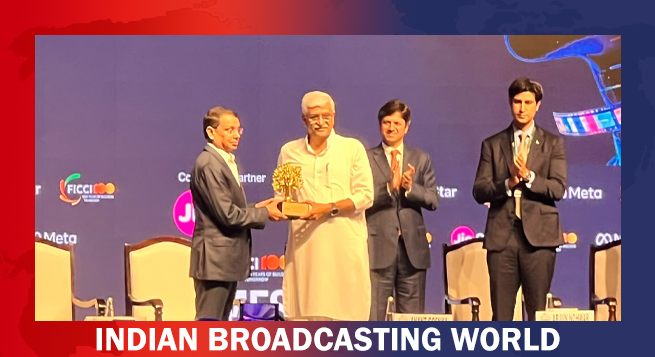 Uday Shankar urges Indian M&E sector to help nation’s global narrative
 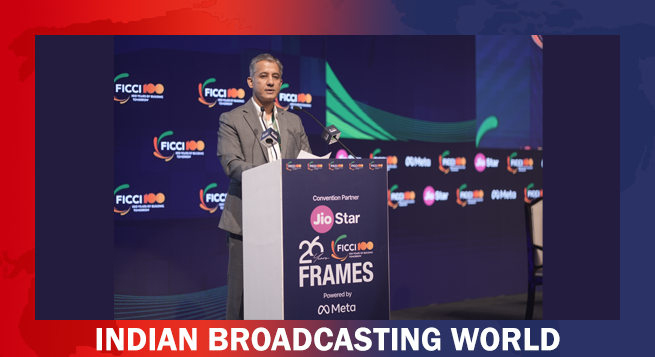 At FICCI FRAMES ‘26, Vaz bats for more innovation, regulatory flexibility
  India b’band base at 1.1bn in August, telecom subs cross 1.36bn
 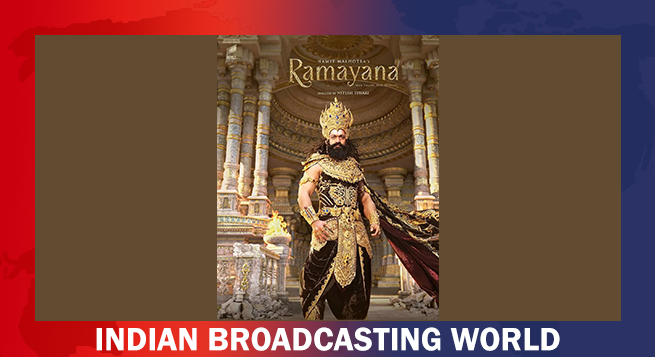 ‘Ramayana’ makers unveil Yash’s Ravana look; MrBeast joins promos
 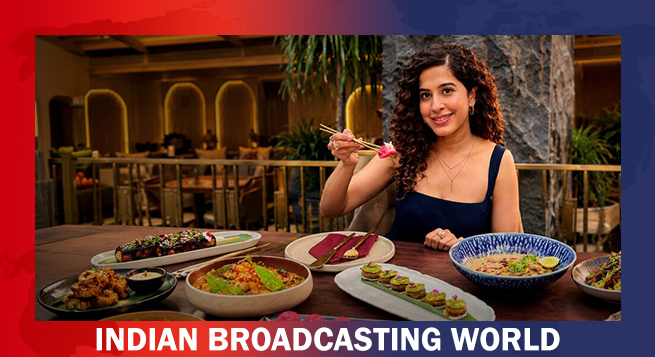 Kamiya Jani’s ‘Sunday Brunch’ to premiere on Netflix Oct. 4
 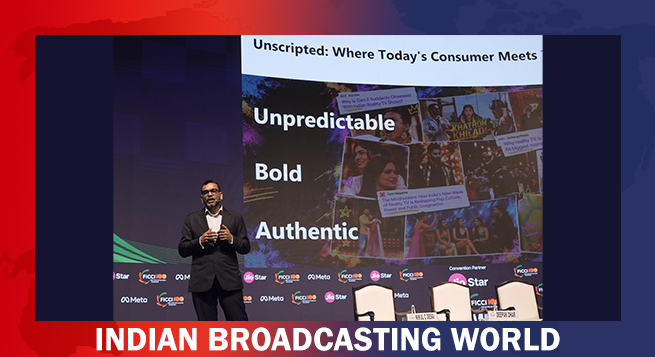 Ficci FRAMES session discusses what makes reality TV tick
 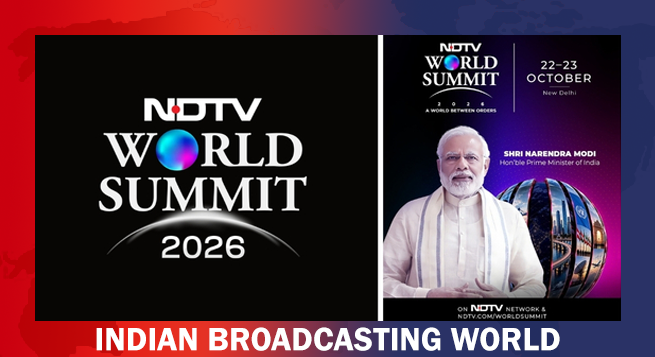 NDTV World Summit 2026 to explore to be held on Oct 22-23
  ‘Game of Thrones’ movie ‘Aegon’s Conquest’ set for June 2029
 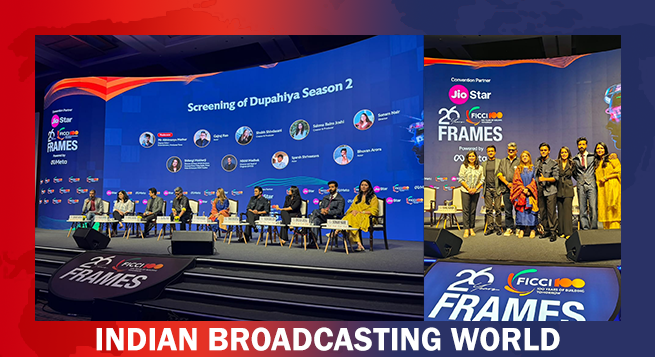 FRAMES celebrates Prime Video’s ‘Dupahiya’ S2 with cast & creators



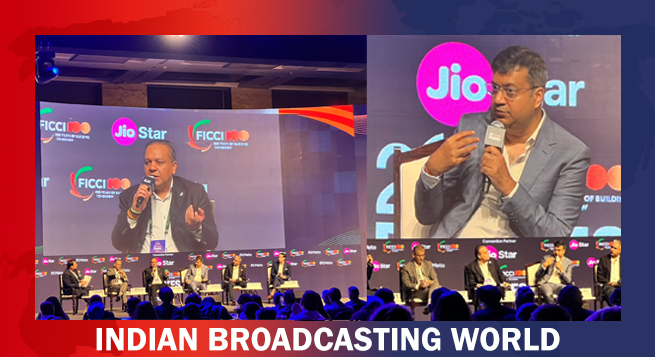
Reality television may be unscripted, but creating a successful format involves a carefully built mix of casting, storytelling, partnerships, budgets and audience understanding. At FICCI FRAMES 2026, industry leaders discussed what makes reality shows work and how unpredictable moments can turn into cultural talking points.
The session, titled ‘Reality – The Hit-Making Engine: Moments that turn into Cultural Phenomena’, brought together Alok Jain, Head – Hindi & English Entertainment Business (Streaming, TV and Studios), JioStar; Deepak Dhar, Founder and Group Chief Executive Officer, Banijay Asia and Endemol Shine India; Ekta Kapoor, Founder, Balaji Telefilms; Vipul Shah, Founding Chairman and Managing Director, Optimystix Entertainment; Apoorva Mehta, Chief Executive Officer, Dharma Productions; and Nikul Desai, Founder and Producer, Eevaan Films and Story Weaver Collective. The discussion was moderated by Delshad Irani.
The conversation looked at how unscripted entertainment continues to find audiences at a time when viewing habits are spread across television, streaming platforms, social media and short-form video. According to Alok Jain, the changing Indian consumer has played an important role in the growth of the category. He traced this evolution from the post-liberalisation period in 1995 through the IT boom and the digital acceleration around the Covid-19 period.
Jain described the 2026 Indian consumer as young, ambitious and increasingly comfortable moving between screens and content formats. He also highlighted the scale of JioStar’s entertainment business, saying it reaches around 1 billion people every year in the Hindi market across television, digital and connected TV, with approximately 460 billion minutes of watch time. More than 40 shows were released across television and digital over the previous year, with another 17 titles lined up over the following three to four months.
For the panellists, however, numbers only explain part of reality television’s appeal. The real strength of unscripted programming lies in its unpredictability. Creators can establish the setting, rules and format, but once participants enter that environment, their reactions cannot always be controlled. It is these unexpected moments that can sometimes become the most memorable parts of a show.
Deepak Dhar pointed to the challenge of keeping established franchises fresh. Shows such as Bigg Boss and Khatron Ke Khiladi, which have been running for around 20 and 15 years respectively, need to retain the essence of their original formats while continuing to introduce new creative elements. Dhar also said Banijay’s teams track the evolution of these formats across around 40 countries, languages and communities, allowing Indian adaptations to draw on international learnings while responding to changing local audiences.
Audience behaviour has also changed the way reality shows are consumed. Dhar described a journey that can begin with a Reel, move to a promo and eventually bring viewers to the full programme. With this fragmented viewing journey, the first 10 to 15 minutes of a show have become increasingly important in establishing a strong hook. Reality television has also expanded beyond scheduled episodes through 24/7 live streaming, giving audiences the opportunity to follow a show almost continuously.
Ekta Kapoor brought another perspective to the discussion, arguing that reality programming has an advantage in an environment increasingly dominated by short-form content. Drawing from her experience with ‘Nach Baliye and Lock Upp’, she said reality shows need to offer viewers a sense of genuine unpredictability, particularly when competing for long-form attention against Reels and very short videos.
The unpredictable nature of reality teleision also means creators have to give up some of the control associated with scripted entertainment. While a scripted show can be planned several episodes in advance, an unscripted trigger can lead to a reaction that changes the direction of the story, requiring makers to respond to what is happening rather than simply follow a predetermined plan.
Vipul Shah’s ‘Laughter Chefs’ was discussed as an example of how seemingly different entertainment elements can come together to create a reality format. Shah explained that the concept combined food and comedy, two areas that gained particular prominence during Covid-19. Cooking provided the structure, contestants who were not necessarily skilled cooks created the comedy, celebrity participation brought familiarity and relationships added the reality element.
Casting, therefore, emerged as one of the most important ingredients in building a successful reality show. Shah described casting as almost a form of scripting, particularly for comedy-driven formats where natural timing, humour and the ability to enjoy the situation can determine how the show develops.
Nikul Desai spoke about ‘Bhojpuri Bawaal’, a follow-reality format designed around the personal and professional relationships of prominent personalities from the Bhojpuri industry. The show aims to explore the people behind public personas already familiar to audiences through YouTube and social media, while also tapping into the large potential audience across Uttar Pradesh, Bihar and Jharkhand.
The discussion also highlighted the importance of partnerships between creators and platforms. Desai said a creator needs a platform willing to back an idea after signing on, while Shah stressed the importance of broadcaster confidence in both the genre and the audience proposition. Because the outcome of an unscripted show cannot be completely controlled, such partnerships become particularly important once production begins.
Budget, meanwhile, does not automatically determine whether a reality show will become a hit. Dhar pointed to ‘The 50’, which did not rely on major celebrity names or a conventional star host, instead building the show around a masked man. The format was successful enough to move towards a second season. He also cited ‘Alliances with Kunal Khemu’ and ‘Rise & Fall with Virender Sehwag’ as examples of a broader pipeline that does not depend solely on the biggest celebrity names.
The business surrounding reality entertainment has expanded along with the formats themselves. Jain noted that more than 1,000 brands have participated in JioStar shows over the past decade. A reality programme can also generate a much larger content ecosystem, with a five-hour show potentially becoming the source for around 20 hours of surrounding creator-led content, clips, conversations and social engagement.
That extended ecosystem has become an important part of reality television’s appeal. A contestant can emerge as a celebrity, an established celebrity can find a new audience, a television moment can become a meme and a short clip can drive viewers back to the full episode.
The discussion at FICCI FRAMES 2026 highlighted how reality entertainment is evolving from a conventional television genre into a wider audience and content engine. Its central strength remains the element that cannot be completely scripted: what happens when real personalities, carefully designed formats and live audience reactions come together. When the casting works, the format holds, the platform backs it and audiences connect with the story, a single unscripted moment can travel far beyond the episode in which it first appeared.