 Govt admits ad code bars ‘miraculous’ claims in product ads
 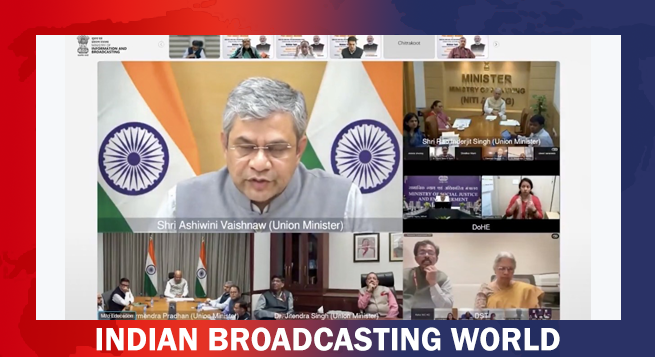 Vaishnaw: Creator economy offers citizens a democratic platform
  Prime Video, HBO Max executives to headline Series Mania Forum
 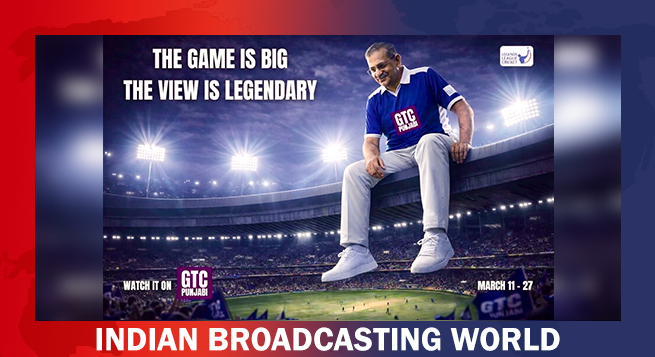 GTC Network gives Punjabi twist to Legends League Cricket
 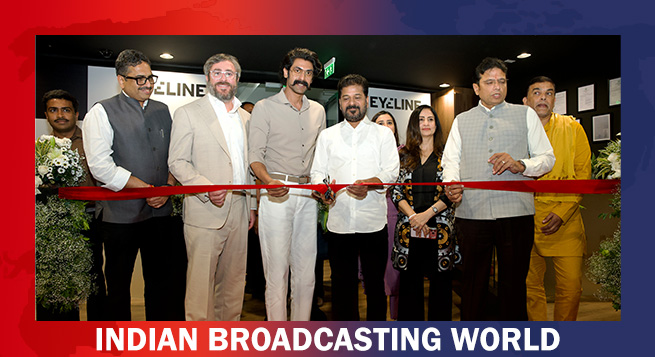 Netflix opens Eyeline Studios in Hyderabad
 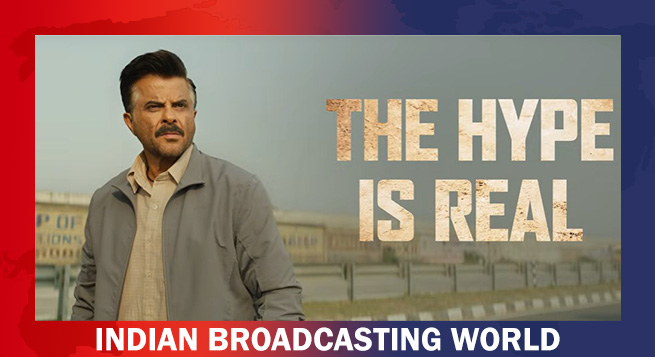 ‘Subedaar’ tops Prime Video India opening weekend
 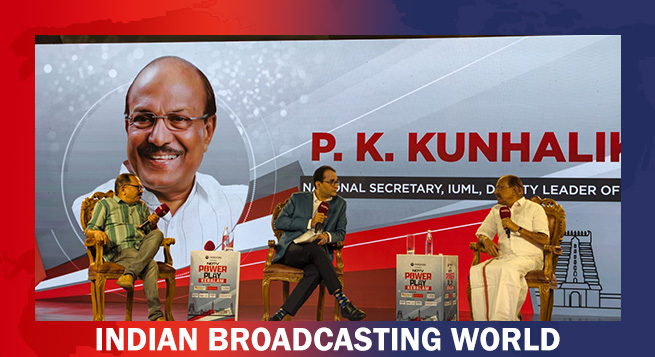 Mathrubhumi partners NDTV for ‘Power Play’ event in Thiruvananthapuram
 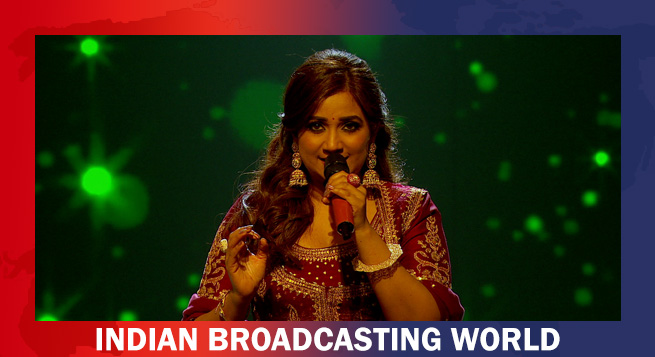 Shreya Ghoshal’s heartfelt moments on Indian Idol that won audiences over
 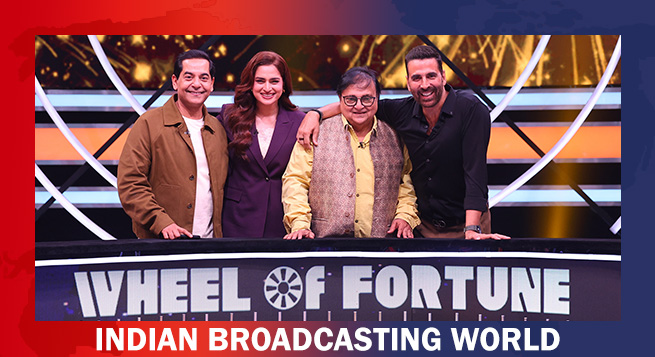 Ayesha Khan gets Akshay Kumar to groove to ‘Shararat’ on ‘Wheel of Fortune’



India yesterday observed World Television Day 2025, celebrating the medium’s reach, impact and evolution as one of the country’s most powerful tools of public communication and national integration. Marked globally on November 21 following the UN General Assembly’s 1996 proclamation, the day highlights television’s role in informing, educating and shaping public opinion across societies.
In India, where television reaches nearly 900 million viewers across 230 million households, the observance was held under the Ministry of Information and Broadcasting (MIB) and public broadcaster Prasar Bharati. The details were released through a government press release, underscoring the medium’s continuing significance in public service messaging, development communication and inclusive access across linguistic and regional audiences.
India’s media & entertainment (M&E) sector contributed Rs.2.5 trillion to the economy in 2024 and is projected to cross Rs.3 trillion by 2027, with television alone accounting for nearly Rs.680 billion. With the growth of smart TVs, 4K broadcasting, digitisation, 5G and expanding OTT use, television remains the country’s most accessible and culturally unifying medium.
Television in India began as an experimental service on September 15, 1959, launched by All India Radio in collaboration with UNESCO, with broadcasts aimed at education and rural development around Delhi. By 1965, regular transmission had begun and Doordarshan emerged as a dedicated national broadcaster. The subsequent expansion of television centres—Mumbai, Srinagar, Amritsar, Calcutta, and Chennai—laid the foundation for a nationwide public service network.
A turning point came with the Satellite Instructional Television Experiment (SITE) in 1975–76, carried out by ISRO and NASA. The initiative delivered educational content directly to 2,400 villages, focusing on agriculture, health, family planning and teacher training—setting the stage for India’s satellite-based communication model. By the early 1980s, Doordarshan had established a development-oriented, multilingual broadcasting ethos that would guide national programming for decades.
The introduction of colour television in 1982 during the Asian Games transformed viewing in India. Throughout the 1980s, Doordarshan expanded its transmitter network, reaching 70 percent of the population by 1990. The era also strengthened regional Doordarshan Kendras, enabling state-level content production and reinforcing cultural representation through local-language broadcasting.
The liberalisation of the 1990s opened the satellite era with private channels such as Star TV, Zee TV and Sony Entertainment Television. Doordarshan continued to build its national and regional services, while India transitioned into digital satellite broadcasting. A milestone came in 2004 with the launch of DD Direct Plus, today known as DD FreeDish, India’s only free-to-air DTH platform, which now reaches more than 6.5 crore homes.
Television has also played a transformational role in education. During the COVID-19 pandemic, Doordarshan became a lifeline for students without internet access, broadcasting curriculum-linked lessons in coordination with the Ministry of Education and NCERT. The PM e-Vidya initiative expanded this effort through 12 dedicated DTH channels for Classes 1 to 12, integrating content from SWAYAM, DIKSHA and NCERT to ensure equitable learning access nationwide.
The SWAYAM Prabha bouquet further strengthens India’s educational ecosystem with 24×7 curriculum-based channels for school, higher education, teacher training and skill development. The channels, accessible via DD Free Dish and other DTH platforms, broadcast content developed by IITs, UGC, CEC, IGNOU, NCERT and NIOS.
As of March 2025, India has 918 permitted private satellite channels, including 333 pay channels. The rise from 821 channels in 2014 reflects the continued importance of television as a multilingual cultural platform. The industry also supports jobs across production, distribution, broadcasting operations and creative sectors while enabling widespread access to information, public welfare programmes and entertainment.
India’s television ecosystem is now undergoing its next phase of transformation with digital terrestrial transmission (DTT), spectrum optimisation and expanded infrastructure using the DVB-T2 standard. Nearly all analogue terrestrial transmitters have been phased out except at around 50 strategic sites, ensuring service continuity in border and remote regions. Meanwhile, DD Free Dish’s growth—from 59 channels in 2014 to 482 in 2025—continues to drive digital inclusion in low-connectivity areas.
Regulatory reforms under the Telecommunications Act, 2023, and TRAI’s recommendations for service authorisation reflect the evolving convergence of traditional broadcasting with OTT, multi-platform distribution and emerging technologies.