 SC judge Nagarathna says media can’t perform under constraint
  NDTV.com tops English news websites in January with 35.6 million visitors
  JioStar’s Piyush Goyal outlines vision for ‘Any Screen, Any Pipe’ future of TV
  UK makes content, accessibility norms for streamers same as TV
 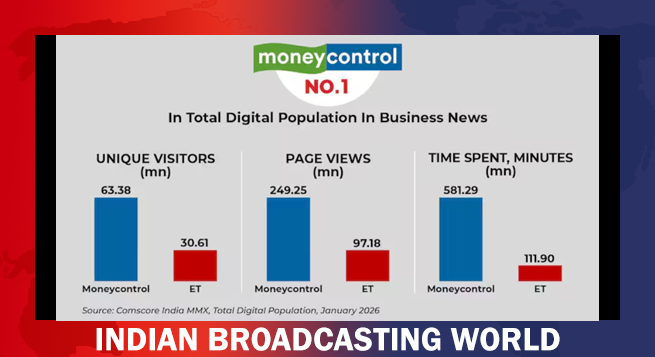 Moneycontrol tops biz news rankings; more than twice of ET audience
  FAST emerges as TV ecosystem core in 2026, revolutionizing streaming ads
  ‘Hamnet’ to stream on Peacock on March 6 ahead of Oscars
  ‘Kara’ starring Dhanush set for April 30 release
  ‘The Society’ S2 returns with Munawar Faruqui at the helm
  WBD agrees to be bought by Paramount for $110bn
  BAFTA-winning film ‘Boong’ to hit theatres on March 6



In a significant upheaval within the digital landscape, a recent study has unveiled that nearly 50 percent of environmentalists have abandoned the social media platform, formerly known as Twitter and now rebranded as X.com, after its acquisition by tech magnate Elon Musk. The research sheds light on the profound implications of this exodus for public discourse on critical environmental topics.
Elon Musk’s $44 billion takeover of Twitter in October 2022 marked a pivotal moment in the platform’s trajectory, particularly for its role as a hub for environmental discussions. Renowned as a space for diverse voices advocating for environmental causes, Twitter’s transformation into X.com under Musk’s leadership triggered a profound shift in user engagement.
A group of researchers, composed of biologists and environmental consultants based in the United States, delved into the consequences of this transformation. Their findings, published in the journal “Trends in Ecology and Evolution,” emphasize the alarming attrition of environmental users on the platform. This departure, the researchers stress, has far-reaching ramifications for conversations surrounding subjects like climate change, biodiversity, and disaster recovery.
According to IANS, the research team focused on a sample of 380,000 “environmentally-oriented users,” a diverse spectrum of individuals who actively contributed to discussions on climate change and biodiversity conservation on Twitter. Users were considered “active” if they posted at least once within 15 days.
The findings reveal a stark reality: during the six months following Musk’s takeover, only 52.5 percent of these environmentally-focused users continued to engage on X.com. This steep decline far exceeds the attrition rates observed in other comparable online communities, including those discussing general politics on the platform.
The researchers underline the uniqueness of Twitter’s role as a platform for diverse environmental interests to communicate, advocate, and collaborate on crucial matters. They express concerns about the absence of an equivalent platform to Twitter, raising questions about the future of tracking discourse related to environmental conservation and mobilizing pro-environmental segments of the public.
The study authors emphasize the necessity for collaborative efforts across industry, non-profit organizations, and academia. They assert that tracking public engagement with the environment across various social media platforms is essential for driving primary research, applied conservation efforts, and climate mitigation.
As the fallout from the departure of environmentalists from X.com unfolds, conversations about the future of digital spaces for environmental discourse are likely to intensify. The study’s revelations underscore the growing importance of digital platforms as arenas for discussing vital global challenges and advocating for change.