 Guest Column: TRAI’s ALTD reccos a turning point for b’cast sector
 Indian publishers, including those owned by Ambani & Adani, challenge privacy laws
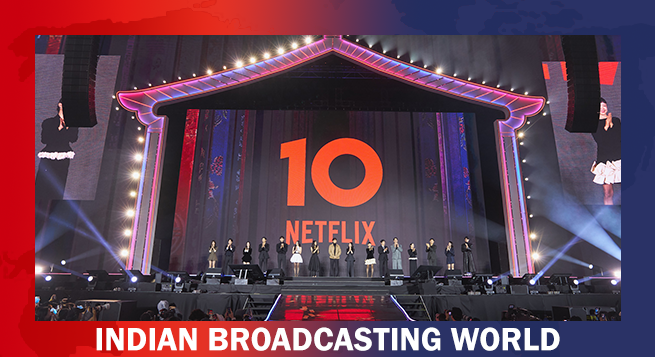 Netflix’s marks Korean decade as K-content rules non-English viewing
 GTPL Hathway now tracking TV viewership via RPD, targets 50k homes
 Netflix, hoichoi in pact to take Bengali stories to wider audiences
 Google unveils Gemini 4 Carbon AI model
 Christopher Chung joins Apple TV’s ‘Ascension’
 TRAI internet TV proposal raises OTT regulation concerns: ET report
 Rohit calls Rajpal Yadav, Kiku’s episode best on ‘Family Full House’
 Ranbir Kapoor recalls Alia Bhatt proposal story on ‘Kaun Banega Crorepati’




The Telecom Regulatory Authority of India has recommended a new authorisation framework for internet-based TV services, raising concerns among legal experts about the possibility of wider regulation of online content platforms. Experts have questioned whether the Telecommunications Act, 2023, gives TRAI the authority to regulate these services and whether the proposal could set a precedent for regulating other internet-based applications.
According to an Economic Times report today, the proposal focuses on Application-based Linear Television Distribution (ALTD) services, which bring together and distribute scheduled TV channels through apps and websites over the internet. These services include Free Ad-Supported Streaming Television (FAST) platforms. Legal experts and industry stakeholders fear that the framework could have wider implications for OTT services, although it does not automatically bring all OTT platforms under the proposed rules.
The main concern is whether TRAI can regulate applications that deliver content over the internet but do not operate the underlying telecom infrastructure. Industry stakeholders have argued that internet-based TV apps are different from traditional cable and DTH services and that the regulator’s legal authority over such applications needs to be clarified.
The Ministry of Information and Broadcasting (MIB) referred the matter to TRAI in December 2025, seeking recommendations on a framework for FAST services. TRAI has argued that these platforms distribute scheduled TV channels in a way similar to traditional television distributors, making a regulatory framework necessary.
Under the proposed framework, ALTD service providers would need government authorisation. TRAI has recommended a one-time entry fee of Rs 1 lakh and an application processing fee of Rs 10,000. The authorisation would be valid for 20 years and could be renewed for successive 10-year periods. The proposal does not include an annual authorisation fee, bank guarantee or security deposit for the service authorisation.
The recommendations also propose compliance and reporting requirements for service providers, along with consumer complaint-handling arrangements. Smart TV manufacturers and operating system providers would be required to make only authorised ALTD applications available through their devices and app stores.
TRAI has also recommended a simplified registration process for internet-native linear TV channels that do not carry news or current affairs. The proposal includes separate requirements for internet-based TV channels, while live streams on social media platforms and certain broadcaster-owned services are excluded from the proposed framework.
The recommendations have raised concerns among legal experts and digital industry stakeholders about the possible impact on online platforms and the boundaries between telecom, broadcasting and digital media regulation. They argue that the government needs to clarify the legal basis and scope of the proposed framework.
TRAI’s recommendations have been submitted to the government for consideration. They are proposals and have not yet become final rules. The Ministry of Information and Broadcasting will decide on the next steps.