 Govt unveils revamped TV ratings framework; entry norms liberalised
  KRAFTON, DPIIT sign pact to promote digital entertainment, esports
 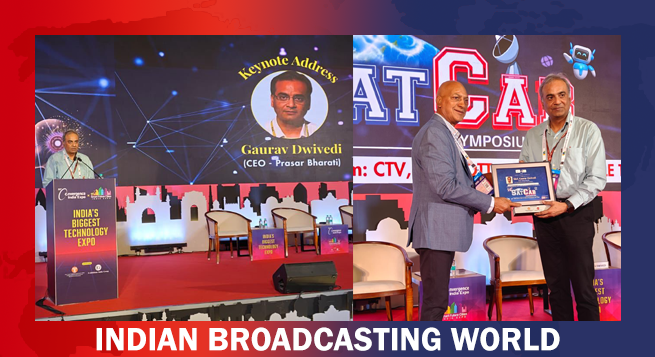 Distribution paradigms shifting, but audience remains ‘king’ Prasar Bharati CEO
 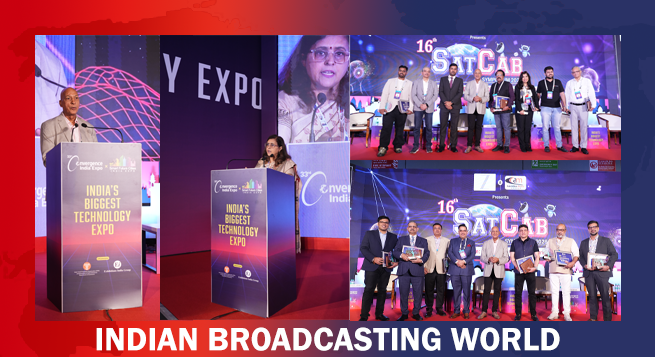 SATCAB ’26 opens with lively discussion on rules, news, multi-screen measurement
 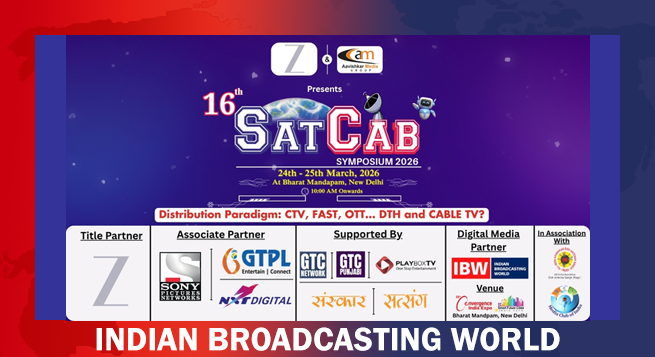 SATCAB 2026 to spotlight future of broadcasting, OTT, digital media
  CNN-News18 launches ‘Battle for the States’ ahead of assembly polls
  Chetak SCREEN Awards 2026 to air live on Sony on April 5
  ZEE5 Global to premiere ‘Hey Balwanth’ on March 31
  Pocket FM partners with Indian Open Pickleball 2026
  Ridhi Dogra hosts Nat Geo’s ‘Postcards from Hong Kong’




West Bengal’s industrial journey took center stage at the SRMB Presents Times Network Growth Summit West Bengal, as Dr. Shashi Panja, Hon’ble Minister for Industries, Commerce & Enterprises, led a high-impact dialogue on the state’s emergence as a resilient and future-ready economic powerhouse. The summit brought together key voices from government, business, and academia to chart a roadmap for Bengal’s growth narrative across sectors.
Organised by Times Network, the event provided a platform for forward-looking discussions on transformative policy reforms, sustainable infrastructure, digital innovation, MSME development, and the evolving role of education and skilling. The Growth Summit was supported by Dollar Industries, University of Engineering & Management (UEM), and Sister Nivedita University as co-partners, alongside OmDayal Group of Institutions and Julien Day School.
In her keynote address, Dr. Panja spotlighted West Bengal’s investment-driven growth. “The state has attracted over Rs.1.33 lakh crore in private sector investments, creating 1.8 lakh employment opportunities. The iron and steel sector has emerged as a clear leader with Rs.45,240 crore in investment and over 62,500 jobs, followed by energy, oil and gas at Rs.27,159 crore, and logistics contributing Rs.19,000 crore and 25,000 jobs,” she shared.
This address was part of an official press statement from the Government of West Bengal, distributed during the event.
Dr. Panja also pointed to the state’s industrial infrastructure milestones, stating, “West Bengal is home to the largest leather complex, hosiery and foundry parks, and railway manufacturing clusters in India. It is now a cement hub, with all nine major cement players having invested here. Bengal Silicon Valley—spread across 200 acres—has drawn 11 data centers and major IT firms such as TCS, Wipro, Infosys, and Cognizant.”
Highlighting key policy interventions, she noted the 2023 Industrial Corridor Policy supported by a Rs.3,485 crore loan from ADB, and a Logistics Policy backed by Rs.2,072 crore to boost trade efficiency. The state’s Tea Tourism Policy has already attracted 32 investment proposals, while the Sand Mining Policy has generated Rs.500 crore in revenue, with Rs.2,280 crore expected over five years. A shift to freehold land for industries has led to 21 proposals being approved, a landmark move in land reforms.
Dr. Panja underscored the prominence of MSMEs in Bengal’s economy: “With over 90 lakh MSMEs, Bengal leads the country in women-led businesses with 36.4 percent female entrepreneurship and 12.73 percent female workforce participation. MSME credit disbursal has touched ₹8.6 lakh crore, supported by cluster-based industrial development and 35 GI-tagged products showcasing Bengal’s diverse craftsmanship and innovation.”
The summit also featured insights from top industry leaders and educationists, including Ashish Beriwala (Director, SRMB Srijan), Prof. Ved Prakash (Former UGC Chairman), Prof. Biswajoy Chatterjee (Vice Chancellor, UEM Jaipur), and Vinod Gupta (MD, Dollar Industries). They discussed bridging industry-academia gaps, skilling youth for Industry 4.0, and harnessing Bengal’s potential as a digital and manufacturing hub.
The Growth Summit concluded on a note of optimism and clarity, echoing a shared commitment to building Bengal into a center for innovation, inclusivity, and industrial resurgence.