 CEO Jassy says Prime Video gains profit; bullish on ad momentum
 JioStar Q2 revenue up 10.1% to Rs 6,806cr. despite weak ad environ
 Google brings AI Mode ads to India, 9 other markets
 Of Jio listing, tears, party…and RIL’s combined $320bn market cap
 Guest Column: TRAI’s ALTD reccos a turning point for b’cast sector
 Indian publishers, including those owned by Ambani & Adani, challenge privacy laws
 HUL’s Taj Mahal Tea ropes in Rahman as brand ambassador
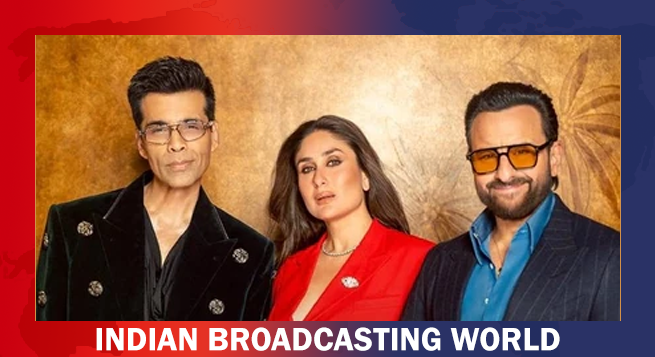 Kareena, Saif Ali Khan join KJo on ‘Koffee With Karan’ S9
 Prasar Bharati bags two Asia-Pacific Broadcasting Union honours
 Arnie swaps action hero for Santa’s red suit in ‘Man with the Bag’
 ‘Rise and Fall 2’ gets its first finalist in Shehzad Poonawalla





The government is not seeking to control or restrict online content but rather to ensure transparency by requiring creators to label AI-generated content so that audiences can make informed choices, Electronics and IT Secretary S Krishnan said yesterday.
The government proposed changes to IT rules on Wednesday (Oct, 22), mandating the clear labelling of AI-generated content and increasing the accountability of large platforms, such as Facebook and YouTube, for verifying and flagging synthetic information to curb user harm from deepfakes and misinformation.
“All that we are asking for is to label the content…You must put in a label which indicates whether a particular piece of content has been generated synthetically or not. We are not saying don’t put it up, or don’t do this and that. Whatever you’re creating, it’s fine. You just say it is synthetically generated. So that once it says it’s synthetically generated, then people can make up their minds as to whether it is good, bad, or whatever,” a PTI report from New Delhi quoted Krishnan as saying.
India’s strength lies in its ability to build and deploy artificial intelligence solutions globally, offering an opportunity to drive greater productivity, employment, and innovation across sectors, Krishnan said while speaking at the curtain-raiser of the ‘AI for Social Impact’ thematic track at the Emerging Science, Technology, and Innovation Conclave 2025.
He said the country’s goal of becoming Viksit Bharat by 2047 could only be realised through widespread use of technology, with AI playing a crucial role.
On October 22, the IT Ministry (Meity), according to a PTI report, had noted that deepfake audio, videos and synthetic media going viral on social platforms have demonstrated the potential of generative AI to create “convincing falsehoods”, where such content can be “weaponised” to spread misinformation, damage reputations, manipulate or influence elections, or commit financial fraud.
The proposed amendments to IT rules provide a clear legal basis for labelling, traceability, and accountability related to synthetically-generated information.
Apart from clearly defining synthetically generated information, the draft amendment, on which comments from stakeholders have been sought by November 6, 2025, mandates labelling, visibility, and metadata embedding for synthetically generated or modified information to distinguish such content from authentic media.