 FY26 Q3 pay TV viewership dips; telecom subs, revenues up: TRAI
  India’s football body invites commercial rights bids for 15 years
  NDTV India, NDTV 24×7 lead YouTube viewership amid major news cycle
  SC judge Nagarathna says media can’t perform under constraint
 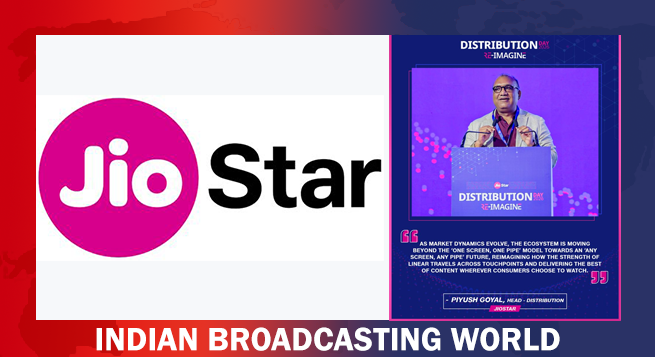 JioStar’s Piyush Goyal outlines vision for ‘Any Screen, Any Pipe’ future of TV
  ‘Scary Movie’ returns with 6th instalment, set for June release
 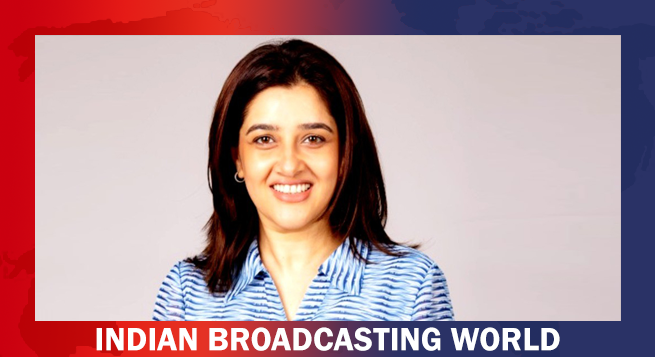 WPP Media elevates Dipti Gulati as APMEA VP for Client Growth
  Apple TV cancels Kristen Wiig-led comedy ‘Palm Royale’
 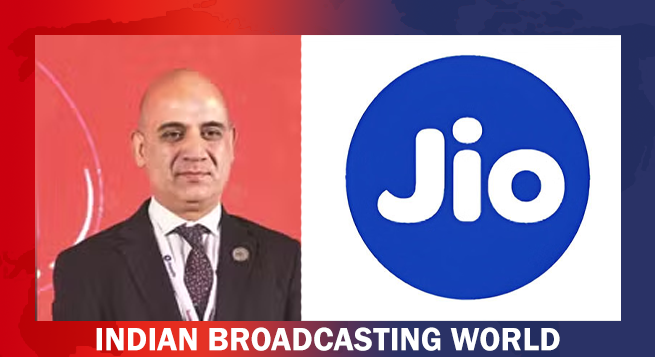 Jio Platforms appoints Dan Bailey as prez to drive global expansion
 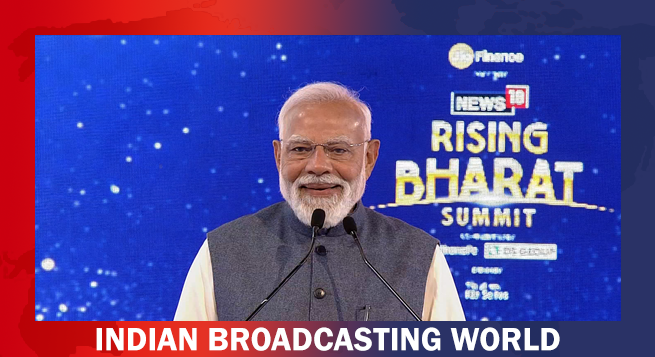 Rising Bharat ’26: PM outlined vision of self-reliance, AI leadership



The latest ‘Indian Telecom Services Performance Indicator Report’ for the quarter ending December 31, 2025 released by the Telecom Regulatory Authority of India (TRAI) yesterday shows mixed trends in the media and entertainment segments alongside continued expansion in the telecom sector.
Broadcasting indicators highlight a modest contraction in pay TV viewership, with pay DTH service active subscriber numbers declining from 52.78 million to 50.99 million during the quarter, underlining a continuing shift in consumer preferences.
Interestingly, though the number of permitted private satellite TV channels stands at 920, but only 335 of 911 permitted channels reported to TRAI and were active pay TV channels.
In radio broadcasting, 385 private FM radio channels continue operations across 113 cities, though the sector saw two station permissions being surrendered in Mumbai and Chennai during the period under review. Despite this, FM radio advertising revenue increased to Rs. 419.29 crore, up from Rs. 399.96 crore in the prior quarter, indicating resilient ad spends in the segment. In the community radio space, 557 stations were operational as of December 31, 2025.
The TRAI release encapsulates broad sectoral trends that underscore media consumption shifts and telecom market resilience, offering a detailed snapshot of industry performance amid evolving consumer dynamics and technology adoption.
On the internet front, India’s digital footprint continued to expand, with the total internet subscriber base rising to 1,028.61 million — up 1.06 percent from September. Broadband subscribers formed the bulk at 1,007.35 million, though narrowband users declined 4.18 percent. Wired connections reached 45.32 million, with wireless internet at 983.29 million.
Telecom subscription data, according to the TRAI report, showed robust growth, with total telephone connections increasing from 1,228.94 million to 1,306.14 million quarter-on-quarter. Overall tele-density climbed substantially to 91.74 percent, supported by gains in both urban and rural markets. Wireless (mobile + FWA) subscribers increased to 1,258.77 million, with mobile users standing at 1,244.20 million.
Financial performance indicators reinforced steady revenue growth in the telecom segment. Gross Revenue (GR) rose to Rs.1,02,475 crore, with Applicable Gross Revenue (ApGR) at Rs. 96,456 crore and Adjusted Gross Revenue (AGR) at Rs. 84,270 crore. These figures marked healthy quarterly and year-on-year increases in revenue flows for the sector.
Consumer usage metrics also reflected positive momentum, with the average monthly revenue per user (ARPU) for wireless services increasing to Rs. 194.57 — up 1.87 percent quarter-on-quarter and 7.03 percent year-on-year. At the same time, average minutes of usage climbed to 1,012 minutes per month, indicating sustained engagement on telecom networks.
Network quality benchmarks continued to show compliance by operators across key service parameters, confirming ongoing efforts to maintain service standards. The report noted full adherence to quality of service norms by both wireline and broadband providers in the quarter.