 ‘Punha Ekda…’ to stream on Ultra Jhakaas from Mar 19
  Punjab unveils film promotion policy offering major subsidies
  Prasar Bharati holds copyright over content, govt clarifies in Parliament
  ‘One Battle…’, ‘Sinners’, Marty…’, begin Mar15 Oscars quest
  Choice International, CNBC-AWAAZ host ‘Nivesh Nirnay’ initiative in Vadodara
  WION to host World PULSE forum in New Delhi
 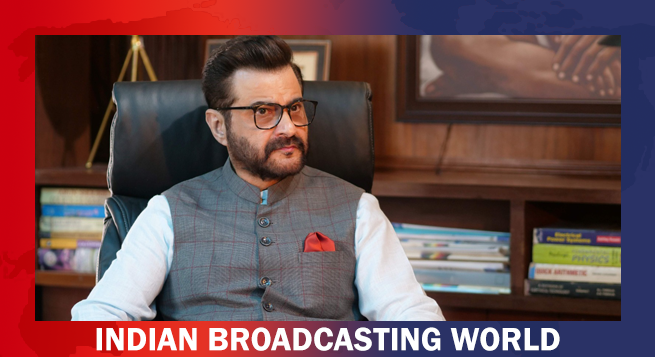 Sanjay Kapoor reflects on working with Prakash Jha in ‘Sankalp’
 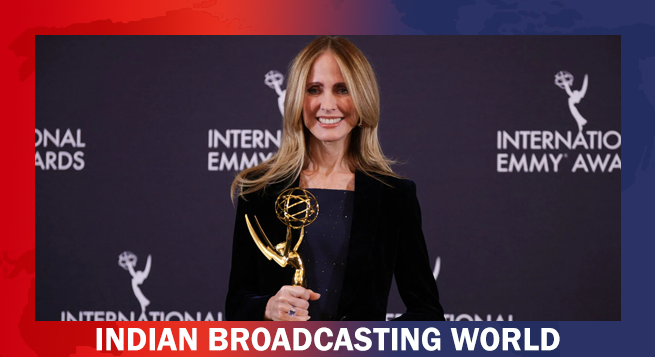 Disney reshapes entertainment leadership under Dana Walden
  Prime Video, Hrithik Roshan team up again for comedy ‘Mess’



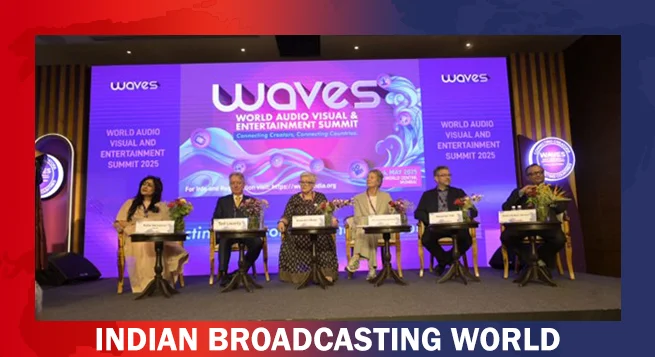
A compelling panel discussion titled ‘Radio Reimagined: Thriving in the Digital Age’ took centre stage at the ongoing World Audio Visual and Entertainment Summit (WAVES 2025) in Mumbai today. The session, rich in global perspectives and expert insights, delved deep into the opportunities and challenges surrounding the radio broadcasting industry in the digital era.
As per a press release issued by the Press Information Bureau (PIB), the panel brought together noted radio and broadcasting experts including Jacqueline Bierhorst, a pioneer of commercial radio; Ruxandra Obreja, Chairman, Digital Radio Mondiale (DRM); Alexander Zink, Vice Group Leader of DRM; Ted Laverty, a veteran in broadcast technology; and Shashi Shekhar Vempatti, ex-CEO of Prasar Bharati and Co-Founder of Deep Tech for Bharat. The discussion was skillfully moderated by Nisha Narayanan, Director and COO of Red FM, who steered the conversation through various vital aspects shaping the industry’s future.
Jacqueline Bierhorst stated that digital radio is set to become the primary medium due to its superior sound quality, reliability, and capacity to integrate multimedia features. While endorsing the digital shift, she stressed that analog broadcasting should continue to exist, especially in regions lacking digital infrastructure. Both she and Alexander Zink highlighted the indispensable role of broadcast radio during emergencies such as natural disasters and terror attacks, where digital networks might falter. Ruxandra Obreja reinforced this, noting that analog radio still reaches over 600,000 villages in India, and remains vital for crisis communication.
The challenge, as the panellists put it, lies in introducing cutting-edge technologies without rendering older systems obsolete. Ruxandra Obreja articulated this well, emphasising a balance that preserves traditional networks while building future-ready infrastructure.
In a sharp contrast between the old and the new, Bierhorst outlined a modernised version of the classic “5 Cs” — now standing for Coverage, Content, Consumer Devices, Car, and Communication. She stressed the importance of ensuring coverage in regions where radio listenership remains high. On a similar note, Ted Laverty discussed the benefits of radio-playing apps like Radioplayer and Radio FM in Europe, which provide privacy-safe listenership analytics. He suggested similar innovations be explored in India to strengthen understanding of audience trends.
The panellists universally agreed that ‘Content is King.’ Nisha Narayanan raised the concern of high licensing fees limiting private FM content diversity, pushing them to rely on popular music rather than varied programming. Highlighting a success story, Bierhorst mentioned Absolute Radio in the UK, which thrived for decades by producing engaging, educational, and community-focused content.
Adding to this, Alexander Zink reminded the audience that digital radio offers far more than audio—it supports visual and text elements that enhance the listening experience. Laverty underlined the need for an entire ecosystem to support radio’s growth, including affordable devices and user-friendly platforms. He called for support through initiatives like ‘Make in India’ to bolster indigenous radio hardware manufacturing.
On the subject of sustainability, the experts discussed how digital radio uses more energy-efficient modulation techniques and supports single-frequency networks, making it more climate-friendly. Yet, a complete FM switch-off, as tried in some European nations, was cautioned against by Ruxandra Obreja. She urged that policymakers account for the needs of commercial radio before making sweeping changes.
Reflecting on the Indian context, Shashi Shekhar Vempatti described radio as the “original public good” and underlined its continued relevance in Indian society. With over 90 crore people reachable through Prasar Bharati and a billion-plus mobile users, India is uniquely positioned to lead the digital radio revolution. Policy support — such as mandating radio in mobile and AI-powered devices — would be key to realising this vision.
The discussion concluded with a strong consensus: digital radio is undoubtedly the future, but analog must not be discarded. Instead, a collaborative platform, backed by shared transmission infrastructure and forward-looking policy, is needed to ensure that radio in India not only survives but thrives in the digital age.