 ‘Ramayana’ producer Malhotra likens film to ‘Avatar’, ‘LOTR’, ‘Odyssey’
 Bombay HC protects ‘Ramayana’ from piracy
 CEO Jassy says Prime Video gains profit; bullish on ad momentum
 JioStar Q2 revenue up 10.1% to Rs 6,806cr. despite weak ad environ
 Google brings AI Mode ads to India, 9 other markets
 Of Jio listing, tears, party…and RIL’s combined $320bn market cap
 ITU says despite 6.3bn people now online digital divide persists
 Eros Innovation, Tourism Ministry sign pact for 50 promo films
 Is Jio exploring tech-for-equity deals with US’ Comcast, Charter Comms?
 Much anticipated ‘Ramayana’ targets Rs 75-100cr. opening
 NBCUniversal invests in microdrama platform Story TV’s parent EloElo




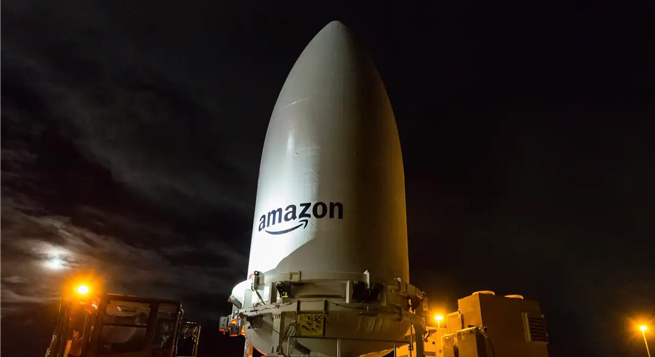
Amazon launched the first test satellites for its planned internet service on Friday as a rival to SpaceX’s broadband network.
United Launch Alliance’s Atlas V rocket blasted off with the pair of test satellites, kicking off a program that aims to improve global internet coverage with an eventual 3,236 satellites around Earth.
Amazon plans to begin offering service by the end of next year, Associated Press reported.
Elon Musk’s SpaceX has a huge head start over Amazon and its founder Jeff Bezos, who has his own rocket company, Blue Origin.
SpaceX flew its first test Starlink satellites in 2018 and the first operational satellites in 2019. It has since launched more than 5,000 Starlinks from Florida and California, using its own Falcon rockets.
Europe’s Eutelsat OneWeb also is launching internet satellites, with around 600 in orbit.
Amazon originally agreed to put the satellites on the debut launch of ULA’s Vulcan rocket. But with the Vulcan grounded by problems until at least the end of this year, Amazon switched to the long-established Atlas V.
When licensing the program, the Federal Communications Commission stipulated that at least half of the planned satellites be operating by 2026 and all of them by 2029.
Amazon has reserved 77 launches from ULA, Blue Origin, and Europe’s Arianespace to get everything up.