 Satellite company SES, JioStar sign multi-year distribution deal
 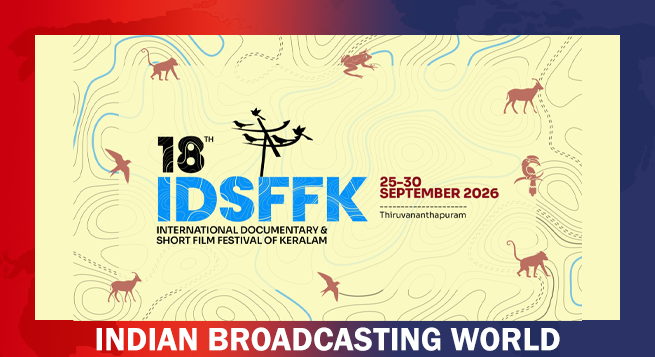 MIB says no film denied screening permission at Keralam film festival
  Govt. clarifies CBFC certification changes, says 1991 core framework unchanged
 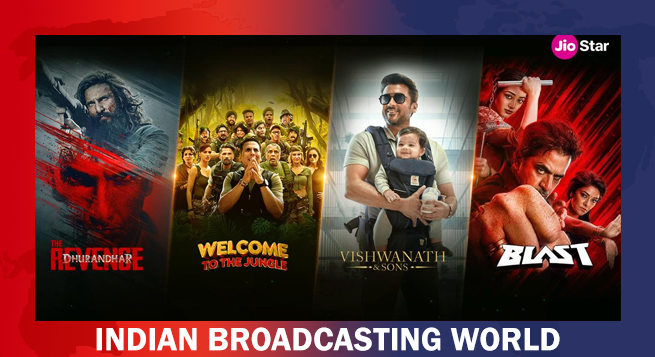 JioStar lines up power-packed festive world TV premieres
  Airtel ups value for postpaid subs; adds iCloud+ service
 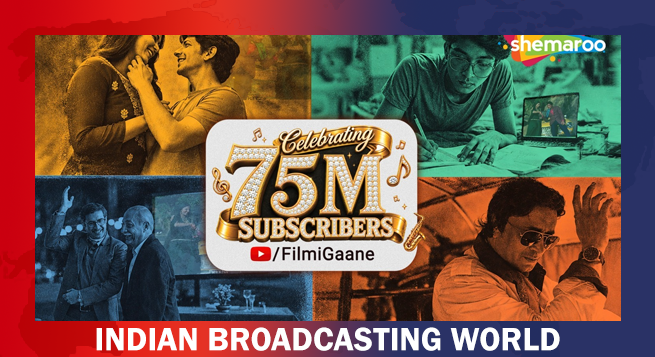 Shemaroo Filmi Gaane crosses 75 million YouTube subscribers
  Why Chrome DM data matters in cross-screen media economy
  Netflix sets december 17 premiere for ‘Quiztopia’



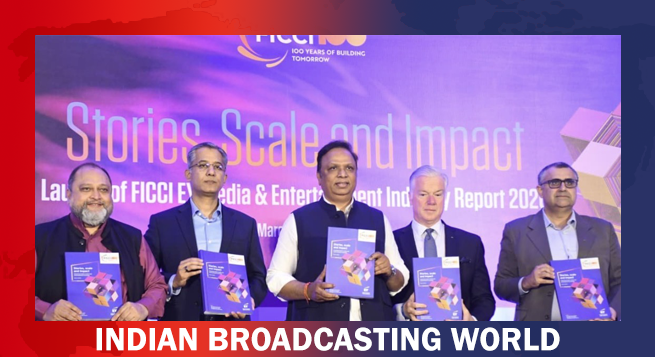
India’s media and entertainment (M&E) sector in 2025 entered a phase of structural transformation driven by digital dominance, shifting consumer behaviour and evolving monetization models, according to a FICCI-EY media and entertainment (M&E) report released yesterday in Mumbai.
Key trends in 2025 showed the M&E sector grew 9.1 percent to reach Rs.2.78 trillion, outpacing nominal GDP per capita growth, with advertising expanding 13.5 percent and emerging as a key growth engine. Digital media continued to dominate, accounting for 63 percent of total advertising, while live events recorded the fastest growth, rising sharply on the back of ticketed events, government functions and large-scale gatherings.
Though linear TV is expected to thrive as total TV homes set to increase over the next few years, the report also noted subscription revenues remained weak overall.
The industry saw strong growth led by advertising and live experiences, even as traditional segments like television and print adapted to changing consumption patterns, while technology such as artificial intelligence (AI) and data analytics deepened engagement across platforms.
The report, ‘Stories, Scale and Impact: Unlocking India’s Media and Entertainment Economy’, highlighted that the sector has moved beyond a growth phase into a digital-first ecosystem marked by platform convergence, hybrid revenue models and audience fragmentation.
It also underlined a broader transition toward immersive experiences, creator-led content ecosystems and IP-driven monetization, with multiple structural drivers — from AI to gaming and experiential entertainment—reshaping the industry’s future trajectory.
Digital platforms drove both consumption and revenues, with digital advertising rising strongly and subscription revenues increasing, particularly across video and music. Paid video subscriptions expanded significantly, aided by premium content behind paywalls, while music subscriptions grew as platforms curtailed free usage. At the same time, linear television witnessed declines in both advertising and subscription revenues due to migration toward digital platforms and Connected TV ecosystems.
Content production dynamics also shifted during the year, with India producing nearly 200,000 hours of content, largely for television, even as studios rationalized spending on high-cost OTT and TV content. Films remained resilient with record releases and box office milestones, though digital and satellite rights values softened as buyers recalibrated investments.
Meanwhile, sectors such as animation and VFX faced cost pressures linked to global supply disruptions and reduced commissioning volumes.
The report noted that 2025 marked a “digital inflection point”, with digital advertising crossing 63 percent of total spends and subscriptions exceeding 140 million households, fundamentally restructuring the media value chain. This shift is driving convergence across platforms, hybrid monetization models combining subscription and advertising, and a move toward data-led decision-making and personalized content delivery.
As disruption deepens, each segment is undergoing transformation, from television transitioning to connected TV and targeted advertising, to OTT platforms experimenting with formats and monetization, and films evolving into multi-platform intellectual property assets. Live entertainment is becoming “phygital”, blending physical and digital experiences, while publishing is moving toward trust-led, subscription-driven models.
Looking ahead, the report identified seven key drivers reshaping the sector, including the rise of experiential entertainment, the rapid expansion of the creator economy, and the adoption of hybrid monetization models.
AI is expected to unlock new efficiencies and creative possibilities, while sports is entering a phase of increased institutional investment and professionalization. At the same time, advertising is being transformed by data and programmatic tools, and gaming is emerging as a major pillar driven by cloud technologies and interactive ecosystems.
Here are more granular details, data points and service-level figures that the report highlighted.
Deeper trends shaping 2025
The report shows that the M&E sector grew 9.1 percent to Rs.2.78 trillion, adding Rs.232 billion during the year, and outperforming nominal GDP per capita growth. Excluding the impact of the online gaming slowdown, growth would have been 11.8 percent, indicating underlying strength across segments.
Growth was sharply skewed toward advertising and experiential segments, with live events emerging as the fastest-growing category, registering a 44 percent jump in the organized segment, driven by ticketed events, weddings, government events and religious gatherings.
Advertising expanded 13.5 percent to Rs.1.5 trillion, with digital alone contributing 63 percent of total ad revenuesand nearing the Rs.1 trillion mark, underlining a decisive shift toward digital-first monetization.
Segment-wise performance snapshot (2025)
- Digital media: Rs.1,110 billion (fastest-growing large segment)
- Television: Declined to Rs.617 billion (structural shift to digital)
- Print: Flat at ~Rs.259 billion
- Filmed entertainment: Rs.205 billion with strong box office recovery
- Live events: Rs.145 billion (high-growth segment)
- Music: Rs.59 billion
- OOH media: Rs.67 billion, growing 13 percent
The report also noted subscription revenues remained weak overall, impacted by declining pay TV homes and regulatory disruption in gaming.
Dwelling on digital ecosystem and consumption metrics, the report said India’s digital consumption scale expanded significantly:
- Online video viewers: 572 million in 2025 (up 4 percent)
- Time spent on video: 32 billion hours (up 13 percent)
- Expected to reach 657 million viewers by 2028
A key structural shift was the rise of regional content with 56 percent of digital content produced in regional languages. Multi-language strategies (up to 8 languages) are now becoming standard across platforms.
Connected TV and platform behaviour. The report highlights the rapid rise of CTV:
- Connected TVs grew 25 percent in 2025
- Connected dongle usage rose 34 percent
- Monthly viewing time reached 85 hours for OTT content on CTV (vs 8 hours for linear TV)
This indicates a shift toward long-form, large-screen viewing, even as mobile remains dominant.
On digital subscriptions and monetization, the report noted the following:
- Digital subscription revenues rose 60 percent to Rs.163 billion
- Paid video subscriptions: 216 million across 143 million households
- Paid music subscriptions: 14.4 million (up 37 percent)
- Paid news subscriptions: only ~4 million (limited scale due to free alternatives)
The data shows video driving scale, while news struggles to monetize, and music is transitioning from free to paid.
On music and audio ecosystem trends, the report said:
- 178 million music streaming users
- 5.98 trillion streams in 2025, with 5.8 trillion ad-supported
- 81 percent consumption domestic; 19 percent international
- 57 percent of streams film-related (declining share)
Additional structural insights: Paid streaming growth driven by restricting free tiers; discovery shifting to short-video platforms and Reels ecosystems
Film and theatrical performance:
- India recorded its highest-ever box office collections in 2025
- Gross box office: Rs.133 billion
- Admissions: ~900 million (up 1 percent)
- India ranked No.4 globally in box office markets
Advertising structure and drivers:
- Digital advertising: Rs.947 billion (up 26 percent)
- E-commerce and point-of-sale ads: Rs.220 billion (up 50 percent)
- Over 1 million SMEs contributed Rs.363 billion to digital ad spends
This reflects a broadening advertiser base, beyond large brands to long-tail businesses, the report noted.
Key structural takeaways include (i) high-growth in digital, live events, CTV, advertising (ii) transitioning: Films, music, OOH (adapting to hybrid models) and (iii) declining/under pressure linear TV, print, traditional subscriptions. At the same time, India continues to lag global peers in monetization despite massive consumption scale, highlighting a persistent gap between audience size and revenue realization.