 Satellite company SES, JioStar sign multi-year distribution deal
  MIB says no film denied screening permission at Keralam film festival
  Govt. clarifies CBFC certification changes, says 1991 core framework unchanged
  JioStar lines up power-packed festive world TV premieres
  Airtel ups value for postpaid subs; adds iCloud+ service
  Shemaroo Filmi Gaane crosses 75 million YouTube subscribers
  Why Chrome DM data matters in cross-screen media economy
  Netflix sets december 17 premiere for ‘Quiztopia’



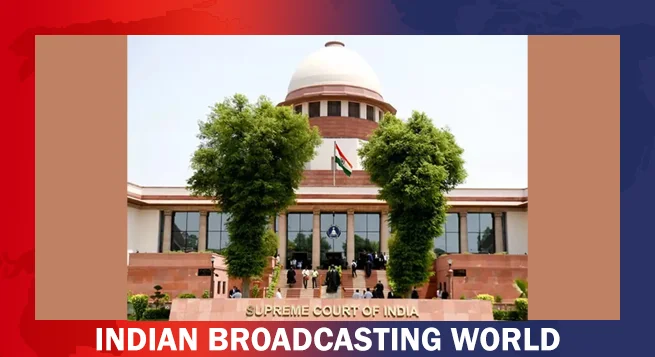
A recent Supreme Court judgment allowing dual taxation on television broadcasting services could significantly increase the tax burden on digital entertainment platforms like Netflix, Amazon Prime Video, and gaming apps, according to tax experts and legal professionals, a report in The Economic Times stated yesterday.
The May 22 verdict, passed by a bench comprising Justices BV Nagarathna and NK Singh in the Asianet Satellite Communications and Others case, clarified that the act of broadcasting can be considered as two separate taxable activities — delivery of service and delivery of entertainment. As a result, both the Centre and state governments can impose separate taxes: service tax by the Centre and entertainment tax by the states.
The Economic Times report stated this dual-taxation model, although originating from a pre-GST era case, could have far-reaching implications for the current digital landscape.
“The ruling is mainly premised on the basis that both taxes deal with different aspects of broadcasting activities and hence, there is no overlap in taxing powers of the Centre and state,” said Saloni Roy, Partner, Deloitte India.
She added that the decision, despite relating to an earlier tax regime, introduces uncertainty in the industry and may influence current tax structures.
While GST was meant to streamline taxation, some states have already enacted their own laws allowing local bodies to impose entertainment duties.