 Ind, Pak cricket & hockey matches most viewed in Asian Games history
 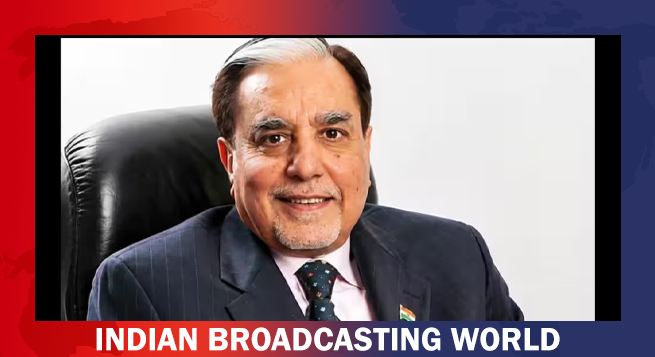 Zee completes 34 years as Subhash Chandra recalls media journey
  Ficci FRAMES session discusses what makes reality TV tick
 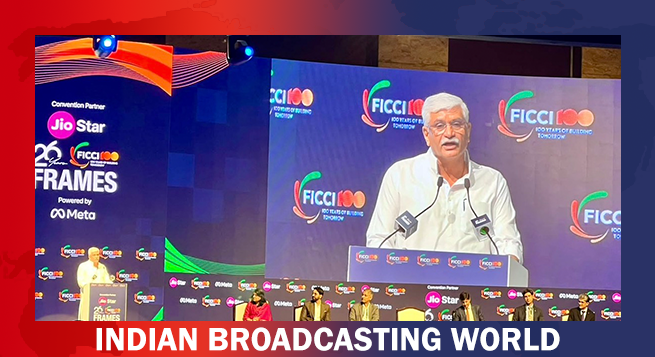 Shekhawat: India must shift from content consumer to global creator
 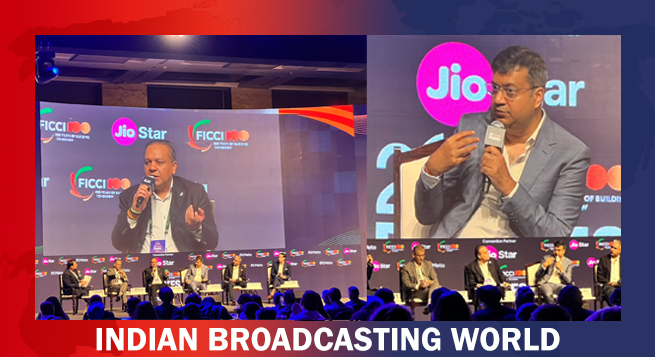 Puneet Goenka, Gaurav Banerjee, Rahul Kanwal share views on TV ratings
  Airtel Business launches IQ Gateway for safer enterprise comms
  TRAI flags mixed 2025-26 trends: DTH shrinks, telecom base expands
  Skyscanner is title sponsor for JioStar’s ‘Jeeto Dhan Dhana Dhan’ contest
  Animation studio Living Pixels starts ‘Grisu’ S2 production
  Vedanta chief Agarwal recalls on ‘Aap Ki Adalat’ humble beginnings



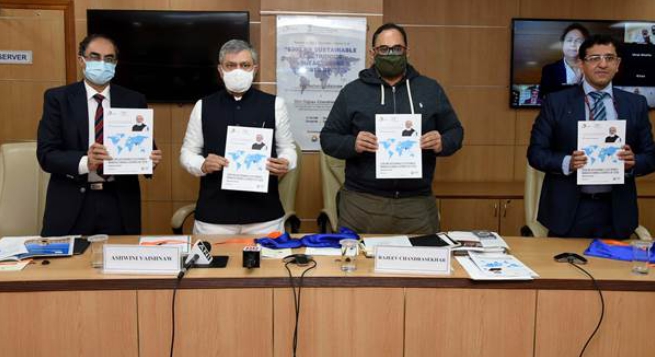
India’s Communications and IT Minister Ashwani Vaishnaw on Monday said the Telecom Department would not interfere in matters related to mobile phone manufacturing.
He, along with his ministerial colleagues, unveiled the second volume of the vision document on boosting electronics manufacturing in the country that outlines a roadmap for India’s transformation into $300 billion electronics manufacturing hub.
Vaishnaw comments came amid the industry’s apprehensions that there could be heavy regulations if the Department of Telecom decides to control the mobile manufacturing activities, PTI reported from New Delhi.
“Telecom Departmentis not going to enter mobile manufacturing at all. That (regulatory) regime is not going to change,” Vaishnaw said after the release of a vision document on electronics manufacturing.
At present, the Ministry of Electronics and IT (Meity) is the nodal organisation to manage matters related to mobile manufacturing.
Vaishnaw also said that the government is working on fine-tuning the labour laws to support hiring of large number of the workforce by big companies and allowing residential facilities within the company’s campus.
He said that housing within the campus is not allowed, but asked mobile phone makers to give a location where the government can work and find out the laws that need to be fine-tuned or tweked to meet the industry requirements.
The report provides a year-wise break-up and production projections for the various products that will lead India’s transformation into a $300 billion electronics manufacturing powerhouse, from the current $75 billion.
Amongst the key products that are expected to lead India’s growth in electronics manufacturing include mobile phones, IT hardware (laptops, tablets, etc.), consumer electronics (TV and audio), industrial electronics, auto electronics, electronic components, LED lighting, strategic electronics, PCBA, wearables and hearables and rtelecom equipment. Mobile phone manufacturing that is expected to cross $100 billion annual production — up from the current $30 billion — is expected to constitute nearly 40 percent of this ambitious growth.
The report, according to a government statement, seeks a competitive tariff structure on electronic components and removal of regulatory uncertainty. It also recommends a “winner takes all” strategy backed by economies of scale and global competitiveness, new and revised incentive schemes for some sectors, and the need to address issues of sustainability and ease of doing business.