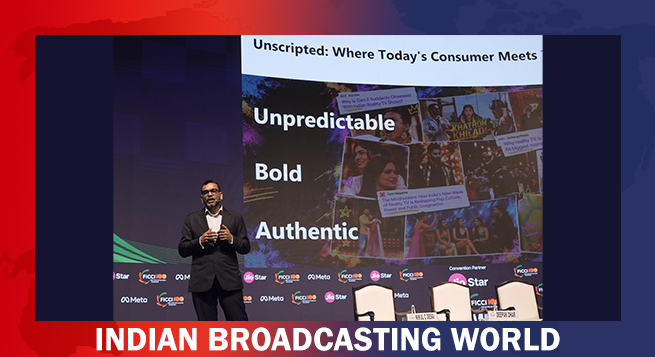
 Ficci FRAMES session discusses what makes reality TV tick
  Shekhawat: India must shift from content consumer to global creator
  Puneet Goenka, Gaurav Banerjee, Rahul Kanwal share views on TV ratings
 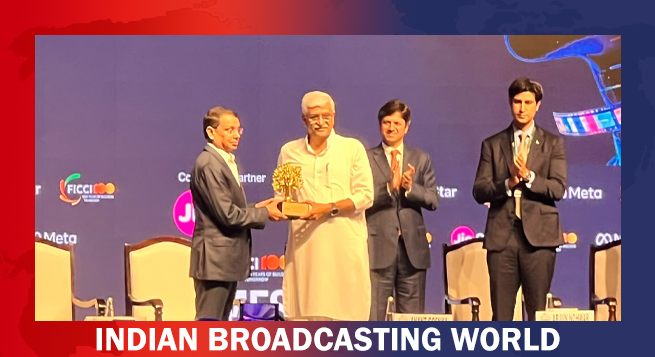 Uday Shankar urges Indian M&E sector to help nation’s global narrative
  At FICCI FRAMES ‘26, Vaz bats for more innovation, regulatory flexibility
  India b’band base at 1.1bn in August, telecom subs cross 1.36bn
  BULLET’s Lalani says micro-dramas need new storytelling style
  Debuting Oct. 16, ‘Roadies REBIRTH’ sets up OG, NewG battle
  Amazon unveils faster Fire TV Stick4K with redesigned remote
  To up popularity, Premier League comes to GamingCon Bharat
  Prime Video packs October with ‘Carrie’, ‘Terminal List’, sports




YouTube has announced a set of tools to globally help news organisations strengthen editorial workflows, diversify revenue and protect journalists’ identities as the industry adapts to a rapidly changing digital and AI environment.
The initiatives, as outlined in a blog by a senior YouTube executive yesterday on the company website, were announced at the 14th YouTube News Working Group in New York City, where the platform brought together more than 100 global news partners to discuss the future of news.
YouTube said people watched more than 35 billion hours of news content on the platform globally in 2025, including more than 12 billion hours on connected TVs.
The company said journalists — from established broadcasters and publishers to independent reporters and emerging news creators — remain central to this growth.
The first set of initiatives focuses on helping reporters and digital editorial teams make faster decisions, from developing stories to distributing published work.
New capabilities in YouTube Studio include enhanced Insights and Research tools to help news organisations assess coverage performance and identify emerging topics.
New feedback features can provide input on narrative flow, pacing and storytelling structure while a story is being prepared.
News organisations can also use dynamic thumbnails, which automatically serve the highest-performing thumbnail to different audience segments. An upcoming video A/B testing tool will allow journalists to test hooks, storytelling formats, visuals and other elements.
Ask Studio can review previous coverage and suggest refreshed thumbnails aimed at bringing older reporting to new viewers.
YouTube is also expanding monetisation options for news organisations through Channel Memberships.
The feature allows viewers to pay a monthly fee for exclusive content and perks and has generated more than $1.5 billion in payouts to creators over the past five years.
The expanded Memberships features include a dedicated in-app hub for exclusive content, video previews that allow audiences to sample content before becoming members, and members-only communities where journalists can interact more closely with supporters.
Another focus is protecting journalists’ identities as generative AI makes it easier to replicate a person’s appearance and voice. YouTube said journalists can already control their visual likeness through its Likeness Detection tool.
The platform will soon integrate speaking-voice detection with facial detection to improve matching accuracy and lay the groundwork for broader voice protections.
Likeness Detection will also become available directly through the YouTube mobile app, allowing news creators to set up, review and act on protections while on the go.
“If someone can fake my likeness to report false news, trust is instantly questioned,” Jon Laurence, vice-president of production at Newpress, said.
He added that YouTube’s tools were “critical for protecting our work and defending our identity” as the AI era accelerates.
A senior strategy operations exec at Dow Jones said the integration of insights and feedback would allow digital teams to “optimize our coverage performance, ensuring our reporting finds its audience.”