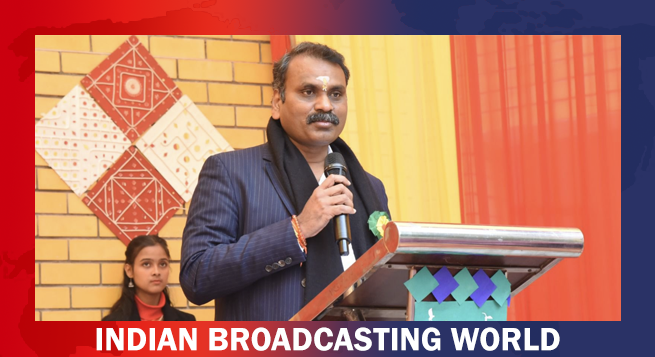
 Prasar Bharati adopting digital-first content strategy: Murugan
 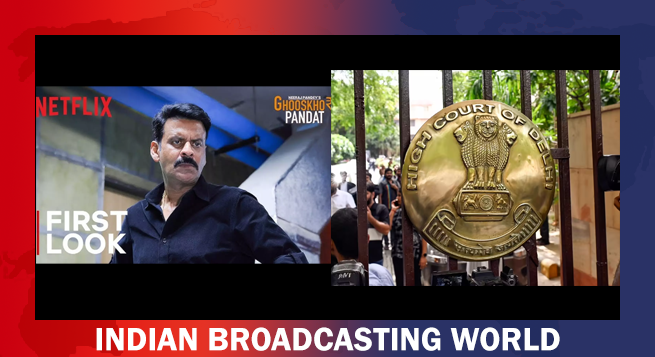 NHRC notice to MIB as separate petition filed against ‘Ghooskhor Pandat’
 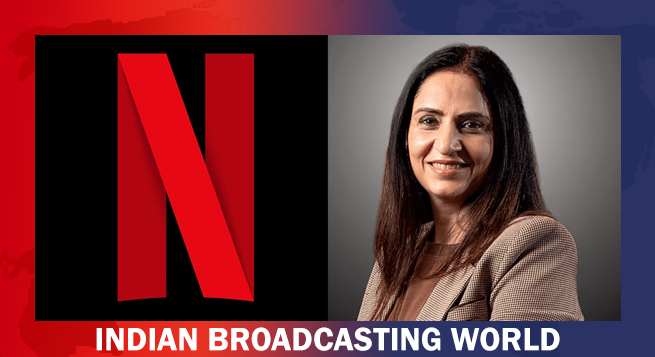 India programming careful blend of art, science: Netflix’s Shergill
  ICC warns Pak Cricket Board of legal action against it by JioStar
  Guest Column: Budget’s policy interventions to boost Orange Economy
 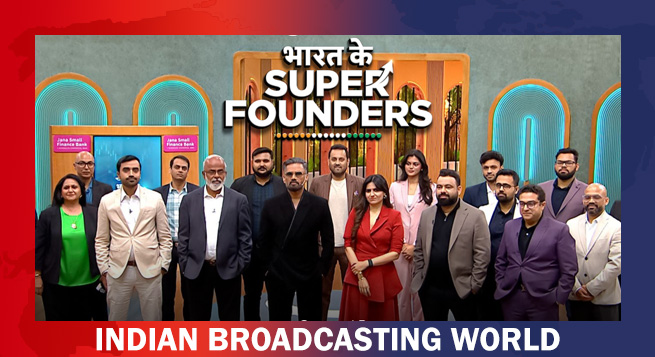 High-stakes pitches stole spotlight on ‘Bharat Ke Super Founders’ this week
  HBO drops trailer, confirms March premiere for ‘Rooster’
 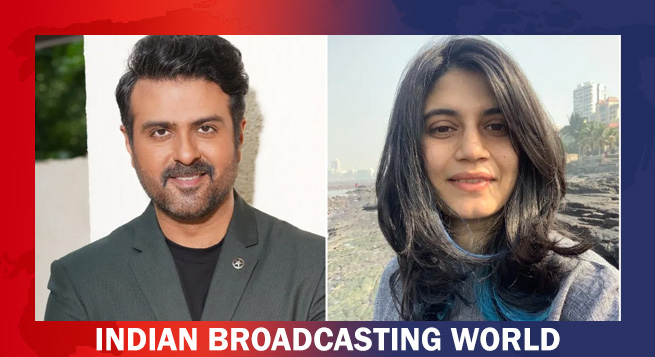 Harman Baweja, Arati Kadav to reunite for new film after ‘Mrs.’
  Dish TV faces ₹7,203 cr licence fee demand amid uncertainty
 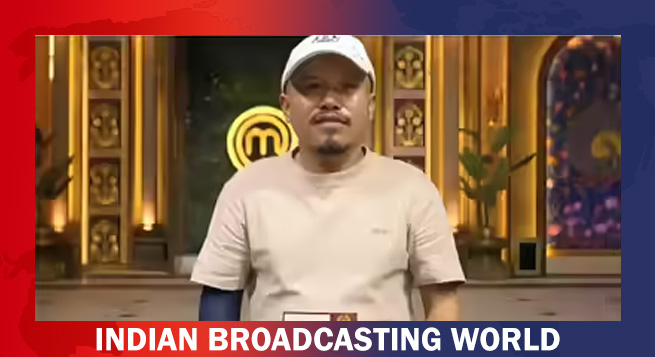 Vikas Khanna, Ranveer Brar honour Ratna Tamang’s courage on ‘MasterChef India’


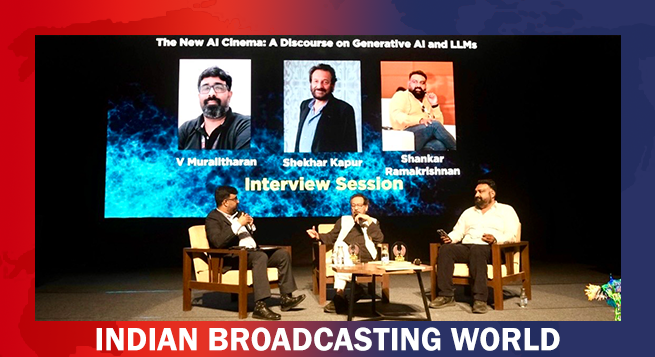
The sixth day of the International Film Festival of India (IFFI) 2025 yesterday featured a thought-provoking masterclass titled ‘The New AI Cinema: A Discourse on Generative AI and Large Language Models (LLMs)’, bringing together eminent voices from technology and cinema to discuss the rapidly evolving landscape of artificial intelligence-driven filmmaking.
The panel comprised noted technologist Shankar Ramakrishnan, AI expert V. Muralitharan and internationally acclaimed filmmaker and also the festival director Shekhar Kapur.
Initiating the discourse, Kapur noted that the world has undergone a profound shift with the rise of artificial intelligence and described AI as “the most democratic medium for filmmaking”, while emphasising that it has dismantled traditional barriers and gatekeeping within the industry.
According to an official gist of the session put out by the organisers yesterday, in an engaging anecdote, Kapur (who is known for films like ‘Mr. India’, ‘Bandit Queen’ and Cate Blanchett-starrer ‘Elizabeth’) shared how his cook created a script for ‘Mr. India 2’ using ChatGPT, driving home an argument that AI tools bring accessibility and empowerment to ordinary individuals.
He stated that AI is poised to redefine global cinema, offering unprecedented creative freedom. Noting India’s status as a nation with the world’s largest young population, he expressed confidence that this demographic strength will accelerate India’s leadership in the future of film technologies.
During the session, Kapur also explained the distinction between VFX and AI, clarifying that VFX involves creating or manipulating visuals digitally, whereas AI uses machine-learning models to automate, enhance, or generate elements of the filmmaking process.
Technologists Ramakrishnan and Muralitharan then elaborated on the wide range of AI tools — such as ChatGPT and Google Gemini — that assist filmmakers in scripting, storyboarding and designing shot descriptions, including lighting and camera requirements.
The duo showcased their AI-assisted film ‘The Turban and The Rock’, written by Raja Rao, explaining how various AI platforms and models were integrated into its creation, the official gist added.
During an interactive Q&A session, the panellists highlighted how AI can significantly support documentary filmmaking, archival restoration and film education. An AI-generated short documentary titled ‘The Lost Legends’ was also screened, offering audiences a glimpse into the capabilities of emerging creative technologies.
Despite sounding an avid supporter of AI and its profound impact on filmmaking, Kapur stressed that cinema’s essence lies in human emotion. While artificial intelligence can assist and accelerate processes, real artists remain essential for conveying genuine feeling and depth on screen, he observed.