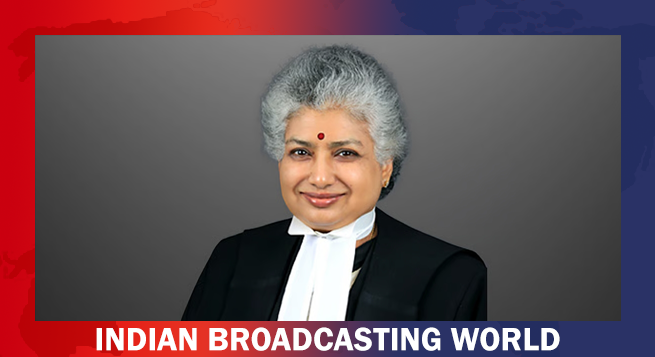
 SC judge Nagarathna says media can’t perform under constraint
 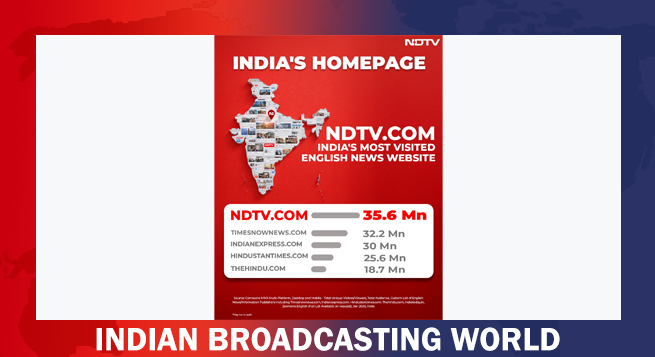 NDTV.com tops English news websites in January with 35.6 million visitors
  JioStar’s Piyush Goyal outlines vision for ‘Any Screen, Any Pipe’ future of TV
 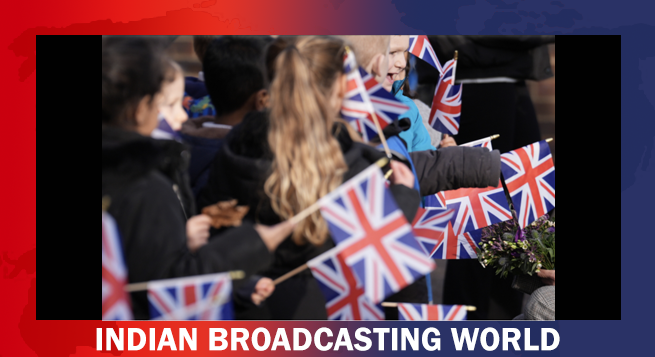 UK makes content, accessibility norms for streamers same as TV
 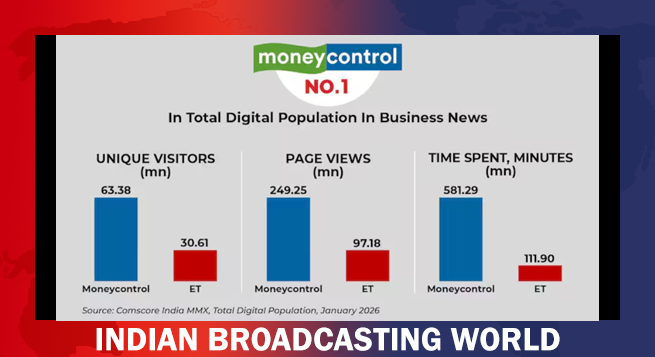 Moneycontrol tops biz news rankings; more than twice of ET audience
  FAST emerges as TV ecosystem core in 2026, revolutionizing streaming ads
  ‘Hamnet’ to stream on Peacock on March 6 ahead of Oscars
  ‘Kara’ starring Dhanush set for April 30 release
  ‘The Society’ S2 returns with Munawar Faruqui at the helm
  WBD agrees to be bought by Paramount for $110bn
 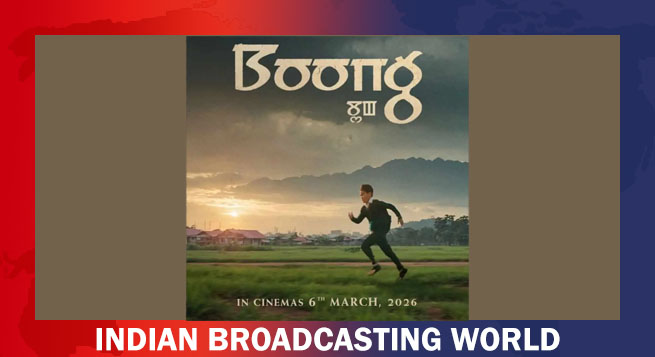 BAFTA-winning film ‘Boong’ to hit theatres on March 6



The media diets of viewers and listeners in the UK appear to be more diverse and fragmented than ever, according to Ofcom’s latest annual report on the TV, online video, radio and audio sectors.
As competition for the country’s attention intensifies, Media Nations 2023 report revealed that the proportion of viewers who tune in to traditional broadcast TV each week has seen the sharpest ever annual fall — from 83 percent in 2021 to 79 percent in 2022, the British regulator has said in a statement.
For the first time, there is also evidence of a significant decline in average daily broadcast TV viewing among ‘core’ older audiences (aged 65+), a drop of 8 percent year on year, and down 6 percent on pre-pandemic levels.
Conversely, the proportion of over-64s subscribing to Disney+, for example, increased from 7 percent in 2022 to 12 percent in 2023.
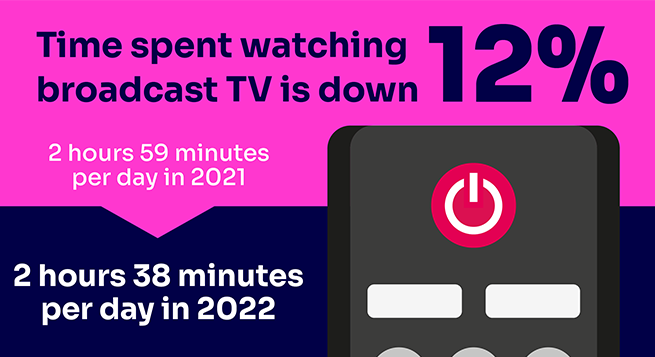
The report, according to Ofcom, reveals another notable shift in the broadcast TV landscape: a steep decline in the number of programmes attracting ‘mass audiences’.
The number of programmes with more than four million TV viewers has halved over the past eight years, from 2,490 in 2014, to 1,184 in 2022.
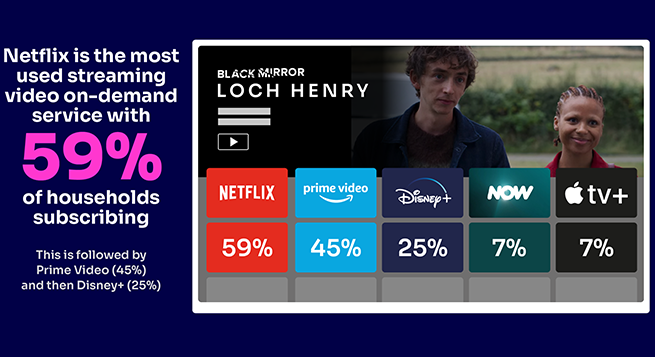
But despite the continuing decline of traditional broadcast TV viewing, BBC One (20 percent) and ITV1 (13 percent) are still the top two first destinations for viewers when they turn on their television, with Netflix coming in third (6 percent). And, with broadcasters digitising their services to meet audiences’ changing needs, use of their video-on-demand services, such as BBC iPlayer and ITVX, continues to grow.
Public perception of the public service broadcast channels also remains positive, with seven in ten viewers (69 percent) saying they were satisfied with them overall.
Viewers also recognised the contribution of these channels in delivering ‘broadcast events that bring the nation together for a shared viewing experience’ — with sentiment increasing from 61 percent in 2021 to 65 percent in 2022.
PSB (public service broadcasting)’s programmes of this nature dominated the list of most-watched programmes in 2022, with England’s quarter-final in the FIFA World Cup (16.1m viewers), HM Queen Elizabeth II’s state funeral (13.2m viewers), and the Platinum Jubilee (13.2m viewers) holding the top spots.
Ofcom has clarified that the figures quoted for broadcast TV are for 28-day consolidated viewing on a TV set. Consolidated viewing includes viewing of programmes at the time they were broadcast (live viewing) as well as from recordings on digital video recorders (DVRs) and through online broadcaster video-on-demand (BVoD) services (e.g. BBC iPlayer, ITVX and Sky Go/Sky TV On Demand) up to 28 days after the first broadcast (time-shifted).
Weekly reach is defined as the percentage of all individuals aged 4+ watching 15 consecutive minutes or more in an average week.
The largest declines in weekly reach have been among 16-24s (from 82 percent in 2017 to 54 percent in 2022, with a six-percentage-point decrease last year), and children aged 4-15 (from 87 percent in 2017 to 60 percent in 2022, down five percentage points year on year).