 Prasar Bharati holds copyright over content, govt clarifies in Parliament
  ‘One Battle…’, ‘Sinners’, Marty…’, begin Mar15 Oscars quest
  Govt admits ad code bars ‘miraculous’ claims in product ads
 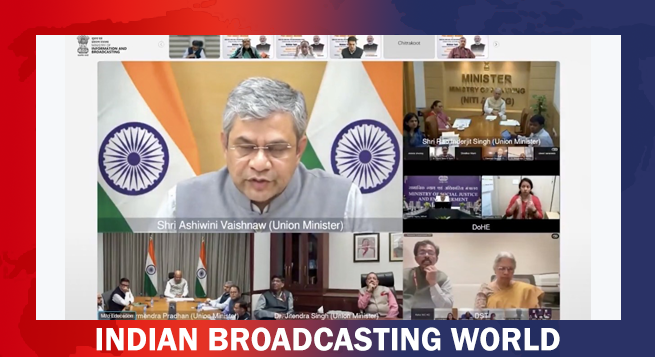 Vaishnaw: Creator economy offers citizens a democratic platform
  Prime Video, HBO Max executives to headline Series Mania Forum
  India Today Conclave returns to Delhi for 23rd edition on Mar 13-14
  ‘Cocktail 2’ set for theatrical release on June 19
 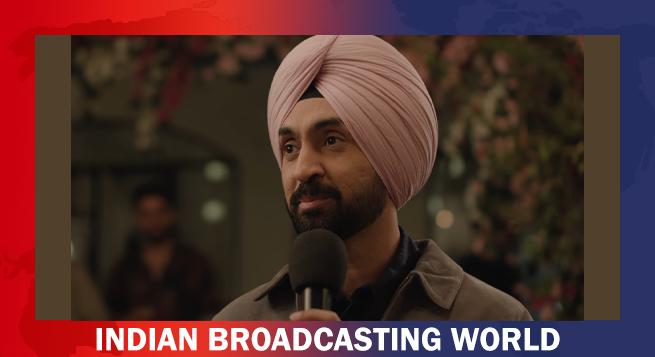 Imtiaz Ali, Diljit Dosanjh reunite for ‘Main Vaapas Aaunga’
 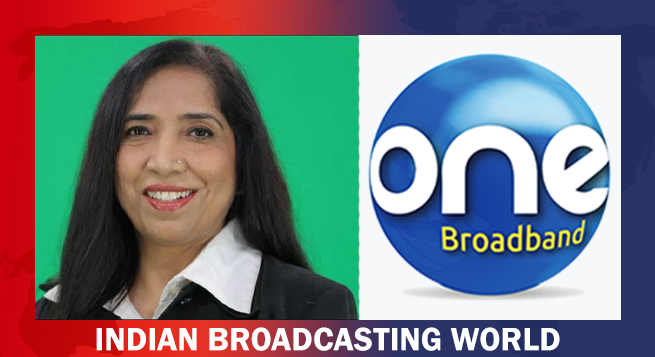 Hemlata Sharma joins ONEOTT Broadband as Chief Business Officer



The Telecom Regulatory Authority of India (TRAI) has released its recommendations on the long-awaited Digital Radio Broadcast Policy for private radio broadcasters, outlining the framework, terms and conditions, as well as reserve prices for the launch of digital radio services in major Indian cities.
The policy, seen as a milestone in the evolution of the Indian radio industry, aims to open new opportunities for broadcasters while offering listeners superior audio quality and multiple channel options.
The recommendations, announced today in a TRAI release, propose the introduction of digital radio broadcasting in simulcast mode across four ‘A+’ cities — Delhi, Mumbai, Kolkata and Chennai — along with nine ‘A’ category cities including Hyderabad, Bengaluru, Ahmedabad, Surat, Pune, Jaipur, Lucknow, Kanpur and Nagpur. The Ministry of Information and Broadcasting (MIB) had sought TRAI’s inputs in April 2024 under section 11 (1)(a)(i) of the TRAI Act, 1997, leading to a wide consultation process. A paper was floated in September 2024, followed by 43 stakeholder comments, 13 counter-comments, and an open house discussion in January 2025 before finalising today’s recommendations.
Under the proposed framework, digital radio services will begin in simulcast mode, allowing new entrants to broadcast one analog, three digital, and one data channel on a single frequency. Existing FM broadcasters will also be permitted to migrate to simulcast on a voluntary basis. TRAI has strongly recommended that a single digital radio technology standard be adopted nationwide, with the government tasked to select the most suitable technology in consultation with broadcasters and receiver manufacturers.
The recommendations call for frequency assignments through auctions as per the Telecommunication Act, 2023, with reserve prices fixed for each of the 13 cities. For instance, the spectrum base price has been set at Rs.194.08 crore for Mumbai, Rs.177.63 crore for Delhi, and ₹87.22 crore for Bengaluru. Broadcasters who choose to migrate will pay the difference between the auction-determined price and their proportionate entry fee balance.
TRAI has suggested that digital radio operators should commence services within two years of acquiring spectrum, while existing broadcasters opting to migrate must confirm within six months of the auction. Importantly, the regulator has left the sunset date for analogue FM undecided, noting that it should be fixed only after evaluating the adoption of digital services.
To support the ecosystem, the regulator has urged the government to issue advisories on ensuring digital radio compatibility in mobile phones and car infotainment systems, similar to existing advisories on FM receivers. It has also proposed that private terrestrial broadcasters be allowed to stream their live terrestrial channels concurrently.
Among other highlights, TRAI has called for a new authorisation category for “Radio Broadcasting Infrastructure Providers” to allow leasing of infrastructure to broadcasters, though this will not be mandatory for launching digital services. A high-level steering committee has also been recommended to monitor the growth of digital radio receivers and industry dynamics, with representatives from MIB, MeitY, broadcasters, device makers, and technology providers.
The proposed authorisation period for digital radio services will be 15 years, with operators required to pay a fee of 4% of Adjusted Gross Revenue (AGR). For broadcasters in border, hilly and North-Eastern states, the fee has been relaxed to 2percent for the initial three years.
TRAI emphasised that digital radio broadcasting will bring a significant qualitative leap for both the industry and listeners. Unlike analog FM, which allows only a single channel per frequency, the digital system will provide three digital channels and one data channel alongside the existing analog service, ensuring better audio quality, diverse content genres, and value-added services.
The recommendations also encourage infrastructure sharing, including land and towers of Prasar Bharati at concessional rates, while calling for flexibility in transmission infrastructure usage among radio, telecom, and broadcasting players.
With over 908 private satellite TV channels and more than 70 OTT platforms already reshaping India’s entertainment ecosystem, the push for digital radio is expected to mark the next wave of innovation in audio broadcasting, potentially offering richer experiences to millions of listeners and creating fresh growth avenues for the radio industry.