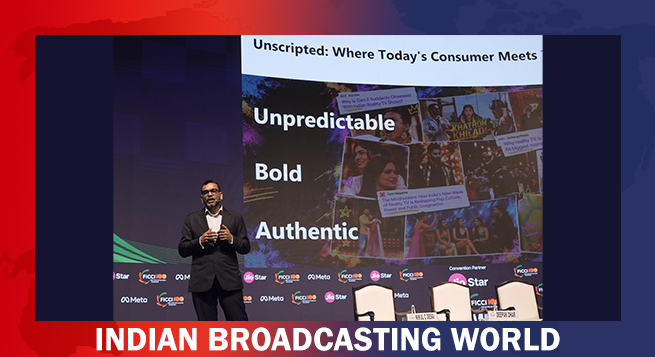
 Ficci FRAMES session discusses what makes reality TV tick
 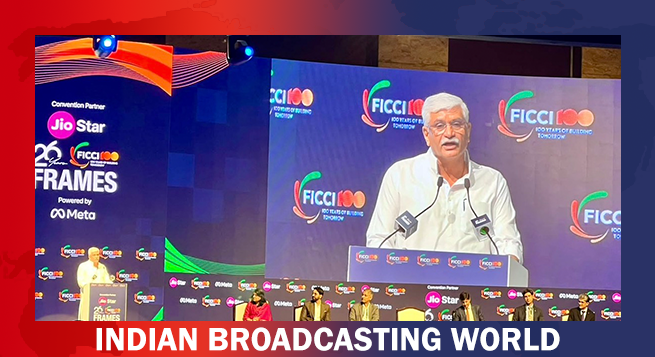 Shekhawat: India must shift from content consumer to global creator
 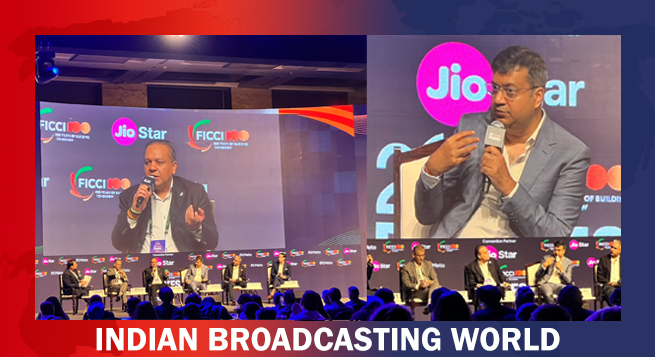 Puneet Goenka, Gaurav Banerjee, Rahul Kanwal share views on TV ratings
  Uday Shankar urges Indian M&E sector to help nation’s global narrative
  At FICCI FRAMES ‘26, Vaz bats for more innovation, regulatory flexibility
  India b’band base at 1.1bn in August, telecom subs cross 1.36bn
  From Netflix’s Sarandos to Ben Affleck: highlights of Bloomberg event
  ‘Neagley’ S2 okayed after S1 nets 40mn viewers at Prime Video
  Paramount, WBD merged entity to be christened Skydance
 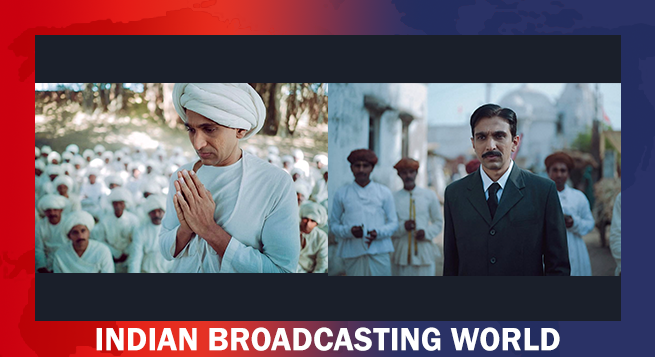 Mehta shares ‘Gandhi’ BTS images on Mahatma’s birth anniversary
 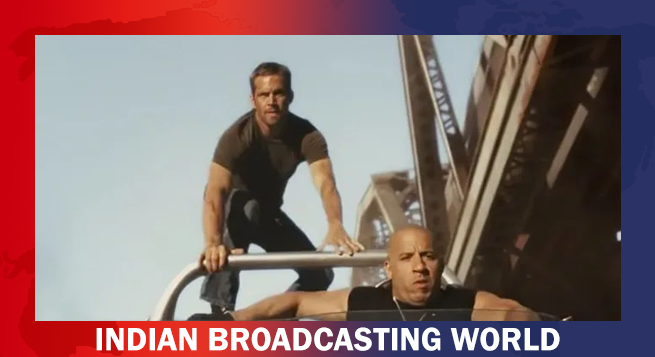 Peacock greenlights ‘Fast & Furious’ series; debut in 2028



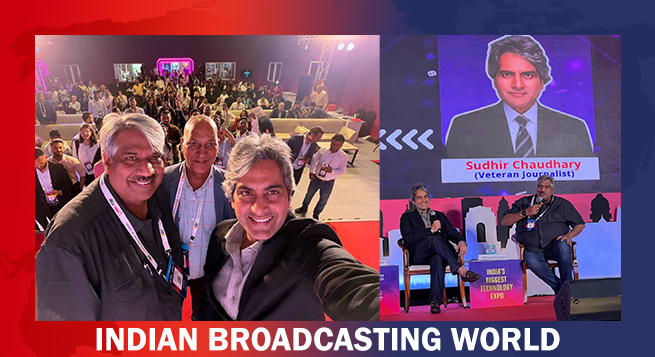
Veteran journalist Sudhir Chaudhary sparked interest around a potential new venture with Ekta Kapoor during a candid fireside chat at the SATCAB Symposium 2026 held in New Delhi. The session, moderated by Amitabh Srivastava, offered rare insights into Chaudhary’s views on news evolution, AI, and the future of media.
Responding to a question about stepping into entertainment or acting, Chaudhary maintained a grounded stance. At the session held on March 25, he said he would only consider such opportunities if there is genuine public demand and fair compensation, adding that he remains open to exploring new avenues if given the right opportunity.
The remark, combined with references to a possible collaboration with Kapoor, drew attention from the audience.
The conversation quickly moved to the changing nature of news consumption. Chaudhary spoke at length about the shift from high-decibel, fast-paced news formats to what he described as “slow news” — a model focused on clarity over noise. Drawing from audience feedback over the years, he noted that viewers often complain about excessive shouting and lack of understanding in news broadcasts. This, he said, led him to develop formats like ‘DNA’ and later ‘Decode’, where storytelling and simplified presentation take precedence.
He emphasised that his goal was to create a “family news show” — one that can be watched across generations, breaking the perception of news as a male-dominated space. According to him, simplifying complex topics and making them relatable has helped build a strong and loyal viewer base.
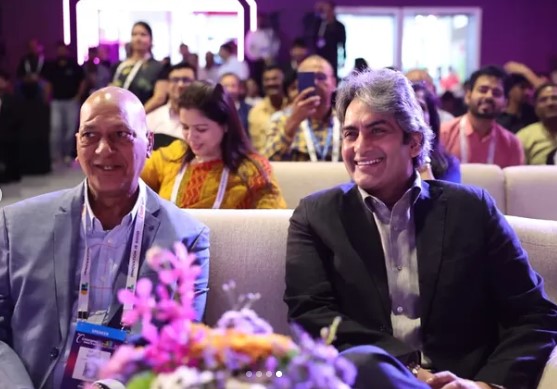
Speaking about his move to a national broadcaster, Chaudhary described it as both a professional and personal decision. Calling himself an “underdog by nature,” he explained that he prefers challenging environments over comfortable positions at the top. He added that joining a public broadcaster aligned with his sense of responsibility towards society and nation-building, where news is not just content but also a representation of the country’s stance globally.
He highlighted the weight of this responsibility, noting that narratives presented on state platforms are often perceived as the official voice of the nation. This, he said, requires a careful and balanced approach, especially in sensitive international matters where a single narrative can influence diplomatic perception.
On the growing influence of artificial intelligence, Chaudhary acknowledged both its potential and risks. He revealed that he has personally faced misuse through AI-generated deepfake content, some of which was used to spread misinformation. While legal interventions have helped reduce such instances, he stressed the need for stricter regulations to fully address the issue.
At the same time, he described AI as a powerful tool that can significantly improve efficiency in media production — from scripting and graphics to publishing. However, he drew a clear distinction between those who understand AI and those who do not, warning that the latter risk being left behind in an increasingly tech-driven landscape.
Reflecting on what is missing in Indian journalism today, Chaudhary pointed to a lack of emotional connection with viewers. He argued that while news channels focus heavily on high-impact headlines and TRPs, they often fail to address real-life concerns that resonate with everyday audiences. This disconnect, he said, is one of the biggest challenges facing the industry.
He also criticised the over-reliance on TRP metrics, calling them “estimates” that do not fully capture actual viewership behaviour. In his view, this has led to the commercialization of news, where content is often driven more by ratings than relevance.
Closing the session on a forward-looking note, Chaudhary encouraged content creators and media professionals to think like disruptors rather than followers of algorithms. He stressed that while trends and data can guide decisions, true impact comes from originality and the courage to break established patterns.
The fireside chat, offered a comprehensive look at Chaudhary’s philosophy — blending discipline, disruption, and a clear vision for the future of news in India.