 On vulgar song, CBFC clarifies digital content not certified by it
  Sanjay Dutt, Norah Fatehi song in the eye of obscenity storm
  ‘Punha Ekda…’ to stream on Ultra Jhakaas from Mar 19
  Punjab unveils film promotion policy offering major subsidies
  Prime Video doubles down on India with global ambitions, diverse content push
  AIDCF moves TDSAT on WAVES OTT mulling onboarding linear TV channels
 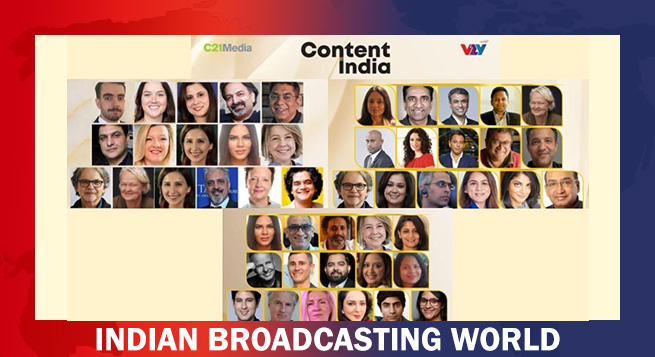 Content India 2026 concludes with 700+ global participants
 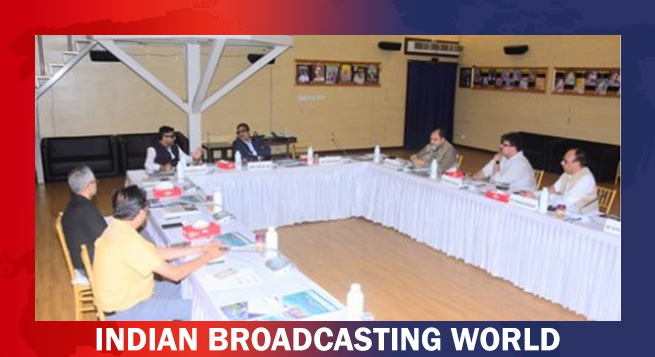 MIB Secy Jaju reviews IICT expansion plans, other initiatives
 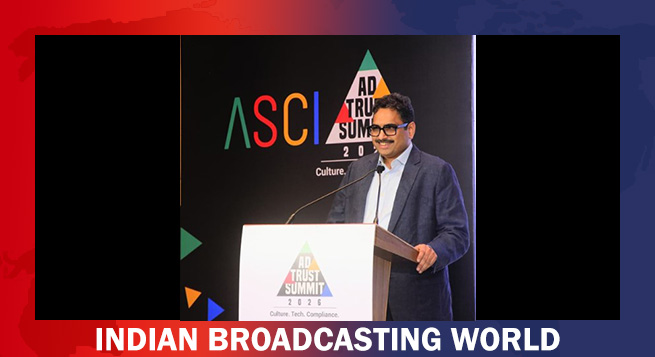 MIB Secy Jaju calls for responsible & trusted ad ecosystem



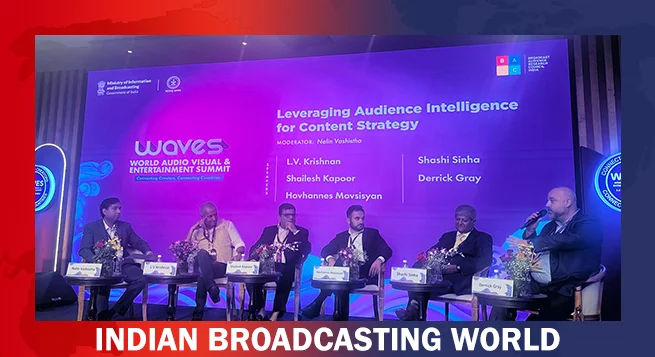
At the ongoing WAVES Summit 2025 in Mumbai, Shashi Sinha, Chairman of the Broadcast Audience Research Council (BARC), made a strong and candid pitch for better stakeholder management in India’s media measurement ecosystem, emphasising that the country’s core challenge isn’t about technological capability, but about aligning various interests across the industry.
Speaking during a panel discussion at the global media and entertainment gathering, Sinha underlined the issue, saying, “In India, it’s not about capability. Our issue is stakeholder management.” He stressed that while India has the technology and the ability to innovate independently — pointing out that BARC builds its own meters and software — the lack of unified stakeholder participation is slowing progress.
As per a report, Sinha cited BARC’s digital panel initiative, which has been running for the last seven years and covers 12,000 concurrent premium homes. Yet, despite this groundwork, he explained that digital data remains fragmented. A key hurdle, he added, is the lack of an updated census, which is crucial to setting audience measurement baselines. “This country has not seen a census for the last 13 or 14 years. So, there are multiple challenges,” he noted.
Sinha also took the opportunity to clear the air about the perceived decline of television in India. “Those who say TV is dead — it’s not dead,” he asserted. “The bulk of India’s PCT audiences are still watching TV.” He acknowledged that digital viewership is rising and is largely additive, but reiterated that traditional TV remains dominant across large sections of the country.
In a significant announcement, Sinha revealed that BARC is working on launching a new premium panel. “Recruitment of the premium panel is the first phase. Once that’s done, we can begin looking at household-level data, as getting individual-level data in such homes is next to impossible,” he said. He noted that regression models — like the one developed by co-panelist Derek in a previous role — can help interpret this data at an individual level.
Sinha further highlighted that there are around 70 million HD homes in India, compared to only 35 million connected TV homes. “Cord-cutting is only at about 20 percent. These are our baseline numbers,” he said, suggesting that there’s a substantial untapped opportunity to strengthen HD content and viewership metrics.
Looking ahead, he outlined BARC’s intention to measure Connected TV (CTV) and linear TV together, creating a more holistic view of audience behaviour. However, he reiterated that such transitions depend on industry collaboration. “The journey cannot be accelerated not because of lack of technology or capability, it cannot be accelerated because you have to align stakeholders,” he concluded, thanking the moderator for spotlighting the systemic challenges.
Sinha’s remarks offered a transparent and grounded perspective on India’s media landscape, underlining the urgent need for collaboration and clarity among advertisers, broadcasters, and regulators as the industry marches toward convergence and data-driven growth.