 ‘Dhurandhar2’ crosses Rs.1,500cr worldwide in two weeks
  Over 4 lakh PM-WANI Wi-Fi hotspots operational: Telecoms Minister Scindia
  Govt says acted on 144 TV programme, ad code breach in 5 years
  Avi Kaul bids adieu to Network18 by penning an emotional note
  DONER Secy Chanchal Kumar swaps places with MIB’s Jaju
  Prime Video unveils diverse April slate with originals, live sports
 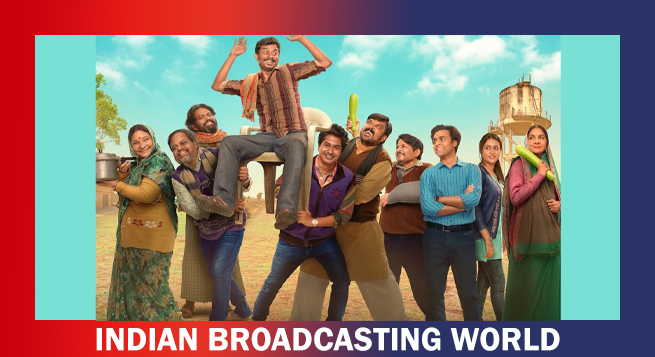 ‘Panchayat’ popularity completes 6 years, makers announce S5
  Zendaya, Sweeney’s ‘Euphoria’ S3 to premiere at Coachella
  Brian Cox joins ‘Dexter: Resurrection’ S2 as New York Ripper
  ‘Call Me Bae’ S2 wraps shoot, Ananya Panday teases return


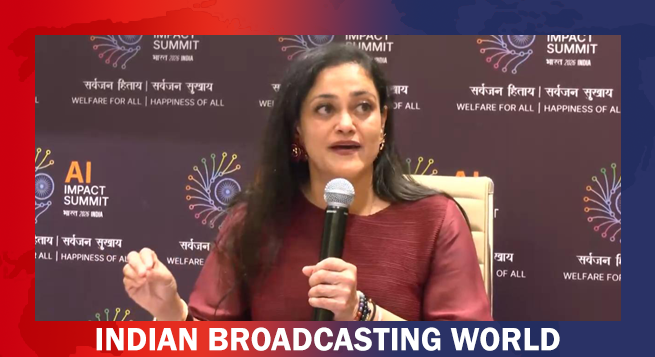
Kalli Purie, Vice-Chairperson and Executive Editor-in-Chief of India Today Group, on Monday presented a nine-point charter advocating fairness, accountability and reciprocity in the use of artificial intelligence in news media. She was speaking at the AI Impact Summit in New Delhi, where she stressed the need for safeguards to prevent unchecked AI from distorting public discourse.
Addressing the session titled AI and Media: Opportunities, Responsible Pathways, and the Road Ahead at Bharat Mandapam, Purie cautioned that journalism risks being reduced to raw material for large language models if appropriate protections are not introduced. She emphasised that fair value for journalistic content is “non-negotiable” and called for transparency in how AI systems use and process news, positioning journalism as central to democratic accountability.
Purie unveiled a nine-point framework aimed at ensuring responsible AI deployment in the media ecosystem. The charter calls for fair compensation for journalistic content, traceability and attribution as democratic principles, recognition of journalism as a public good, and stronger valuation of verified content produced by credible institutions. It also recommends severe penalties for AI hallucinations, an end to asymmetry in regulation between legacy media and social media platforms, and greater accountability from global technology companies that rely on news content and audience attention.
Raising concerns over the imbalance between technology platforms and traditional media organisations, Purie questioned what major global technology firms contribute in return when they access news content and public attention. She described citizens’ attention as a “rare and finite resource” and called for reciprocity from large technology companies that benefit from journalistic output.
Emphasising that the India Today Group is not opposed to technological innovation, Purie said the organisation has actively adopted AI tools for more than two-and-a-half years. She noted that the group uses AI anchors, AI clones, voice cloning and AI-driven storytelling tools, but insisted that accountability must always remain with human editors. She described the company’s approach as an “AI sandwich” — where human intent drives the process, AI acts as an assistive layer, and editorial control rests with human decision-makers.
Purie also warned against what she termed “digital imperialism”, arguing that global technology platforms often treat Indian media differently from their Western counterparts. She said original reporting requires significant investment and risk, and that influencers and AI-generated summaries should not freely benefit from such labour without compensation. She further advocated the development of a sovereign AI framework that places consumers and trust at its core.
Highlighting the broader implications of AI adoption, Purie warned that weakening journalism could have long-term consequences for democratic institutions. She stressed that enforceable norms are essential to ensure AI strengthens rather than undermines credible media, adding that rebuilding trust later would come at a far greater cost.
Her proposals received industry-wide support at the summit, with leaders from The Hindu, The Times of India, Amar Ujala and Dainik Bhaskar agreeing on the need to give the framework a formal structure, signalling growing consensus within the industry on establishing standards for responsible AI use in journalism.