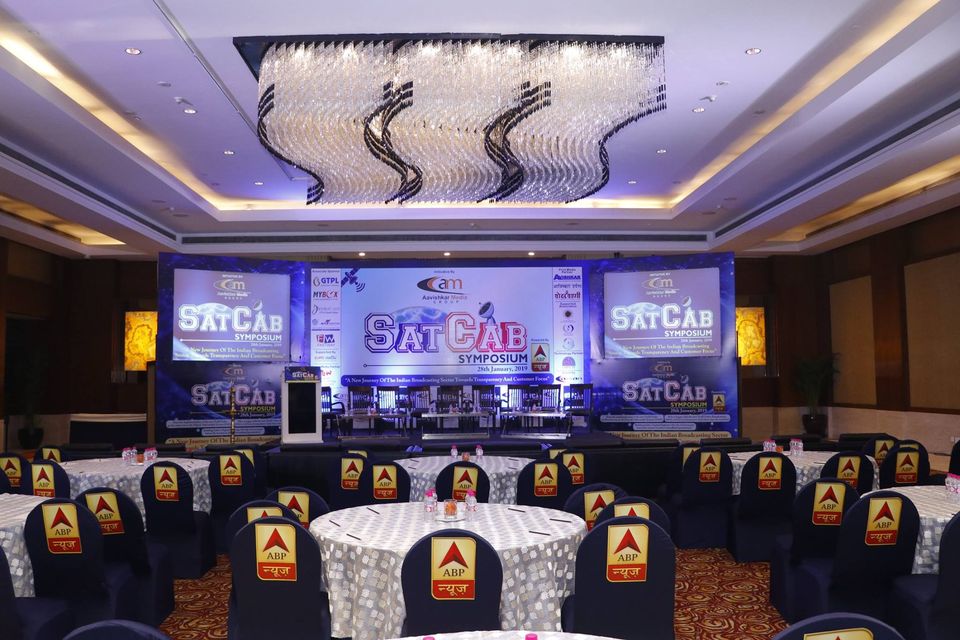
 SATCAB ’26 opens with lively discussion on rules, news, multi-screen measurement
  Govt starts initiatives on AI skilling, MYWAVES, FreeDish tuners
  ‘Dhurandhar2’ BO run strong; tops Rs. 550cr mark globally
  SATCAB 2026 to spotlight future of broadcasting, OTT, digital media
  NCW summons Nora, Sanjay Dutt, Badshah over obscene songs
  ‘Bridgerton’ S5 to focus on Francesca’s story creating different buzz
  MX Player ropes in actor Arjun Rampal to headline ‘Billionaire’
  US-based Somani-led consortium aiming to buy IPL franchise RR
  Karnataka milk brand Nandini to power RCB in IPL 2026



Global news media said they were suspending reporting in Russia to protect their journalists after a new Russian law that threatened jail terms of up to 15 years for spreading “fake news”. Social media platforms like Meta’s Facebook said late last week Moscow was blocking their local operations.
Britain’s BBC said last week it had temporarily halted reporting in Russia, and soon the Canadian Broadcasting Company and Bloomberg News said their journalists were also stopping work.
American news outlets CNN and CBS News said they would stop broadcasting in Russia, and other outlets removed Russian-based journalists’ bylines as they assessed the situation, Reuters reported from various locations, including London and Los Angeles.
With Russia’s attack on Ukraine drawing almost universal condemnation, Moscow has sought to hit back in the information war. Its communications regulator, Roskomnadzor, blocked Meta Platform Inc.’s Facebook, citing 26 cases of discrimination against Russian media. TASS news agency reported that Russia also restricted access to Twitter.
Russian officials have said that false information has been spread by Russia’s enemies such as the United States and its Western European allies in an attempt to sow discord among the Russian people.
Russian lawmakers passed amendments to the criminal code making the spread of “fake” information an offence punishable with fines or jail terms. They also imposed fines for anyone calling for sanctions against Russia following the invasion of Ukraine.
The Kremlin last week did not immediately respond to a Reuters request for comment on the media companies’ moves to suspend reporting.
News executives said the new law would hamper independent reporting and imperil journalists, and that their organizations must balance the obligation to audiences to report the news with protecting journalists against retaliation.
“The change to the criminal code, which seems designed to turn any independent reporter into a criminal purely by association, makes it impossible to continue any semblance of normal journalism inside the country,” Bloomberg Editor-in-Chief John Micklethwait wrote in a message to his staff, “We will not do that to our reporters.”
BBC Director General Tim Davie said the new legislation appeared to criminalise the process of independent journalism.
“It leaves us no other option than to temporarily suspend the work of all BBC News journalists and their support staff within the Russian Federation while we assess the full implications of this unwelcome development,” he said in a statement.
He added that the BBC News Service in Russian would continue to operate from outside Russia. Jonathan Munro, an interim director of BBC News, said the corporation was not “pulling out” journalists from Moscow but assessing the impact of the new law.
The Canadian Broadcasting Corp., the country’s public broadcaster, said it had temporarily suspended reporting from the ground in Russia so it could seek clarity on the new law.
US television newscaster ABC News said it would pause broadcasting from Russia as it assessed the situation. The Washington Post, Dow Jones and Reuters said they were evaluating the new media law and the situation.
“Our top priorities are the safety of our employees and covering this important story fairly and fully,” said Dow Jones spokesperson Steve Severinghaus, “Being in Moscow, freely able to talk to officials and capture the mood, is key to that mission.”
Western governments and tech platforms have also banned the Russian news network RT, with the European Union accusing it of systematic disinformation over Russia’s invasion of Ukraine.
Russian Viewpoint: Russia’s Foreign Ministry has said that the Western media offer a partial – and often anti-Russian – view of the world, while failing to hold their own leaders to account for corruption or devastating foreign wars like Iraq.
The new legislation was drafted by Russia’s upper house of parliament and signed into law by Putin, TASS reported. It appeared to give the Russian state much stronger powers to crack down, by making it a criminal offence to spread fake information, with a jail term.
“If the fakes lead to serious consequences, then imprisonment of up to 15 years,” the lower house of parliament, known as the Duma in Russian, said in a statement.
Russia had earlier cut access to several foreign news organisations’ websites, including the BBC, Voice of America and Deutsche Welle, for spreading what it said was false information about its war in Ukraine.
The BBC said it would start broadcasting four hours of news a day in English on shortwave radio in Ukraine and parts of Russia, reviving an antiquated technology used in the Cold War to circumvent state censorship.