 Sunil Mittal says OneWeb ahead of Musk in Indian approval queue
  Murugan resigns from Cabinet as Mos MIB & Rajya Sabha
  Broadcasters flag HD-SD conversion, satellite spectrum concerns in submission to MIB on telecom rules 2026
  MIB seeks dismissal of AIDCF plea against WAVES, says OTT rules differ from TV
 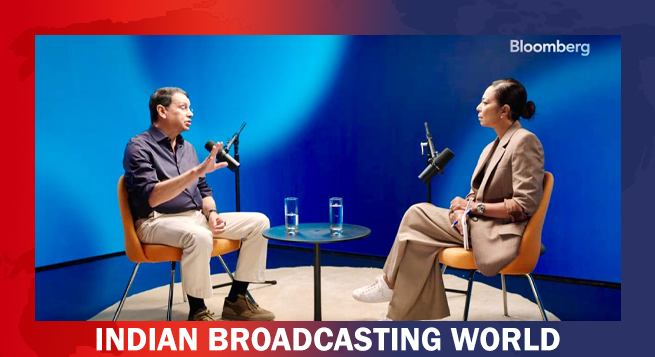 Uday Shankar: Indian M&E sector needs policy support to compete globally
 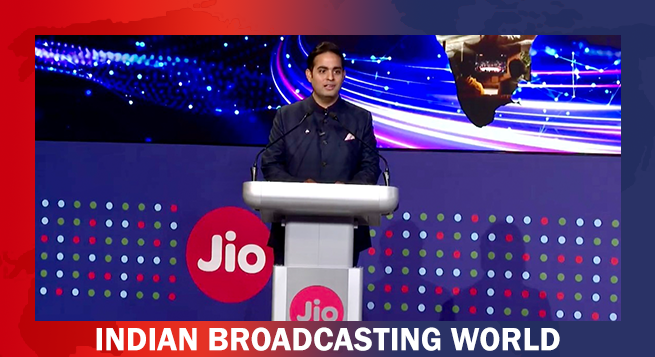 Akash Ambani banks on selling more services to up revenue
  Chanu, Dhanda, Sooryavanshi among CNN-News18 ‘IOTY’ sports nominees
  On ‘Legends Return’ Bidipta talks about growth after ‘Indian Idol’
  Ofcom study flags concerns over offensive language on air
  ISL says first 5 matches netted 65mn YouTube views; 52mn viewers




Bollywood actor Juhi Chawla, who has been actively creating awareness on harmful effects of radiofrequency (RF) radiation, has filed a lawsuit against implementation of 5G mobile technology in India.
The actor said that 5G technology exposes people and animals to RF radiation that is 10 to 100 times greater than it exists today, wire news service ANI reported from New Delhi.
The Bench of Justice C Harishankar on Monday recused to hear the matter and transferred it to another bench of the Delhi High Court. The matter will now be heard on June 2.
In a statement, Chawla’s spokesperson said that the suit has been instituted to seek direction to the “arrayed defendants” to certify that 5G technology is safe for humans and every type of living organism and to produce their studies regarding RF radiation in support.The spokesperson further said that if the tests are not already conducted, efficient research should also be conducted without the participation of private interests.
The statement added that the urge to compete in the race to roll out 5th generation wireless network has “somewhat distracted our nation from taking into due consideration some alarming factors to the health of present and future generations.”
“No person, no animal, no bird, no insect and no plant on Earth will be able to avoid exposure, 24 hours a day, 365 days a year, to levels of RF radiation that are 10x to 100x times greater than what exists today,” the statement by Chawla said, according to the ANI report.
It further said that 5G plans threaten to provoke “serious, irreversible effects on humans and permanent damage to all of the Earth’s ecosystems”.
“The accumulated clinical evidence of sick and injured human beings, coupled with experimental evidence of damage to DNA, cells and organ systems in a wide variety of plants and animals, further coupled with epidemiological evidence which supports the conclusion that the major diseases of modern civilization — cancer, heart disease and diabetes — are, in large part, caused by electromagnetic pollution, stems from a literature-base comprising of over 10,000 (ten thousand) peer-reviewed studies, a number much, much, much too large to be ignored,” the statement added.
It further said that in response to RTI Act dated 20 March 2019, the Ministry of Telecommunications informed in writing from Science and Engineering Research Board that ‘no studies by SERB have been conducted specifically on the effect of 2G, 3G, 4G and 5G cellular technologies on humans, animals, birds, plants and other living organisms’.
Chawla in the statement clarified that they were not against the implementation of technological advancements, including wireless communication.