 India, Korea account for bulk of Asia video content spend: MPA
  Vir Das to perform in New York on Jan 30, 2027
 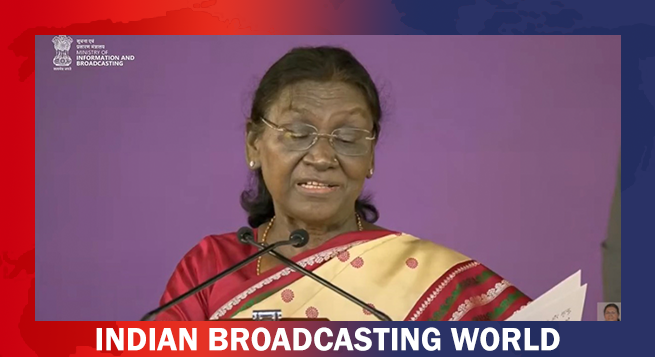 President Murmu exhorts celebs to not endorse ‘harmful products’
  Satellite company SES, JioStar sign multi-year distribution deal
  Govt. clarifies CBFC certification changes, says 1991 core framework unchanged
  Himesh Reshammiya returns to ‘Indian Idol’
  Netflix expands ‘Sesame Street’ deal with a film
  Apple TV unveils first look at Hugh Laurie’s ‘The Wanted Man’
  Moneycontrol to host 3rd Startup Conclave in Bengaluru today
 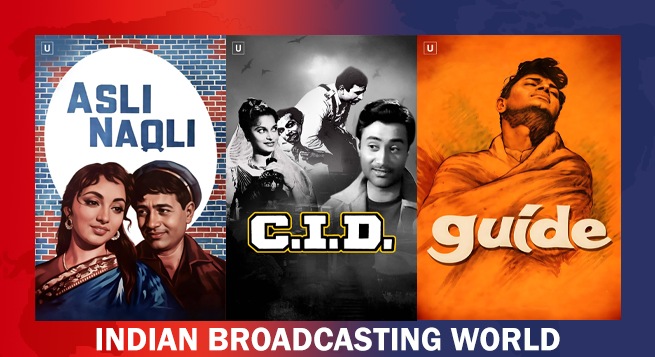 Ultra Play celebrates Dev Anand’s 103rd birth anniversary with his evergreen films



The Telecom Regulatory Authority of India (TRAI) yesterday came out with amendments to the existing interconnection framework for broadcasting and cable services, issuing the Telecommunication (Broadcasting and Cable) Services Interconnection (Addressable Systems) (Seventh Amendment) Regulations, 2026, aimed at overhauling audit-related provisions and easing compliance for distributors and broadcasters.
The amendments introduce clearly defined timelines for audits, mandating that distributors carry out audits on a financial year basis and submit audit reports to broadcasters by September 30 every year.
Broadcasters have also been permitted to depute their representatives during audits to enhance transparency, while a structured mechanism has been laid down for seeking clarifications on audit reports and, if required, conducting fresh audits with the regulator’s approval.
Key additional amendments introduced by TRAI include the following:
- Broadcasters can seek time-bound clarifications from auditors through distributors if discrepancies are found in audit reports.
- If dissatisfied with clarifications, broadcasters may conduct an audit at their own cost after obtaining TRAI’s approval.
- In cases where audit reports are not received by September 30, broadcasters can independently cause audits of such distributors.
- Annual audits at distributors’ cost have been made optional for distributors with fewer than 3,00,000 subscribers, though broadcasters may still audit them at their own expense.
- For infrastructure sharing arrangements, separate SMS and CAS/DRM instances are required for each distributor to enable entity-wise reconciliation.
- Infrastructure providers must insert network logo watermarking for pay channels at the encoder end, while seekers must provide logos through the set-top equipment or middleware, with a preference for no more than two logos on screen.
TRAI, in a statement yesterday, said a revised audit manual aligned with the amended regulations will be issued shortly.
The amendments follow repeated representations from stakeholders seeking improvements in audit provisions under the 2017 Interconnection Regulations, reduction in repetitive audits of distributor platform operators and better incorporation of infrastructure-sharing arrangements into the audit framework.
Stakeholders had also flagged the need to enhance auditor accountability and ensure technical competence.
To address these concerns, TRAI had earlier strengthened technical proficiency and accountability norms in the Expression of Interest issued in August 2025 for empanelment of auditors, including categorisation based on experience. The regulator also issued a consultation paper on audit-related provisions in August 2024, receiving 64 comments and three counter-comments, followed by an open house discussion in December 2024.
According to the regulator, the amendments, coupled with stricter empanelment norms for auditors, are expected to enhance the credibility and accountability of the audit process, reduce repetitive audits, lower compliance costs for DPOs and broadcasters, and ensure time-bound completion of audits without compromising stakeholder confidence.