 Times Now summit expands across south India
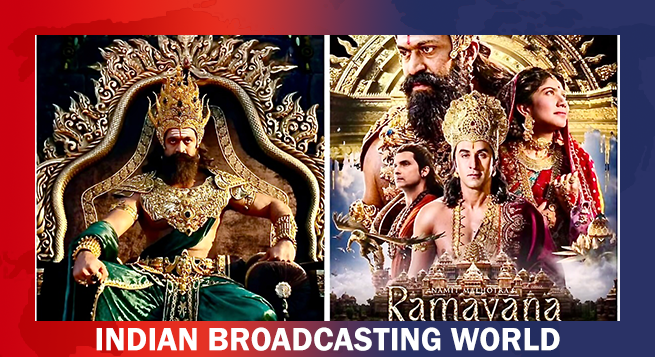 Hindu Janajagruti Samiti flays ‘Ramayana’ film for glorifying Ravan
 Ali Fazal, BBC, CBC, Emmy winner Richie Mehta collab on ‘A Passage To India’
 Akashvani launches ‘AIR Rising Stars’ to promote young musical talent
 WAVES Film Bazaar to mark 20th edition alongside 57th IFFI in Goa
 ‘Ramayana’s global BO march on amid VHP criticism & IFFI honour
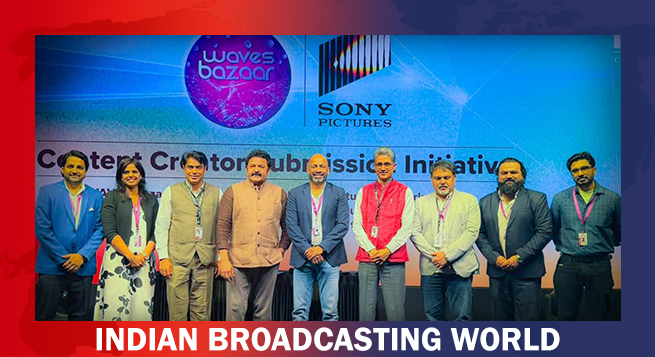 Have a Story to Tell? Sony & WAVES Bazaar Want to Hear It
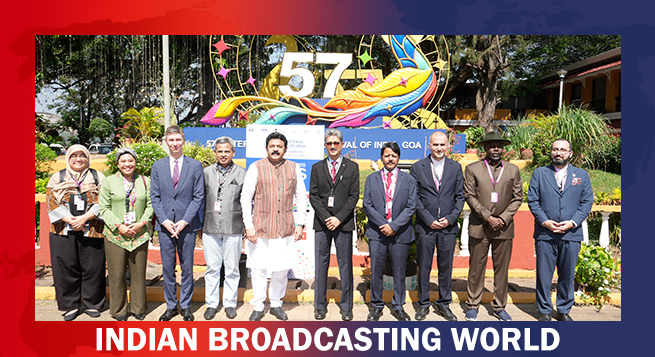 From co-productions to OTT content, BRICS eyes cinema synergies
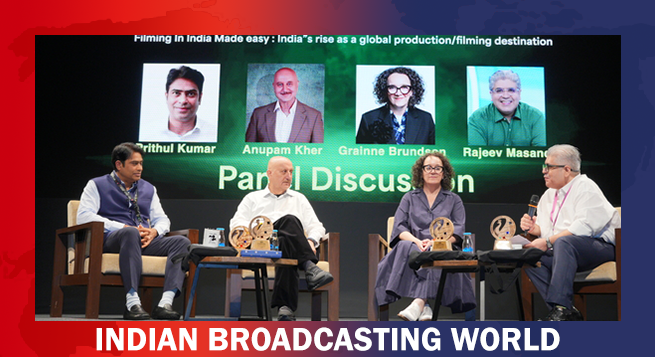 From easier permissions to global collabs, India courts film productions
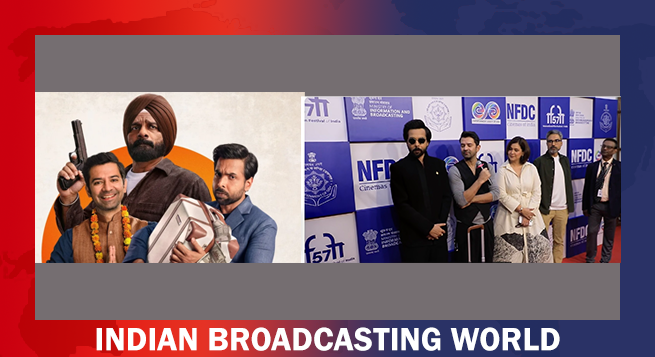 Abhishek Banerjee, Barun Sobti turn to comedy with Sudip Sharma




India is strengthening its bid to become a global filming and production hub through streamlined permissions, diverse locations and international collaborations, speakers opined yesterday at a panel discussion at the 57th International Film Festival of India (IFFI) in Goa.
The discussion highlighted how the India Cine Hub (ICH) — a centralised portal for filmmakers seeking permissions for shoots — is simplifying clearances while opening avenues for India-Australia creative partnerships.
Titled ‘Filming Made Easy: India’s Rise as a Global Filming and Production Hub’, the session brought together Prithul Kumar, Joint Secretary, Ministry of Information and Broadcasting; Grainne Brundson, Chief Operating Officer, Screen Australia, and actor, director and producer Anupam Kher. Film critic and journalist Rajeev Masand moderated the discussion.
Explaining the role of India Cine Hub, Kumar said the integration of State governments into the portal was a significant step towards simplifying filming permissions.
A common application form now enables filmmakers to seek clearances from multiple authorities, including municipal bodies, traffic departments, Indian Railways and the Archaeological Survey of India, through a single digital interface.
Around 32 services have been mapped onto the platform. Applicants can track their applications through a dashboard, while payments, wherever required, are facilitated through secure payment links. Efforts are also underway to integrate drone-related permissions through the Digital Sky platform.
Highlighting the improvement in processing timelines, Kumar said international film shooting permissions, which have a stipulated processing period of 28 days, have taken an average of just 18 days since 2015.
He also cited Madhya Pradesh’s deemed-approval provision, under which applications are treated as approved if no decision is communicated within 15 days.
Pointing to India’s growing appeal among international production houses, Kumar said the number of international productions approaching India for filming and co-production opportunities had increased from 25-30 to 100-200 annually.
He urged production professionals and service providers to register on the portal so that filmmakers worldwide could discover and access India’s production resources.
Brundson highlighted India’s diverse filming locations, skilled filmmaking talent and emotional connect with audiences as key strengths for international partnerships.
Noting the growing popularity of Indian cinema in Australia, she observed that more people watched an Indian film than an Australian film in the country last year.
She said the growing Indian-origin population and strong cultural, educational, sporting and business links between the two countries offered considerable scope for collaborative storytelling.
Emphasising the importance of institutional support for filmmaking, Brundson said, “Every filmis a start-up and a miracle. It begins with a dream or an idea and takes dedication, passion and the support of others to bring it to life.”
She added that successful co-productions were about more than financial collaboration and risk-sharing, creating opportunities for creative exchange and mutual learning.
Indian and Australian filmmakers, she said, could explore shared experiences, including diaspora narratives, and draw on each other’s storytelling traditions to create stories that resonate with audiences in both countries.
Kher, meanwhile, welcomed the government’s initiative to establish India Cine Hub, observing that the process of obtaining filming permissions had improved considerably.
Pointing to India’s extraordinary range of creative possibilities, he highlighted its diverse landscapes, food, costumes and cultural settings.
Stressing that cinema transcends geographical boundaries, he said, “Emotions don’t have any different nationalities. The only thing that you need is the possibility of shooting.”
He also underlined that the single-window system could benefit not just established producers but newcomers, writers, production professionals and aspiring directors.
However, he cautioned against middlemen exploiting filmmakers under the pretext of facilitating permissions.